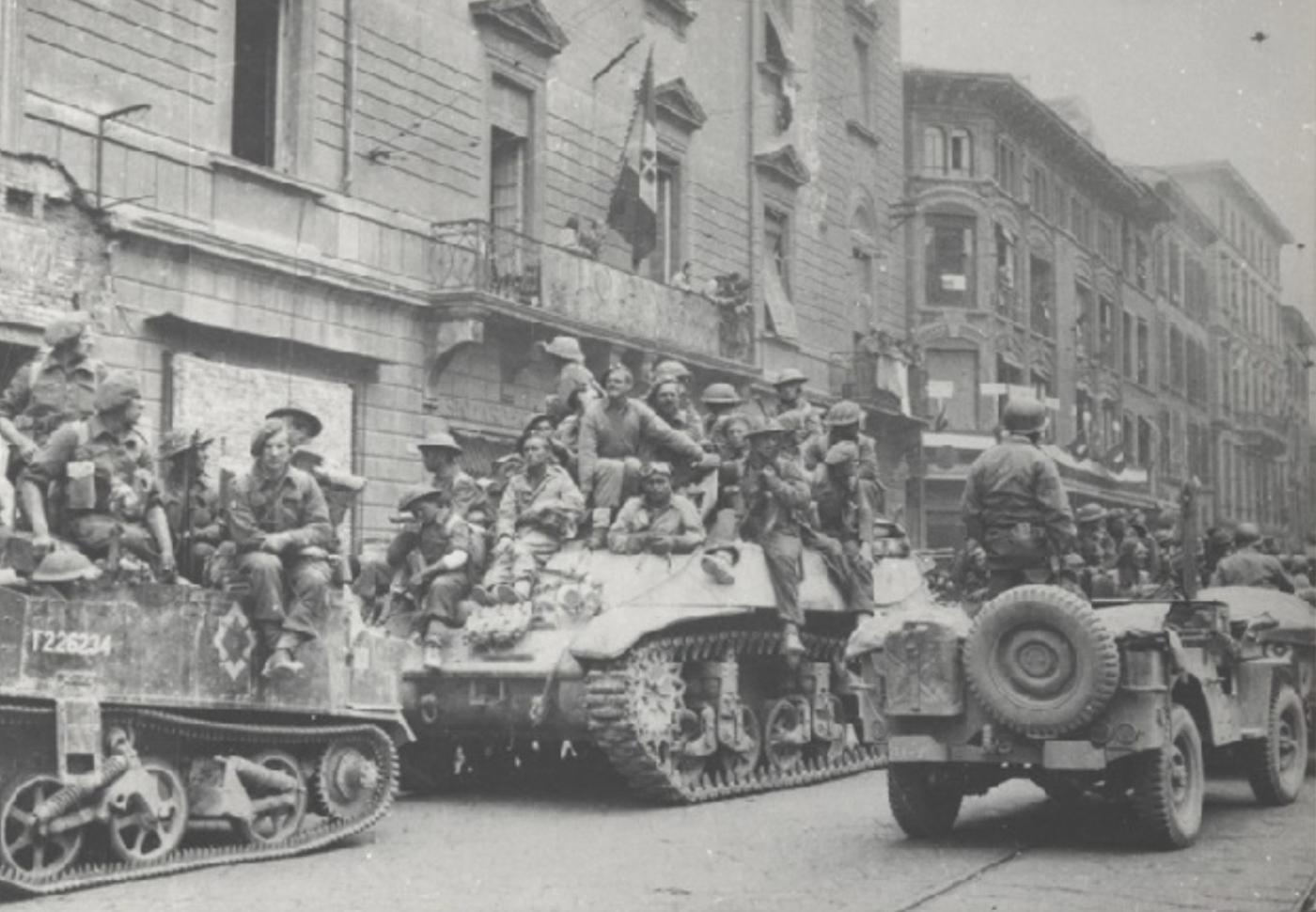
Battle of Bologna
The Battle of Bologna was one of the final major Allied offensives in the Italian Campaign during the Second World War. It took place in April 1945, as Allied forces launched a decisive push to break through German defensive positions in northern Italy and capture the strategically important city of Bologna.
The battle began on 9 April 1945 as part of a larger offensive known as Operation Grapeshot. This was the Allies’ final coordinated assault in Italy, designed to destroy German forces south of the Alps and bring about the collapse of Axis resistance in the region. Bologna itself was a key objective because it served as a major transportation hub, linking routes across northern Italy. Control of the city would disrupt German supply lines and hasten their retreat.
On the Allied side, the operation was commanded overall by Harold Alexander, who was the Supreme Allied Commander in the Mediterranean. Under him, the main ground forces were led by Mark W. Clark, commander of the U.S. Fifth Army, and Richard McCreery, who led the British Eighth Army. These armies worked in coordination, with the Fifth Army advancing from the south and the Eighth Army pushing from the east.
The German forces defending Bologna were under the command of Heinrich von Vietinghoff, who led Army Group C. He was responsible for coordinating the defense of northern Italy as German forces were increasingly strained and outnumbered.
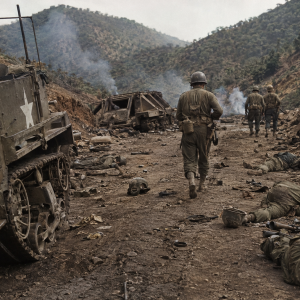
The Allied assault began with a massive aerial and artillery bombardment. Thousands of aircraft struck German positions, supply depots, and communication lines. This was followed by ground advances across the Senio River, one of the last major defensive lines before Bologna. The terrain in this region, consisting of rivers, canals, and fortified positions, made the advance difficult, but the overwhelming Allied firepower and coordination gradually forced German units to withdraw.
One of the notable aspects of the battle was the multinational composition of the Allied forces. Troops from the United States, the United Kingdom, Poland, South Africa, India, and other nations took part. The Polish II Corps played a particularly important role in the capture of Bologna itself. On 21 April 1945, Polish troops entered the city from the east, while American forces approached from the south.
The German defense of Bologna was determined but increasingly disorganized. By April 1945, Germany was facing imminent defeat on all fronts. Supply shortages, lack of reinforcements, and constant Allied pressure made it impossible for German commanders to hold their positions effectively. As a result, many units began retreating northward even before the city was fully encircled.
Bologna was officially liberated on 21 April 1945. The entry of Allied troops into the city marked a significant victory and symbolized the collapse of German resistance in Italy. Civilians welcomed the liberators, and the fall of Bologna opened the way for rapid Allied advances toward the Po Valley.
The battle had important strategic consequences. Following the capture of Bologna, Allied forces pushed quickly across northern Italy, and German forces in the region began to surrender in large numbers. This culminated in the surrender of all German forces in Italy on 29 April 1945, just days before the overall end of the war in Europe.
In terms of casualties, the battle was costly but relatively short compared to earlier engagements in Italy such as Monte Cassino. The rapid success of Operation Grapeshot demonstrated how far Allied coordination, logistics, and firepower had progressed by the final stages of the war.
An interesting detail about the battle is the role of Italian partisans, who assisted Allied forces by disrupting German communications, gathering intelligence, and launching uprisings in cities across northern Italy. Their actions further weakened German control and contributed to the speed of the Allied advance.
The Battle of Bologna stands as one of the final blows against Nazi Germany in Italy. It highlighted the effectiveness of combined Allied operations and marked the end of a long and difficult campaign that had begun with the invasion of Sicily in 1943. Within weeks of the city’s liberation, the war in Europe would come to an end.