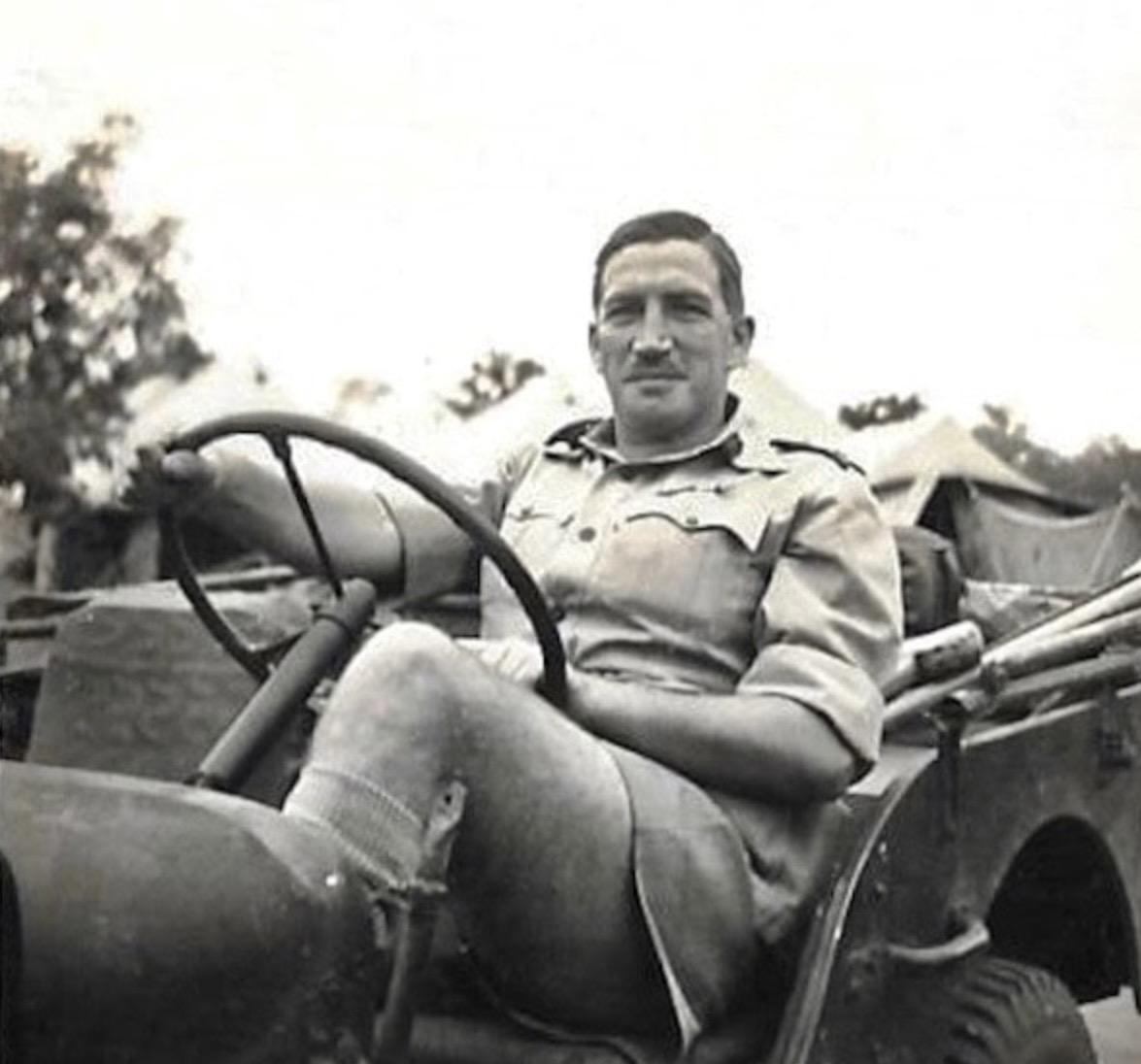
Mad Mike
Brigadier John Masters Calvert, widely remembered by the nickname “Mad Mike,” was one of the most daring and unconventional British officers of the Second World War. His reputation was forged not in set-piece battles, but deep in hostile jungle, where initiative, aggression, and endurance mattered more than rigid doctrine. His career became closely tied to the long-range penetration groups known as the Chindits, and to the wider campaign fought in Burma.
He was born in 1913 in England and educated during a period when the British Army still drew heavily on imperial traditions. From an early age he showed a restless and energetic character, something that would later define his leadership in wartime. He attended the Royal Military College at Sandhurst and was commissioned into the Royal Engineers. This branch of the army required both technical ability and practical problem-solving, and it gave him early experience in field engineering, demolitions, and construction under difficult conditions.
Before the outbreak of the Second World War, he served in various postings across the Empire, gaining experience in different environments and operational roles. When war came, he continued to serve with the Royal Engineers, initially carrying out duties that included constructing defences, maintaining lines of communication, and supporting frontline units. His abilities and willingness to act decisively soon brought him to the attention of senior officers.
His career took a decisive turn when he joined the forces being assembled by Orde Wingate. Wingate’s concept of long-range penetration groups operating behind enemy lines required officers who could think independently and lead under extreme pressure. He first served with Chindit formations during their operations in the Burma theatre, and quickly proved himself capable of commanding men in isolated and dangerous conditions.
Within the Chindits, he rose through the ranks and eventually commanded the 77th Indian Infantry Brigade, one of the key formations within the force. This brigade was part of the wider Chindit organisation that conducted deep operations against Japanese forces during the Burma campaign. These units were supplied largely by air and operated far beyond conventional support, relying on mobility, surprise, and aggressive action.
During Operation Thursday in 1944, one of the largest airborne operations of the campaign, his brigade was inserted deep into Japanese-held territory using gliders and transport aircraft. The aim was to establish strongholds behind enemy lines and disrupt communications and supply routes. Among the most famous of these positions was “White City,” a fortified base constructed near a vital railway line.
At White City, he demonstrated a style of command that combined boldness with constant offensive action. Rather than waiting passively for attack, he ordered continuous patrols, ambushes, and raids against Japanese forces. This aggressive defence kept the enemy off balance and prevented them from concentrating their strength. The position became a major obstacle to Japanese movement and forced them to divert significant resources to deal with it.
His service in the Burma campaign was marked by close involvement with his men. He was known for moving forward under fire, sharing the same hardships as his troops, and maintaining morale in extremely difficult conditions. The jungle environment, disease, and isolation were as much enemies as the opposing forces, yet his leadership helped sustain effectiveness in these circumstances.
After the death of Wingate in 1944, command of the Chindits changed, but he continued to play a significant role in their operations. His brigade remained active in disrupting Japanese supply lines and communications, contributing to the wider Allied effort to regain control of Burma. Although the Chindit operations have been debated in terms of their overall strategic impact, the effectiveness of his leadership within them has rarely been questioned.
By the end of the war, he had established a reputation as one of the most aggressive and capable brigade commanders in the theatre. His service included time with the Royal Engineers, followed by his prominent role within the Chindit formations, particularly the 77th Indian Infantry Brigade. These experiences defined his military career and secured his place in the history of unconventional warfare.
After the war, he remained in the army for a period, though the transition to peacetime service did not suit him as well as the intensity of wartime command. His later years were quieter, but his reputation endured among those who had served with him and studied the Burma campaign.
Brigadier Calvert’s story is one of energy, risk, and leadership under extreme conditions. The nickname “Mad Mike” reflected his willingness to act boldly where others hesitated, but it also masked a commander who understood the demands of jungle warfare and the importance of maintaining initiative.