General Vo Nguyen Giap
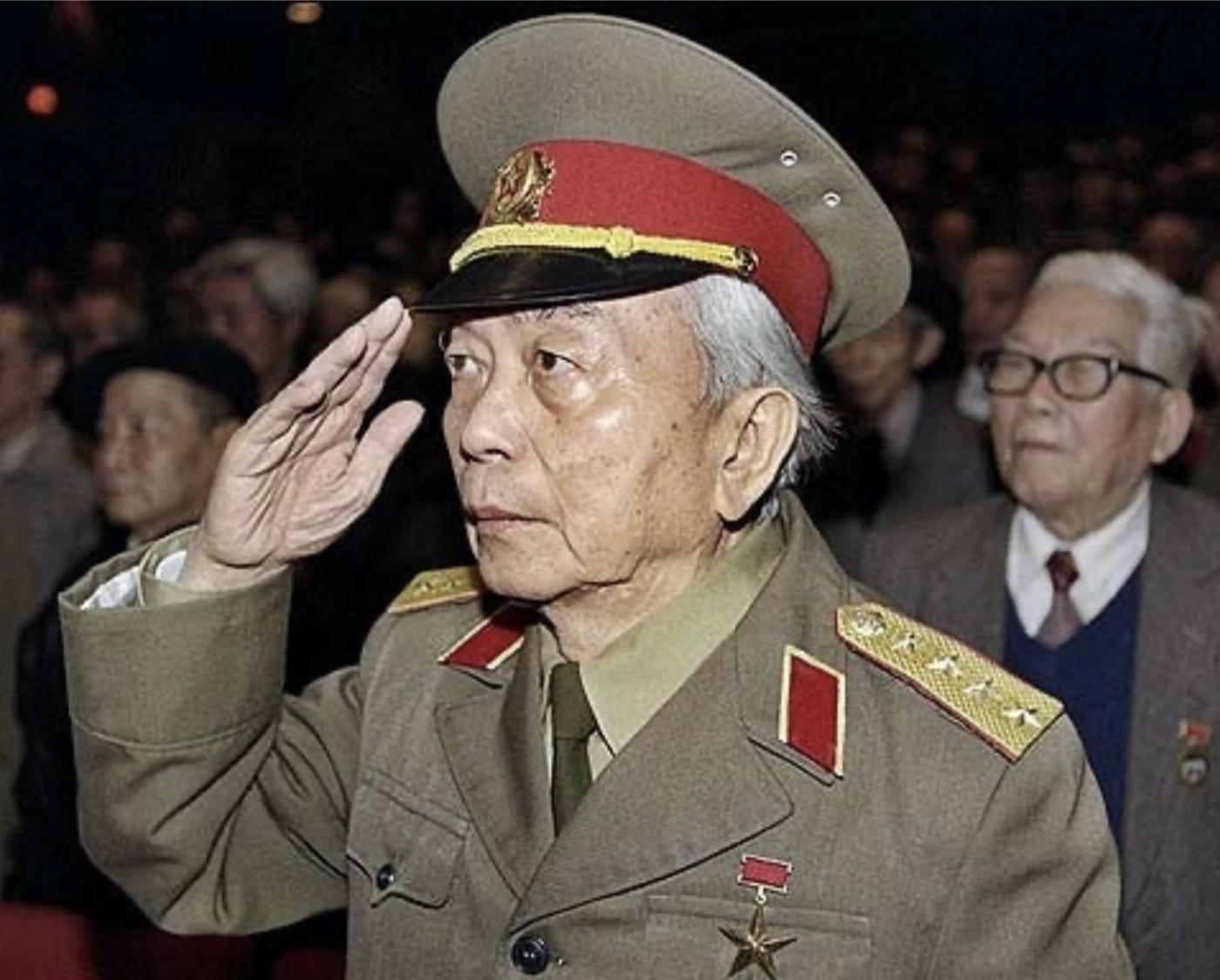
Võ Nguyên Giáp stands as one of the most influential military leaders of the twentieth century, a figure whose life intertwined revolutionary politics, intellectual discipline, and an unconventional approach to warfare that reshaped Vietnam’s history. Born on 25 August 1911 in Quảng Bình Province in what was then French Indochina, he grew up in a poor but politically conscious family. His father was a Confucian scholar who opposed French colonial rule, and this environment exposed Giáp early to ideas of nationalism and resistance. As a young student, he proved academically gifted and intensely disciplined, developing a strong interest in history and literature that would later shape his strategic thinking. His political awakening came during his teenage years when he joined student protests against French authorities, activities that led to imprisonment and strengthened his commitment to revolutionary change.
Giáp did not begin his life as a soldier. He trained as a teacher and later studied law and political economy, becoming deeply influenced by Marxist ideas and by anti-colonial movements spreading across Asia. During the 1930s, he became involved with revolutionary groups connected to the Indochinese Communist Party. French repression was severe, and his personal life was marked by tragedy. His wife was arrested by colonial authorities and later died in prison, while other family members were imprisoned or killed. These losses profoundly affected him and transformed his political beliefs into a lifelong dedication to armed struggle.
His path to military leadership became clear after he met Hồ Chí Minh in the early 1940s. Despite having no formal military education, Giáp immersed himself in the study of warfare, reading widely about historical campaigns and drawing inspiration from Chinese revolutionary theory and Vietnamese resistance traditions. He believed that war was fundamentally political and that a weaker force could defeat a stronger one by mobilising the population, maintaining morale, and choosing the right time and place to strike. In 1944, he helped form the first units of what would become the People’s Army of Vietnam, beginning with a small guerrilla force equipped with limited weapons but driven by strong ideological commitment.
Giáp achieved international recognition during the First Indochina War against France. His most famous victory came in 1954 at the Battle of Điện Biên Phủ. In a move that defied conventional military thinking, he ordered heavy artillery and supplies to be transported by hand through mountainous jungle terrain, allowing Vietnamese forces to surround and besiege a heavily fortified French garrison. The eventual French defeat shocked the world and led directly to the Geneva Accords, which ended French colonial rule in Vietnam. This victory established Giáp as a leading strategist of revolutionary and anti-colonial warfare.
After Vietnam was divided, Giáp became a central figure in the leadership of North Vietnam during the long conflict against South Vietnam and the United States. As Minister of Defence and a senior military strategist, he oversaw campaigns that combined guerrilla tactics with conventional warfare. While he is often associated with the 1968 Tet Offensive, the planning was shared among several leaders, and Giáp later expressed concerns about the heavy casualties involved. His strategic philosophy focused on endurance and political will rather than battlefield statistics, based on the belief that prolonged resistance would eventually wear down technologically superior enemies.
Following the end of the Vietnam War in 1975, Giáp’s influence gradually declined as political priorities within the leadership changed. He remained a respected national figure but was moved away from direct military command and later removed from his position as defence minister. In his later years, he continued to serve in government roles, wrote extensively about military theory and revolutionary history, and became an advocate for environmental protection. He publicly opposed several large industrial projects, arguing that they threatened Vietnam’s long-term environmental and national interests.
Võ Nguyên Giáp died in 2013 at the age of 102, having lived to see Vietnam unified and at peace. In Vietnam, he is remembered as a national hero and a symbol of resistance, discipline, and intellectual determination. Internationally, military historians continue to study his campaigns as examples of how popular mobilisation, strategic patience, and asymmetrical warfare can overcome far greater military power. His life remains a rare example of a self-taught commander who reshaped modern warfare through adaptability, ideological conviction, and an unwavering belief in the strength of a determined people.