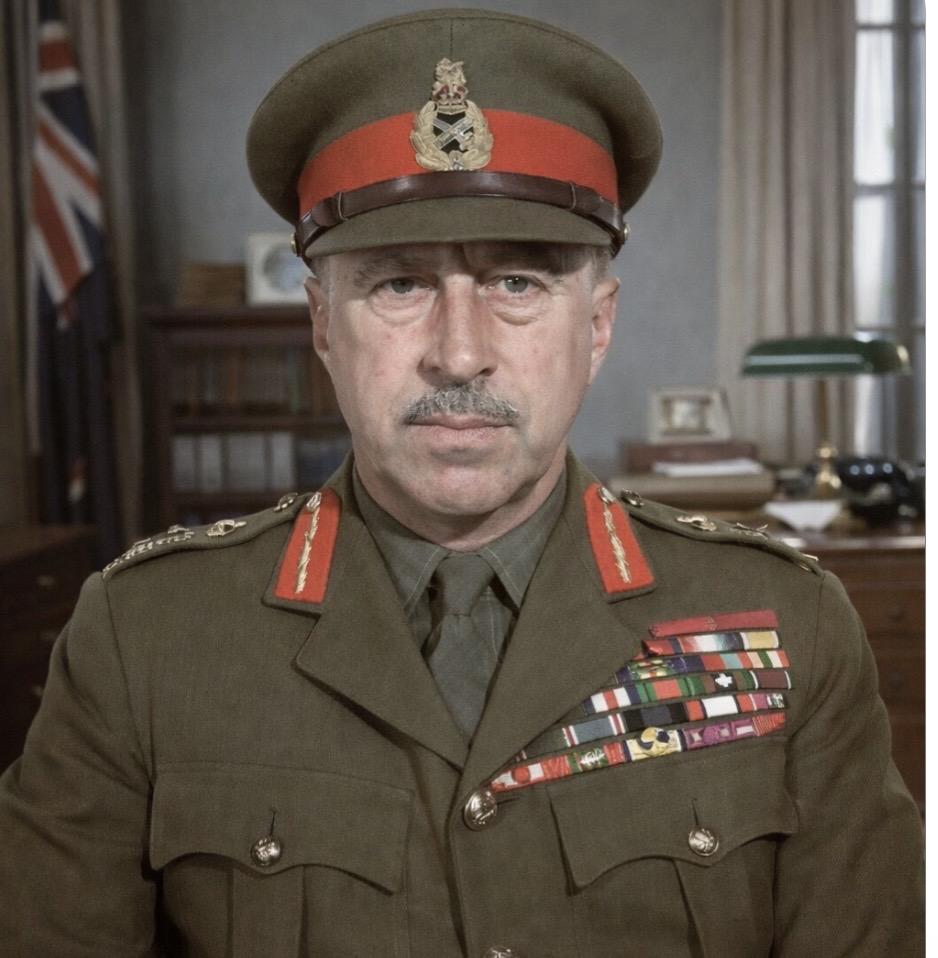
General Henry Cretan
Henry Crerar was one of the most important Canadian military leaders of the Second World War, remembered especially for commanding the First Canadian Army during the final phases of the war in northwest Europe, including the operations that ultimately contributed to the liberation of Arnhem and much of the Netherlands. His leadership combined administrative brilliance with a cautious but effective operational style, and his career reflects both the growth of Canada’s military independence and the immense challenges of coalition warfare.
He was born on April 28, 1888, in Hamilton, Ontario, into a well-educated and socially prominent family. His father was a businessman and senator, which placed him in an environment that valued discipline, public service, and leadership. He was educated at Upper Canada College and later attended the Royal Military College of Canada in Kingston, one of the country’s premier institutions for officer training. At RMC, he developed a strong interest in military organization and logistics, areas that would later define much of his effectiveness as a senior commander.
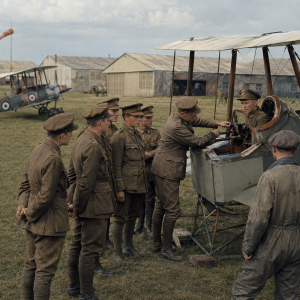
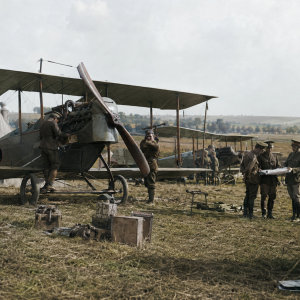
After graduating, he joined the Canadian Militia and worked as an engineer in civilian life, reflecting a dual career path that was common among officers of his generation. When the First World War broke out in 1914, he joined the Canadian Expeditionary Force and quickly distinguished himself not as a frontline battlefield hero, but as an exceptionally capable staff officer. He served in various administrative and planning roles, gaining a deep understanding of how large armies function, how supply chains are maintained, and how operations are coordinated across different units. By the end of the war, he had earned a reputation as one of Canada’s most competent military planners.
Between the wars, he remained deeply involved in the development of Canada’s military. He held a series of important staff appointments and became increasingly influential in shaping defence policy. During this period, Canada’s military was small and underfunded, but he worked to professionalize it and prepare it for the possibility of future conflict. His rise was steady rather than spectacular, built on competence, reliability, and a strong grasp of modern warfare’s complexities.
When the Second World War began in 1939, he was already a senior officer and was quickly placed in key administrative roles. He became Chief of the General Staff in 1940, effectively the head of the Canadian Army. In this position, he was responsible for organizing, training, and equipping Canada’s rapidly expanding military forces. This was a monumental task, as Canada transformed from a relatively small peacetime force into a major contributor to the Allied war effort.
In 1944, he was given field command of the First Canadian Army in northwest Europe. This army was unique in that it included not only Canadian divisions but also British, Polish, and other Allied units, making it a multinational force that required careful coordination and diplomacy. His strengths as a planner and administrator were well suited to this role, though some critics argued that he lacked the aggressive flair of more famous commanders. Nevertheless, his methodical approach often minimized unnecessary casualties and ensured that operations were carried out with precision.
The First Canadian Army played a crucial role after the Operation Market Garden in September 1944. Although Market Garden initially aimed to secure bridges deep into the Netherlands, including at Arnhem, the operation ultimately failed to fully achieve its objectives. The responsibility for clearing the remaining German forces and securing the region fell in part to this army. Over the following months, Canadian forces engaged in difficult and often brutal fighting in flooded terrain, particularly during the Battle of the Scheldt, which was essential to opening the port of Antwerp for Allied supply lines.
By early 1945, his army was heavily involved in operations that led to the liberation of large parts of the Netherlands. While Arnhem itself had suffered greatly during Market Garden and remained contested for some time, the broader campaign that followed saw Canadian forces playing a central role in freeing Dutch cities and restoring civilian life. The Canadian soldiers were widely welcomed by the Dutch population, and this period forged a lasting bond between Canada and the Netherlands that is still commemorated today.
His leadership during these campaigns was marked by attention to logistics, coordination, and the welfare of troops. He understood that modern warfare depended not only on battlefield tactics but also on maintaining supply lines, managing reinforcements, and integrating different national forces into a cohesive whole. Although he occasionally faced health issues during the war, including bouts of illness that temporarily removed him from command, he returned to lead his army through the final stages of the conflict.
After the war ended in 1945, he retired from active military service. Unlike some wartime commanders who sought political office or public prominence, he largely withdrew from the spotlight. However, his contributions were widely recognized. He was appointed Canada’s High Commissioner to the United Kingdom, a prestigious diplomatic post that reflected both his status and his experience working closely with British military and political leaders during the war.
In later life, he remained a respected figure in Canadian public life, though he did not seek constant attention. He lived quietly, occasionally participating in commemorative events and offering his perspective on military affairs. He died on April 1, 1965, leaving behind a legacy as one of Canada’s most important military leaders.