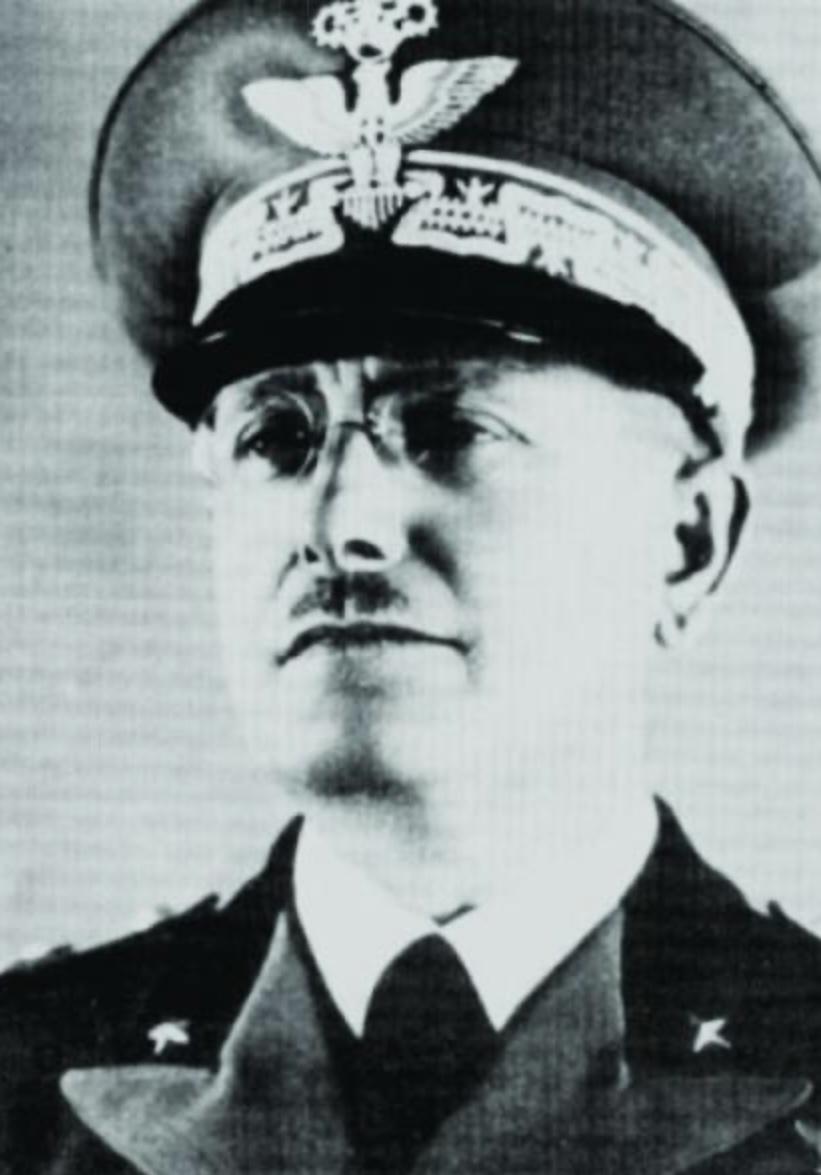
General Giuseppe De Stefanis
Giuseppe De Stefanis, who ultimately rose to the rank of Generale di Corpo d’Armata, was born in 1890 into a generation of Italians who came of age in a country still defining its place among Europe’s powers. He grew up in an Italy that believed military service was a route to national prestige and personal advancement, and he entered the officer corps with the sense of duty and austerity typical of young men shaped by the early twentieth century. His early career followed the conventional path of many promising officers: cadet training, junior assignments, and the formative experience of the First World War, where he learned not only battlefield discipline but also the value of mobility, communications, and close coordination between units. These lessons would mark him for the rest of his military life.
In the interwar years he steadily rose through the ranks, becoming first a Generale di Brigata and later Generale di Divisione, the result of both competence and the professional reputation he developed among superiors. Italian military thinking was shifting during this period, struggling between outdated Great War doctrines and emerging ideas about motorized warfare. De Stefanis belonged firmly to the camp that believed modern armies needed speed, flexibility, and combined arms tactics. He spent much of the 1930s in staff and field roles that exposed him to the development of Italy’s motorized and armored units, and by the time Italy entered the Second World War he was one of the officers capable of understanding how these forces might operate alongside those of Germany.
His transfer to North Africa came at a crucial moment. Italian forces there had suffered early setbacks, and the arrival of German units under Rommel brought new expectations—and new pressure. De Stefanis, by then a Generale di Corpo d’Armata, was placed in command of the Italian XX Motorized Corps, a formation that included some of Italy’s better-equipped divisions. He worked in close cooperation with the German Afrika Korps, and although Germany dominated strategic planning, De Stefanis was respected for his ability to keep Italian units coherent and effective even under harsh desert conditions.
His leadership style relied on steady personal presence and an almost stubborn insistence on maintaining unit cohesion. Italian troops in North Africa often fought with shortages of fuel, spare parts, and armored vehicles, but De Stefanis understood the terrain and emphasized defensive maneuver, disciplined withdrawal when necessary, and the careful use of what armor his forces had available. He was not a flamboyant commander, nor one who sought the spotlight; instead he earned a reputation for reliability, something Rommel valued even if the German command did not always give Italian units the credit they deserved.
Throughout the desert campaigns, from Gazala to the long retreat toward Tunisia, De Stefanis tried to balance the demands of an increasingly desperate strategic situation with the need to preserve his men. Many accounts describe him as a commander who shared risks with his troops and who was quietly devoted to their welfare under circumstances that grew more impossible with every passing month. The collapse of Axis forces in North Africa in 1943 brought an end to his field commands there, as surviving Italian officers and men were swept up in the final surrender.
After the North African campaign he returned to Italy, where the chaos of the armistice and German occupation forced many officers to choose new paths. De Stefanis eventually aligned himself with the reorganized Italian forces that cooperated with the Allies, and after the war he continued to serve in the newly restructured Italian Army. His experience, professionalism, and lack of political extremism made him useful in the difficult years of rebuilding. He went on to hold senior staff positions and contributed to the post-war modernization of Italy’s military institutions.
Giuseppe De Stefanis lived until 1958, spending his final years in relative quiet. He remained respected among veterans and remembered as an officer who carried out his duty with steadiness rather than bravado. His career reflected the turbulent era he lived through: a young officer shaped by the First World War, a senior commander forged in the harsh desert campaigns of North Africa, and finally a seasoned leader helping Italy reshape its armed forces after the greatest conflict of the century.