General Geog Von Der Marwitz
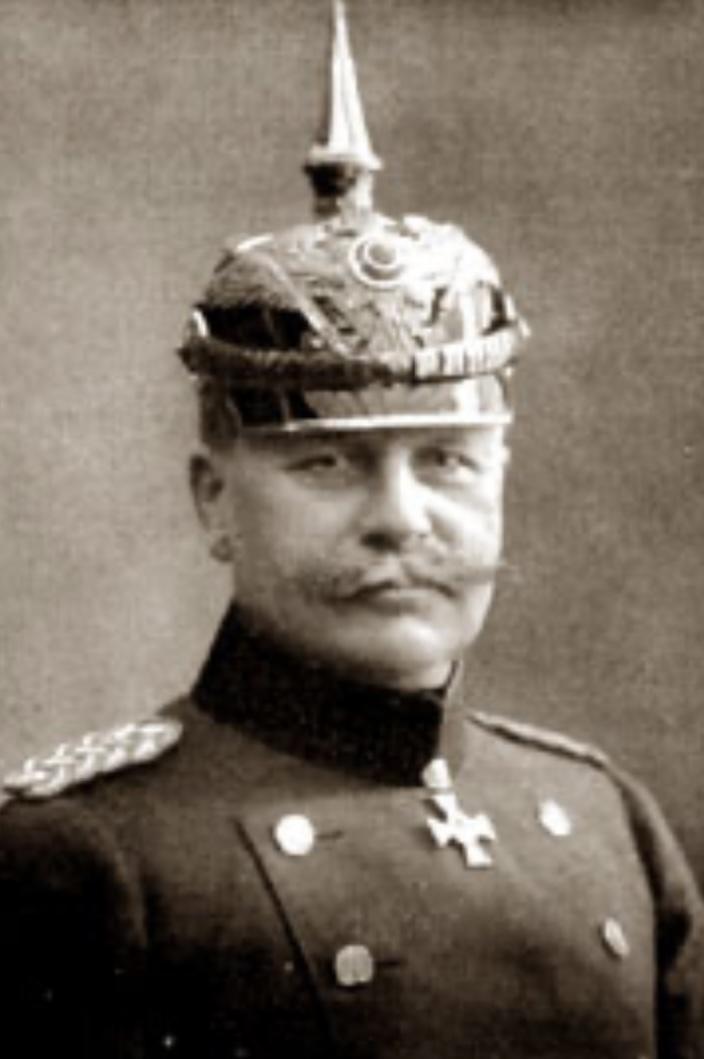
Georg von der Marwitz was born on 7 July 1856 in Stolp, Pomerania, into a Prussian family with a long tradition of military service. From a young age he was shaped by the values of discipline, duty, and the Prussian officer ethos that dominated the Kingdom of Prussia in the latter half of the nineteenth century. He entered the army in 1875, joining the 2nd Dragoons as a cavalry officer. The Prussian cavalry was considered an elite branch, and Marwitz distinguished himself early on through his horsemanship, attention to detail, and steady temperament. His superiors recognized in him not a flamboyant leader but a dependable and methodical officer with a strong grasp of staff work, qualities that steadily advanced his career.
During the 1880s and 1890s he moved through a series of regimental and staff positions, gaining experience in both field command and high-level planning. In 1893 he entered the Prussian General Staff, a crucial step for any officer aspiring to senior leadership. His work there further refined his analytical abilities and ensured he was part of the rising generation of officers who would guide Germany into the twentieth century. His promotions during this period were steady rather than rapid, reflecting a reputation for reliability, commitment, and intellectual seriousness. By the early 1900s he had become one of the army’s more respected cavalry authorities, contributing to doctrinal thinking at a time when the role of mounted troops was increasingly under scrutiny due to technological change.
On the eve of the First World War Marwitz held the rank of Generalleutnant and commanded the II Cavalry Corps. At the outbreak of war in 1914 his corps operated on the Eastern Front, where cavalry still had useful reconnaissance and screening roles. Marwitz handled his forces with professionalism, though this phase of the war quickly demonstrated the diminishing relevance of cavalry in modern conflict. After his service in the east he was transferred west, where he gradually moved into command of larger and more complex formations. By 1916 he had earned the command of the elite Guards Cavalry Division and later the XXXVIII Reserve Corps.
Marwitz’s most prominent role came in late 1916 when he was appointed commander of the German Second Army on the Western Front. In this position he oversaw defensive operations during a period of intense pressure. One of his most noted challenges was the Battle of Cambrai in November 1917, the first large-scale British tank offensive. The initial British success caught the German forces off guard, yet Marwitz’s command managed to stabilize the situation and organize a determined counterattack that recaptured much of the lost ground. Although the battle demonstrated Germany’s growing difficulties and the Allies’ increasing technological advantage, Marwitz’s handling of the crisis earned him respect for calm leadership under extreme strain.
As the war progressed into 1918 his army participated in the German spring offensives and later in the desperate defensive battles against a resurgent Allied force. The final months of the war were marked by exhaustion, dwindling resources, and growing political turmoil. Marwitz, like many senior commanders, struggled against circumstances increasingly beyond any general’s control.
After the Armistice of November 1918 he retired from military service when the Imperial German Army was dissolved and replaced by the much smaller Reichswehr. His postwar years were quiet compared to the intensity of his wartime responsibilities. He lived away from the political upheavals of the Weimar period, maintaining the reserved dignity typical of former Prussian officers. Georg von der Marwitz died on 27 October 1929 in Wundichow, Pomerania, closing the life of a soldier whose career bridged the transformation of European warfare from cavalry charges to mechanized battlefields. His legacy rests on his steady rise through the Imperial German Army, his service in some of the most critical operations of the First World War, and his embodiment of the professional ethos that defined the Prussian officer corps.