Gammon Bomb
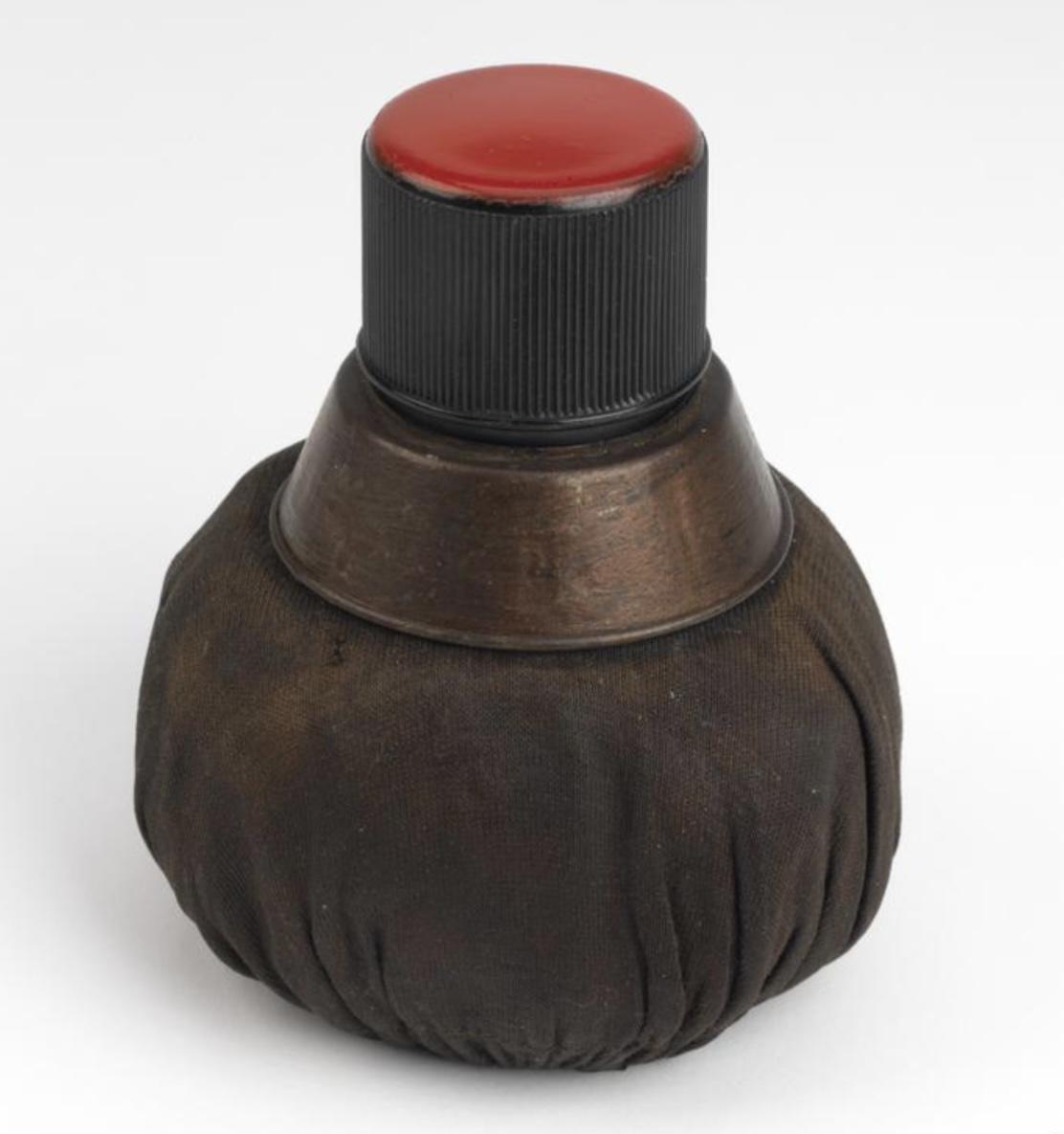
The Gammon bomb, officially known as the No. 82 grenade, was a British hand-thrown explosive used during the Second World War. It was designed primarily for airborne forces who needed a versatile, lightweight, and powerful demolition tool that could be adapted to the mission at hand. Unlike standard grenades, which had fixed explosive charges and a predictable effect, the Gammon bomb was an adjustable device whose power depended entirely on the amount and type of explosive the soldier packed into it.
The inventor of the Gammon bomb was Captain Richard M. Gammon of the British Special Operations Executive (SOE). Drawing on the needs of airborne and irregular warfare units operating behind enemy lines, Gammon created a grenade that emphasized flexibility and destructive capability while remaining easy to carry and deploy. His design was quickly adopted and issued widely to British airborne forces, especially the paratroopers who took part in major operations such as D-Day and Market Garden.
Manufacture of the No. 82 grenade was handled through the British Ministry of Supply, with production contracted to multiple factories that specialized in munitions and textile goods. Because the grenade consisted of a simple cloth bag, a small metal fuze assembly, and a rubber band or elastic neck, it did not require heavy industrial resources. This allowed the device to be produced relatively quickly and at scale. Estimates vary, but roughly 100,000 to 200,000 Gammon bombs were manufactured during the war, though the exact number is not firmly documented due to distributed wartime production and the fact that the grenades were partially assembled in the field.
The grenade worked using a percussion-based fuze, the No. 247 impact fuze, housed in a cylindrical metal plug at the top of the device. The explosive charge itself was placed inside a cloth or stocking-like bag made of sturdy fabric. Soldiers could fill this bag with plastic explosive—most commonly Nobel 808 plastic explosive, a precursor to modern C-series explosives—as well as other demolition materials available in the field. After being packed, the neck of the bag was drawn tight and secured with an integral elastic band. This tight packing was essential for stability and predictable detonation.
When thrown, the fuze mechanism operated automatically. Before use, the soldier would remove a safety cap, exposing a weighted striker. As the grenade left the thrower’s hand, the weighted lead ball attached to the striker pulled out a retaining pin. When the grenade hit a solid target, the striker drove into a percussion cap, initiating the detonator and setting off the main charge. Because the grenade relied on impact rather than time delay, it was ideal for anti-tank or anti-vehicle roles where immediate detonation was preferable.
The contents varied with mission needs, but typically the bag was filled with approximately one to two pounds of plastic explosive. For anti-armour work, soldiers often packed as much explosive as the bag could safely hold, creating a powerful shaped charge effect when thrown against the vulnerable areas of a tank or armored vehicle. For anti-personnel purposes or demolition tasks such as knocking out machine-gun nests, bridges, or doors, a smaller charge might be used. This adaptability was one of the Gammon bomb’s defining characteristics.
Many paratroopers preferred the Gammon bomb to standard grenades because it could serve simultaneously as an anti-tank grenade, demolition device, or general-purpose explosive. It also occupied very little space when empty, making it ideal for airborne troops who had extremely limited carrying capacity during jumps. The grenade was also commonly carried by British Commandos and some U.S. airborne troops, particularly those operating closely with British units.
One interesting fact is that the Grenade No. 82 remained dangerous long after the war, not because of its design but because many were left partially assembled or stored with explosives still inside. The fuze mechanism, being impact-sensitive, posed a significant hazard when found decades later. Another notable detail is that it was one of the few grenades in the war that relied almost entirely on user-filled charges, making each grenade unique to the soldier who packed it.