Forming of the IRA
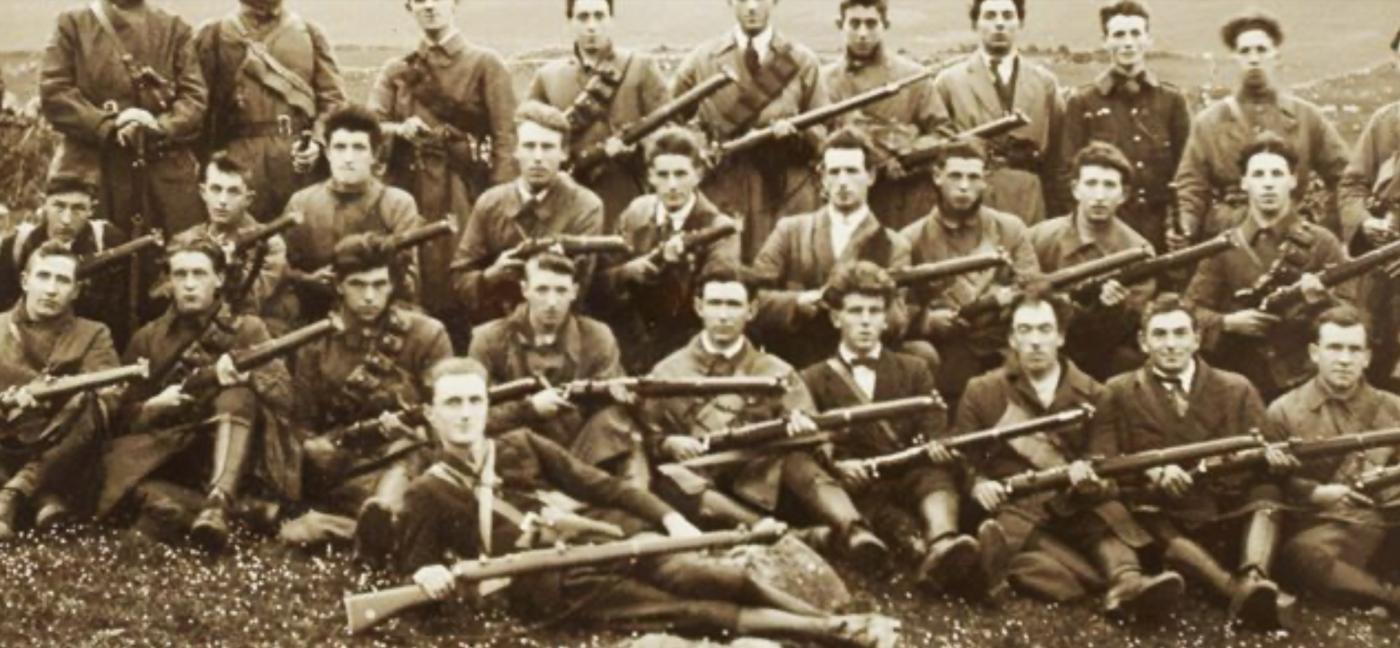
The roots of the Irish Republican Army trace back to the long struggle for Irish independence, but the organization commonly known today as the IRA took shape through several distinct phases. Its origins lie in the Irish Volunteers, formed in 1913 to resist British rule. After the 1916 Easter Rising and the subsequent Irish War of Independence (1919–1921), the Irish Volunteers evolved into the original IRA under leaders such as Michael Collins, Richard Mulcahy, and Cathal Brugha. When the Anglo-Irish Treaty of 1921 created the Irish Free State but left Northern Ireland within the United Kingdom, the IRA split between those who accepted the treaty and those who opposed it. The anti-treaty faction continued to call itself the IRA, rejecting the new state and maintaining the goal of a united Ireland.
In Northern Ireland, tensions between the Catholic nationalist minority and the Protestant unionist majority intensified throughout the mid-20th century. Systemic discrimination in housing, employment, and voting power contributed to civil rights protests in the late 1960s. Violence soon followed as clashes between civilians, paramilitaries, and police forces accelerated. The older IRA, sometimes called the “Official IRA,” struggled to protect Catholic communities during the widespread riots of 1969. Many younger and more militant members felt the leadership had become too political and insufficiently defensive. This dissatisfaction, combined with strategic and ideological disputes, triggered another major split in December 1969. The more traditional, militant faction became the Provisional IRA, led initially by figures such as Seán Mac Stíofáin, Dáithí Ó Conaill, and Ruairí Ó Brádaigh, while the remaining faction became the Official IRA under leaders like Cathal Goulding.
The Provisional IRA grew rapidly in the early 1970s, positioning itself as the armed defender of nationalist communities and the primary force seeking to end British rule in Northern Ireland. Its objectives centered on driving British forces out and achieving a united, independent Ireland. It combined guerrilla warfare, bombings, assassinations, and intimidation with political strategy. The Official IRA, by contrast, gradually moved toward Marxist political activism and declared a ceasefire in 1972. Over time, the Provisional IRA became the dominant republican paramilitary force.
Funding for the IRA came from multiple sources. Local supporters provided donations, while more organized operations included bank robberies, smuggling, protection rackets, and contributions from Irish-American sympathizers, especially those connected to organizations such as NORAID. The IRA also developed international connections, receiving limited assistance, training, or weapons from foreign groups and states over different periods, including contacts in Libya during the 1980s.
As the conflict continued through the 1970s and 1980s, leadership evolved. Notable figures included Seamus Twomey, Gerry Adams, Martin McGuinness, Kevin McKenna, and Thomas “Slab” Murphy, among others. Although Adams and McGuinness publicly emphasized their roles in Sinn Féin rather than the IRA, they were widely regarded as central strategic influencers during the movement’s political turn. Throughout these years, the organization carried out sustained campaigns against the British Army, the Royal Ulster Constabulary, and unionist paramilitaries. Civilian casualties remained a tragic and well-documented part of IRA activity. Across the entirety of the Troubles, the Provisional IRA killed roughly 1,700 people, including both military and police targets as well as hundreds of civilians. The Official IRA was responsible for far fewer deaths, with estimates around 50. Later splinter groups added their own tolls.
Over time, internal disagreements again led to fragmentation. In 1986, when Sinn Féin voted to end abstentionism in the Irish parliamentary system, a group of traditionalists broke away to form Republican Sinn Féin and the Continuity IRA. In 1997, after the Provisional movement endorsed a political settlement, another faction split to create the Real IRA, which later contributed to the broader dissident republican network also including Óglaigh na hÉireann and the New IRA. These groups rejected ceasefires and peace agreements, continuing sporadic attacks.
The Provisional IRA’s shift toward political engagement and negotiations eventually culminated in the 1994 and 1997 ceasefires, which formed a foundation for the Good Friday Agreement of 1998. After several years of monitored disarmament, the Provisional IRA formally ended its armed campaign in 2005. Leadership figures such as Gerry Adams, Martin McGuinness, and later Mary Lou McDonald and Michelle O’Neill became associated with the political pathway through Sinn Féin rather than the military structure, which the organization declared to be defunct.
Dissident groups continue to exist, with various senior figures leading them at different times, though none approach the scale, organization, or community support once held by the Provisional IRA. Their objectives similarly remain focused on ending British control in Northern Ireland, but they possess far smaller capabilities, limited public backing, and face strong opposition from both governments and local communities.
From its earliest formation to its eventual dissolution and splintering, the IRA’s history reflects the broader political, social, and sectarian struggles that shaped modern Ireland. Its development, leadership changes, funding methods, and long record of lethal violence left a lasting impact on society across both Northern Ireland and the Republic of Ireland, influencing politics, security, and national identity well into the present.