
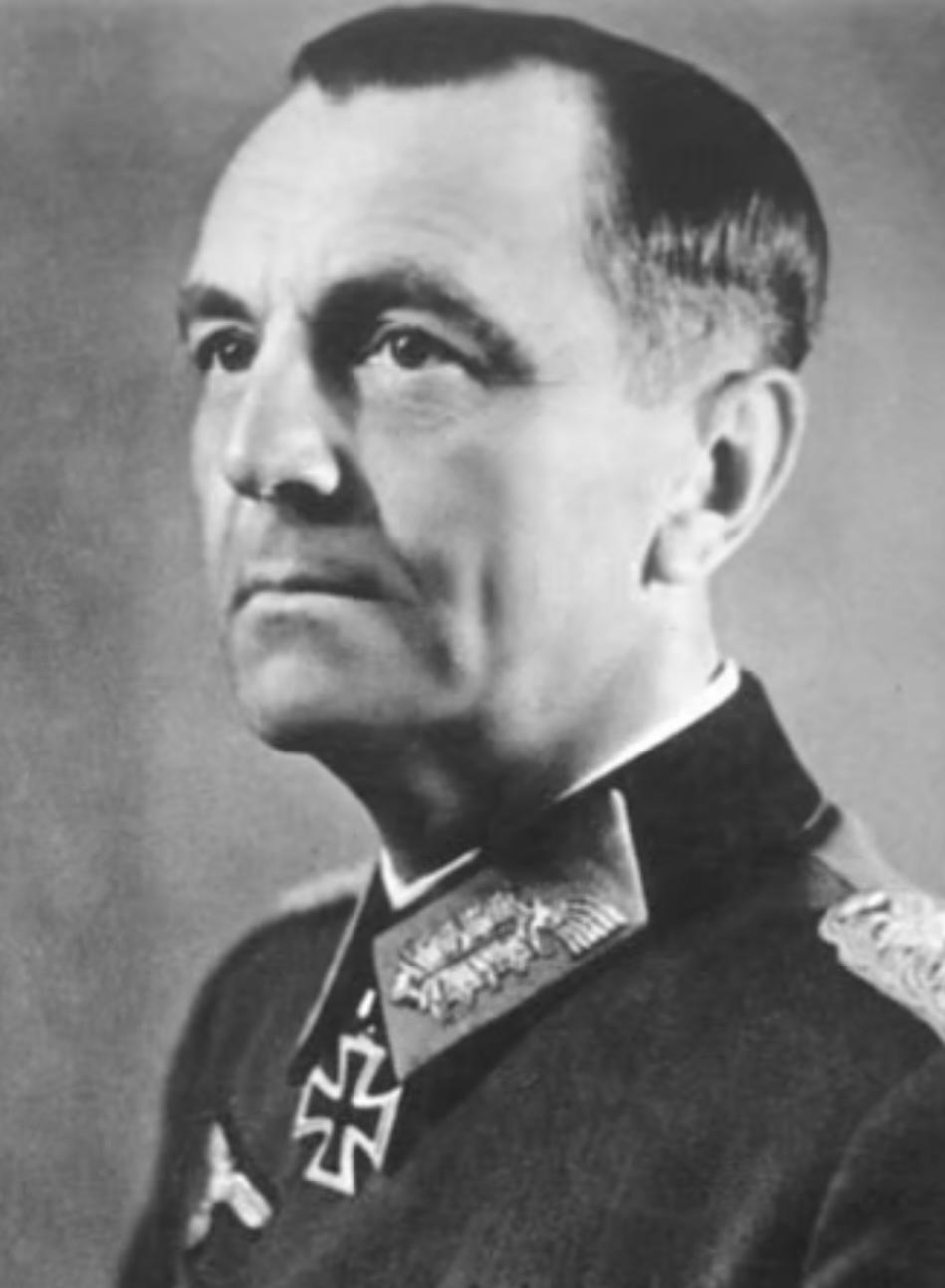
Field Marshal Paulus
Friedrich Paulus occupies a unique and controversial place in German military history, defined less by personal ambition than by the extraordinary circumstances that surrounded his final command and surrender. He was born on 23 September 1890 in Breisach am Rhein, then part of the German Empire, into a lower-middle-class family with no aristocratic or military tradition. His father worked as a civil servant, and Paulus initially pursued academic studies in law before deciding on a military career. In 1910 he joined the Imperial German Army as an officer cadet, entering a profession that would shape his entire adult life.
During the First World War, Paulus served mainly in staff roles rather than as a frontline commander. He demonstrated strong analytical skills, attention to detail, and a calm temperament under pressure, traits that earned him favorable evaluations but little public recognition. He served on both the Western Front and in the Balkans, gaining experience in planning, logistics, and coordination rather than direct troop leadership. By the end of the war he had reached the rank of captain. When Germany’s defeat led to the creation of the small Reichswehr, Paulus was among the limited number of officers retained, indicating that his superiors regarded him as reliable and professionally valuable.
Throughout the interwar years, Paulus advanced steadily through the army’s ranks. He became known as a highly capable staff officer, meticulous and disciplined, though lacking the flamboyance or battlefield charisma associated with some later German commanders. He was not politically radical and showed little ideological enthusiasm for National Socialism, focusing instead on military theory and organization. With the expansion of the armed forces under the Nazi regime, his career accelerated. He contributed to operational planning during the early years of the Second World War and benefited from the regime’s rapid promotion of experienced officers. In January 1942 he was promoted to colonel general and appointed commander of the Sixth Army, one of Germany’s most important field formations.
Paulus’s name became permanently linked with the Battle of Stalingrad. Tasked with capturing the city during the 1942 summer offensive, he led the Sixth Army into prolonged and brutal urban fighting. As Soviet resistance stiffened and supply lines stretched dangerously thin, Paulus became increasingly dependent on direct orders from Adolf Hitler, who forbade any retreat. When Soviet forces encircled the Sixth Army in November 1942, Paulus and many of his generals recognized that breakout or withdrawal was the only realistic option. Hitler rejected these assessments and ordered the army to hold its positions at all costs, insisting that it could be supplied by air and later relieved.
As conditions inside the encirclement collapsed under starvation, disease, and freezing temperatures, the situation became militarily hopeless. On 30 January 1943, with the Sixth Army on the verge of destruction, Hitler promoted Paulus to field marshal. The promotion was not an act of confidence but a calculated political gesture. No German field marshal had ever surrendered, and Hitler expected Paulus to commit suicide rather than allow himself to be captured. Paulus refused to do so. A deeply reserved man and a practicing Catholic, he rejected the idea of taking his own life for symbolic reasons. On 31 January 1943, he surrendered the southern pocket of the Sixth Army to Soviet forces, becoming the highest-ranking officer in German military history to be captured alive.
This act enraged Hitler, who reportedly reacted with fury and contempt. Paulus was denounced as dishonorable and weak, and his survival became, in the Nazi leadership’s eyes, an intolerable humiliation. The surrender at Stalingrad shattered the myth of German invincibility and marked a decisive turning point in the war. For the Soviet Union, Paulus’s capture was an immense propaganda victory; for Germany, it was a psychological catastrophe.
In Soviet captivity, Paulus initially remained withdrawn and in poor health, struggling to comprehend the scale of the disaster. Over time, however, he underwent a political and moral reassessment. He came to distance himself from the Nazi regime and eventually joined the Soviet-sponsored National Committee for a Free Germany, composed of captured officers and anti-Nazi Germans. Paulus participated in radio broadcasts urging German soldiers to abandon Hitler and end the war. After Germany’s defeat, he testified at the Nuremberg Trials, providing evidence about the planning of aggressive war and the conduct of the German High Command. These actions ensured that many former comrades regarded him as a traitor for the rest of his life.
Paulus remained in the Soviet Union until 1953, living under supervision but not subjected to harsh imprisonment. He was then allowed to settle in East Germany, where he worked quietly as a military historian and advisor. He lived a largely private life in Dresden, removed from political power and public acclaim. Friedrich Paulus died there on 1 February 1957, just one day after the fourteenth anniversary of his surrender at Stalingrad. He was 66 years old, and his death passed with little ceremony, reflecting the deeply ambivalent legacy he left behind.
Paulus’s life and death encapsulate the contradictions of the German officer corps during the Third Reich. Promoted by Hitler with the expectation that he would die rather than surrender, he instead chose survival, a decision that infuriated the Nazi leadership but ensured his place in history.