Field Kitchens
During the Second World War, and even in the desperate winter fighting of the Battle of the Bulge, Allied armies placed surprising importance on providing hot food to soldiers whenever conditions allowed. Military planners understood that warm meals were not a luxury but a key factor in endurance, morale, and fighting effectiveness, especially in freezing conditions where exhaustion and exposure could be as deadly as enemy fire.
In the U.S. Army, responsibility for feeding millions of men across multiple continents fell to the United States Army Quartermaster Corps. This organization effectively acted as the army’s catering and supply service, overseeing everything from the purchase of ingredients in the United States to the preparation and delivery of meals close to the front lines. By 1944 the Quartermaster Corps had refined a highly organized system of mobile field kitchens that could move with advancing units, set up quickly, and provide hot food even under combat conditions.
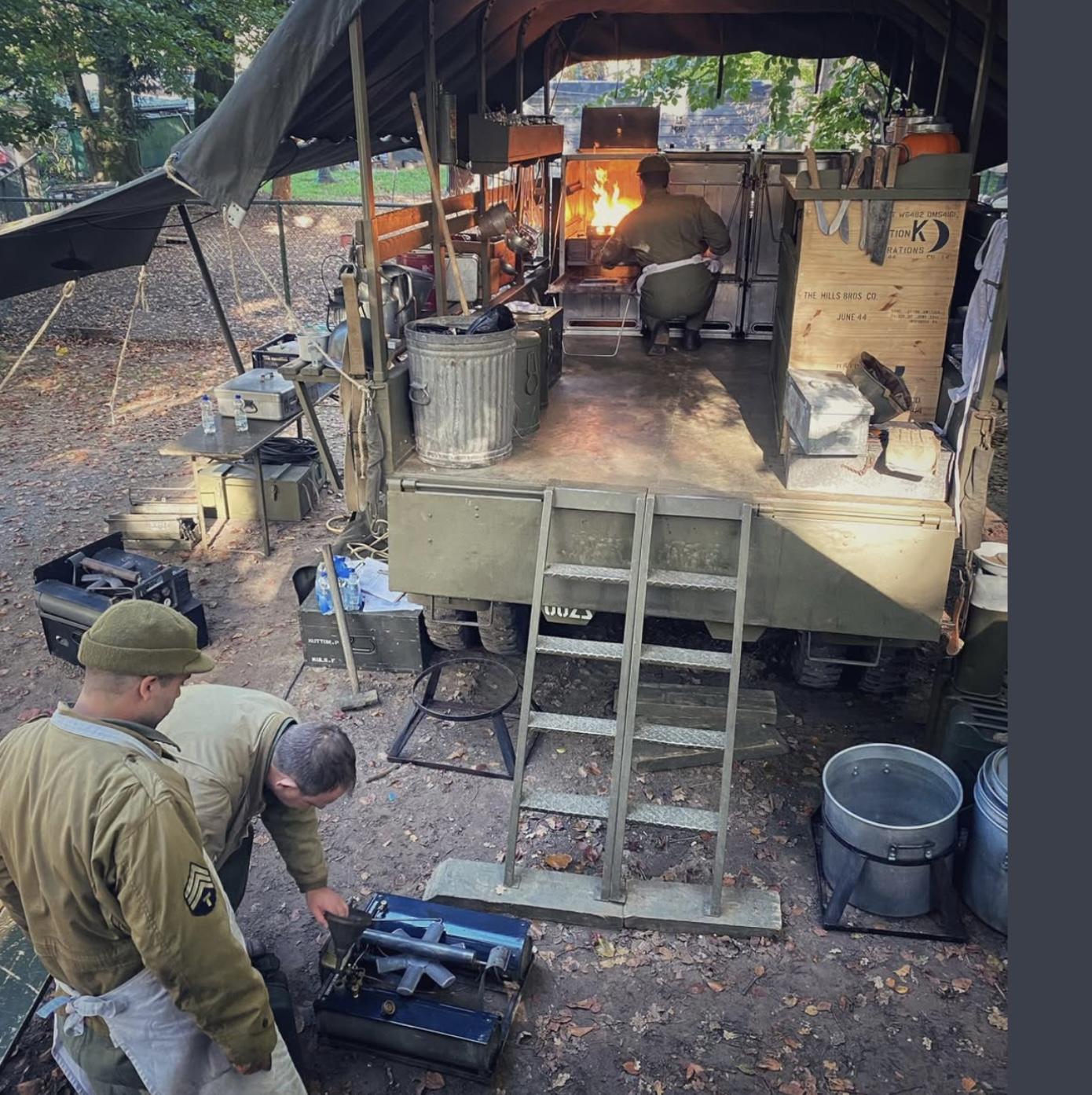
Frontline mobile kitchens were usually built around field ranges mounted on trucks or trailers. The most common was the M-1937 field range, often referred to by soldiers simply as the four-burner or oil-burning stove. These ranges could burn gasoline or diesel fuel and were designed to cook large quantities of food efficiently. A trained cook with a small team of assistants could feed an entire company from one range, often producing meals within a few hours of arriving at a new position. When roads were impassable or the tactical situation made cooking near the front too dangerous, food was prepared further back and transported forward in insulated containers known as marmite cans, which were designed to keep food hot for several hours.
During the Battle of the Bulge, fought in the forests and villages of the Ardennes, supplying hot food became exceptionally difficult. Heavy snow, extreme cold, fuel shortages, and disrupted supply lines meant that many soldiers survived on K-rations or C-rations for days at a time. Even so, Quartermaster units made determined efforts to bring hot meals forward whenever a lull in the fighting allowed it. Many veterans later recalled that a single hot meal, even something as basic as stew or hot coffee, could dramatically lift spirits after days of cold, fear, and fatigue.
The dishes produced by these mobile kitchens were designed to be filling, high in calories, and relatively simple to prepare in large quantities. Common meals included beef stew thickened with potatoes and carrots, spaghetti with meat sauce, chili con carne, meatloaf, and beans cooked with bacon or salt pork. Breakfasts often consisted of oatmeal, pancakes made from pre-mixed batter, powdered eggs, and large quantities of strong coffee. Bread was a staple whenever bakery units could supply it, and fresh bread reaching the front line was often remembered as one of the most powerful morale boosters of the war.
Canned and preserved foods played a major role in these meals. Spam, corned beef, canned sausages, and tinned vegetables were widely used because they traveled well and kept for long periods. When fresh meat was available, cooks improvised roasts or richer stews. In liberated areas of Europe, friendly civilians sometimes traded fresh eggs or vegetables for rations, allowing army cooks to improve meals despite official regulations.
An interesting aspect of the system was the level of training given to army cooks. Many had been professional cooks or bakers in civilian life, while others were trained intensively by the Quartermaster Corps. They were taught not only cooking techniques but also sanitation, ration control, fuel use, and how to operate under battlefield conditions. Kitchens were often camouflaged, fires carefully shielded to avoid detection, and cooking schedules adjusted to reduce the risk from enemy artillery or air attack.
Hot food also served a clear psychological purpose. Commanders understood that a well-fed soldier was more resilient and more confident in the system supporting him. In the brutal winter of 1944–45, when frostbite cases rose sharply and physical exhaustion was widespread, a mug of hot soup or cocoa could be as important as extra ammunition.