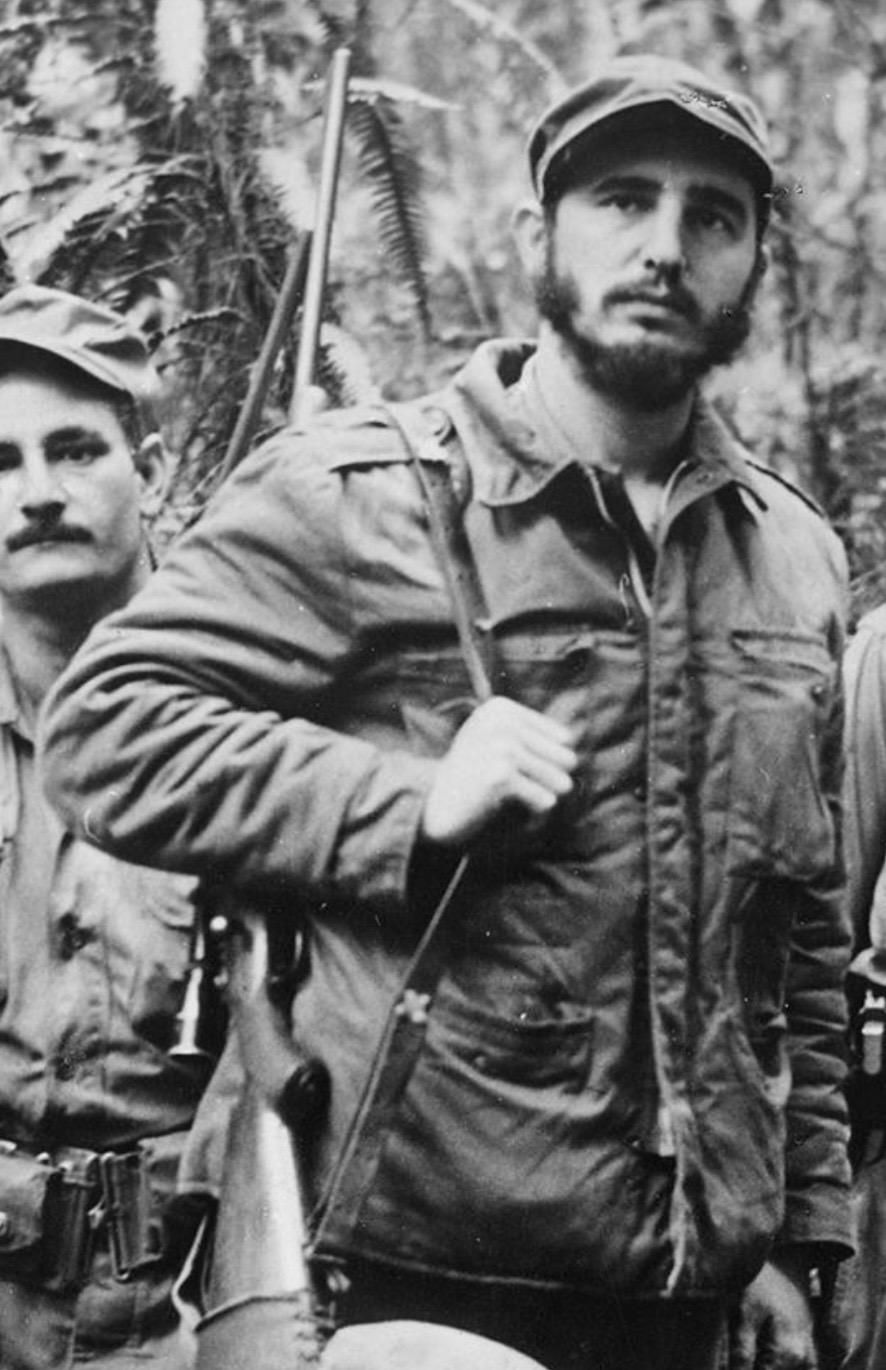
Fidel Castro
Fidel Alejandro Castro Ruz was born on August 13, 1926, near Birán in eastern Cuba. His father, Ángel Castro, was a relatively prosperous Spanish immigrant farmer, which allowed him access to education that many Cubans lacked. Despite this, he grew up witnessing sharp inequality between wealthy landowners and poor workers, shaping his political outlook.
He attended Jesuit schools in Havana and later studied law at the University of Havana, where he became involved in activism. During this time, he was influenced by nationalist ideas and figures such as José Martí. His early political experiences, including involvement in unrest abroad, reinforced his belief in revolutionary change.
In the early 1950s, Cuba was ruled by Fulgencio Batista following a military coup. After failing to challenge the regime legally, he turned to armed revolt. In 1953, he led an attack on the Moncada Barracks, which failed, leading to his imprisonment. After release in 1955, he went into exile in Mexico, where he organised a revolutionary group and met Ernesto "Che" Guevara.
Returning to Cuba in 1956, he and a small group launched a guerrilla campaign from the Sierra Maestra mountains. Through disciplined leadership and effective tactics, the rebel force grew steadily. By 1959, Batista’s government collapsed, and the revolutionaries took control of Havana.
He became Prime Minister in 1959 and later President. His government introduced major reforms, including universal healthcare, expanded education, and land redistribution. Industries were nationalised, and Cuba adopted a centrally planned economy.
Internationally, he aligned Cuba with the Soviet Union and played a key role in the Cuban Missile Crisis. He also supported revolutionary movements abroad and became a symbol of resistance to U.S. influence.
His rule was also marked by restrictions on political opposition and the establishment of a one-party state. Economic challenges and limited freedoms led many Cubans to leave the country.
He stepped down in 2008, handing power to Raúl Castro, and died in 2016. His legacy remains debated, seen by some as a force for social change and by others as an authoritarian ruler.