On this day in military history…
The Bay of Pigs Invasion unfolded over just a few tense days in April 1961, yet it carried consequences far beyond its brief duration, becoming one of the most talked-about episodes of the Cold War. It began on 17 April and was effectively over by 20 April, but the story behind it stretches back to the political upheaval that brought Fidel Castro to power in Cuba in 1959. Castro’s revolution overthrew the previous regime and quickly aligned the island with the Soviet Union, which alarmed the United States. In Washington, policymakers feared that Cuba could become a base for communist influence just 90 miles from Florida.
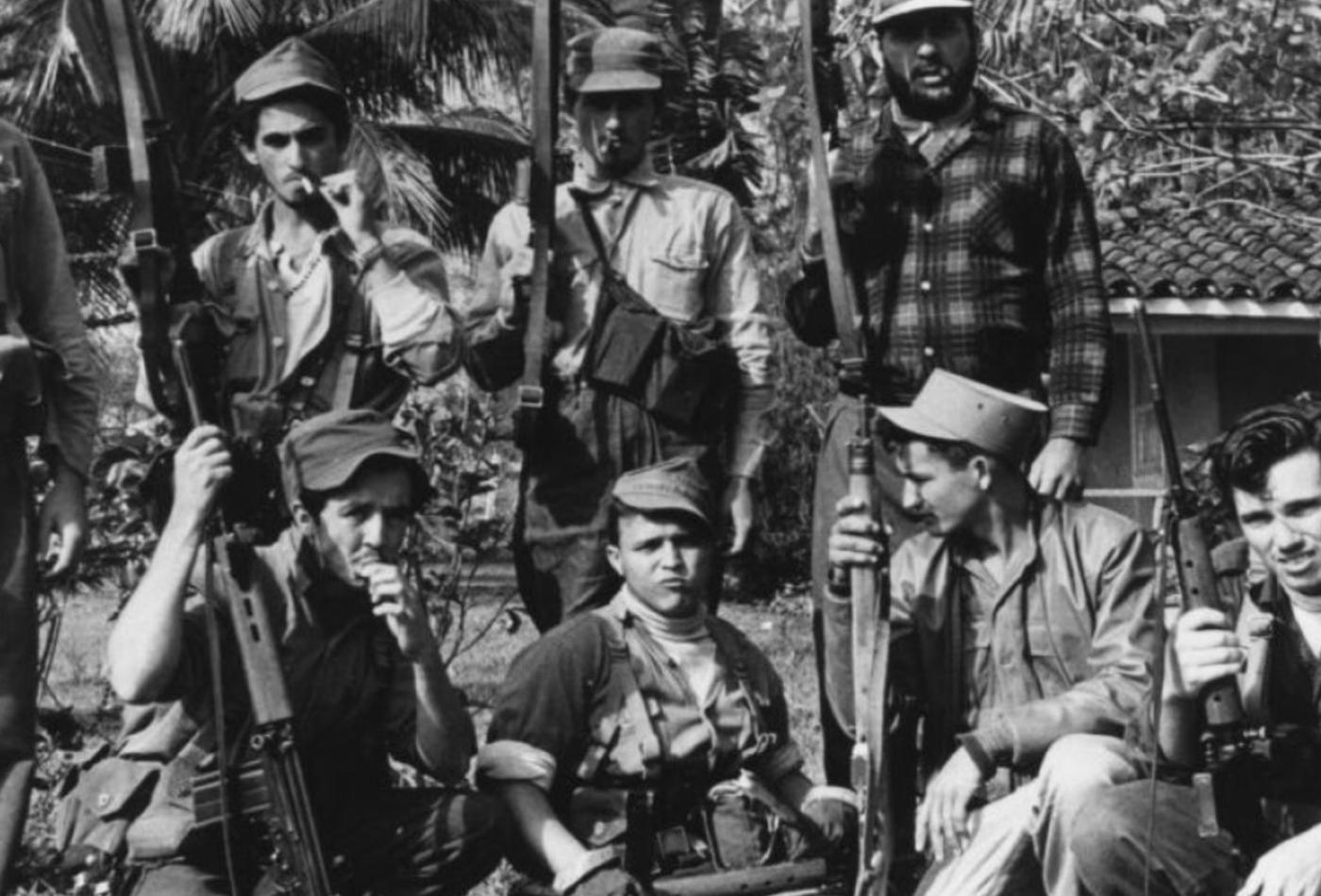
The plan that eventually led to the invasion was developed under Dwight D. Eisenhower and later approved by his successor John F. Kennedy. The idea was not to send American troops directly, but instead to train and equip a force of Cuban exiles who had fled Castro’s rule. These men, numbering around 1,400, became known as Brigade 2506. They were trained in secret, largely under the direction of the Central Intelligence Agency, in camps in places like Guatemala.
The expectation was that once these exiles landed in Cuba, they would spark a wider uprising among the Cuban population, leading to Castro’s overthrow. This assumption turned out to be one of the plan’s greatest flaws. Castro still had significant support within Cuba, and his government was well prepared for an invasion. Intelligence leaks and visible preparations meant that the element of surprise was already compromised before the first troops even landed.
The invasion force came ashore at a remote swampy area on Cuba’s southern coast known as Playa Girón, in the Bay of Pigs. Almost immediately, things began to go wrong. Air strikes that were meant to destroy the Cuban air force were limited in scope, partly because Kennedy wanted to maintain plausible deniability and avoid open war. As a result, Cuban aircraft remained operational and were able to attack the invading force. Supply ships were sunk, communication became chaotic, and the exiles quickly found themselves isolated.
Meanwhile, Castro responded rapidly and decisively. Cuban armed forces, including tanks and infantry, moved in to confront the invaders. Within three days, the exile force was overwhelmed. Many were killed, and over a thousand were captured. The anticipated popular uprising never materialised, leaving the invaders without the internal support they had been counting on.
The failure was a major embarrassment for the United States and for Kennedy personally, especially since he had only recently taken office. It damaged America’s credibility and strengthened Castro’s position within Cuba, allowing him to consolidate power further. It also pushed Cuba even closer to the Soviet Union, setting the stage for the much more dangerous confrontation the following year known as the Cuban Missile Crisis.
There are also some lesser-known details that add to the story. For example, the captured prisoners were eventually released, but only after negotiations in which the United States agreed to provide Cuba with food and medical supplies worth millions of dollars. The operation’s name, Brigade 2506, came from the identification number of one of the original recruits who had died during training. Even the choice of landing site, the Bay of Pigs, turned out to be problematic because its surrounding swamps made escape or reinforcement extremely difficult.
In hindsight, the invasion is often studied as a case of flawed planning and groupthink. Decision-makers convinced themselves that success was likely, ignoring warning signs and overestimating the likelihood of a Cuban uprising. It remains a classic example in both military and political history of how misjudgment, secrecy, and overconfidence can combine to produce a rapid and decisive failure, despite significant resources and preparation.