Affray Sub Sinks
HMS Affray slipped quietly out of Portsmouth on the afternoon of 16 April 1951, beginning what should have been a routine training exercise in the English Channel. On board were 75 men, including a mix of seasoned submariners, trainees, engineers, and a small detachment of Royal Marines. Commanding them was John Blackburn, an experienced officer trusted with both the vessel and the young men learning their trade.
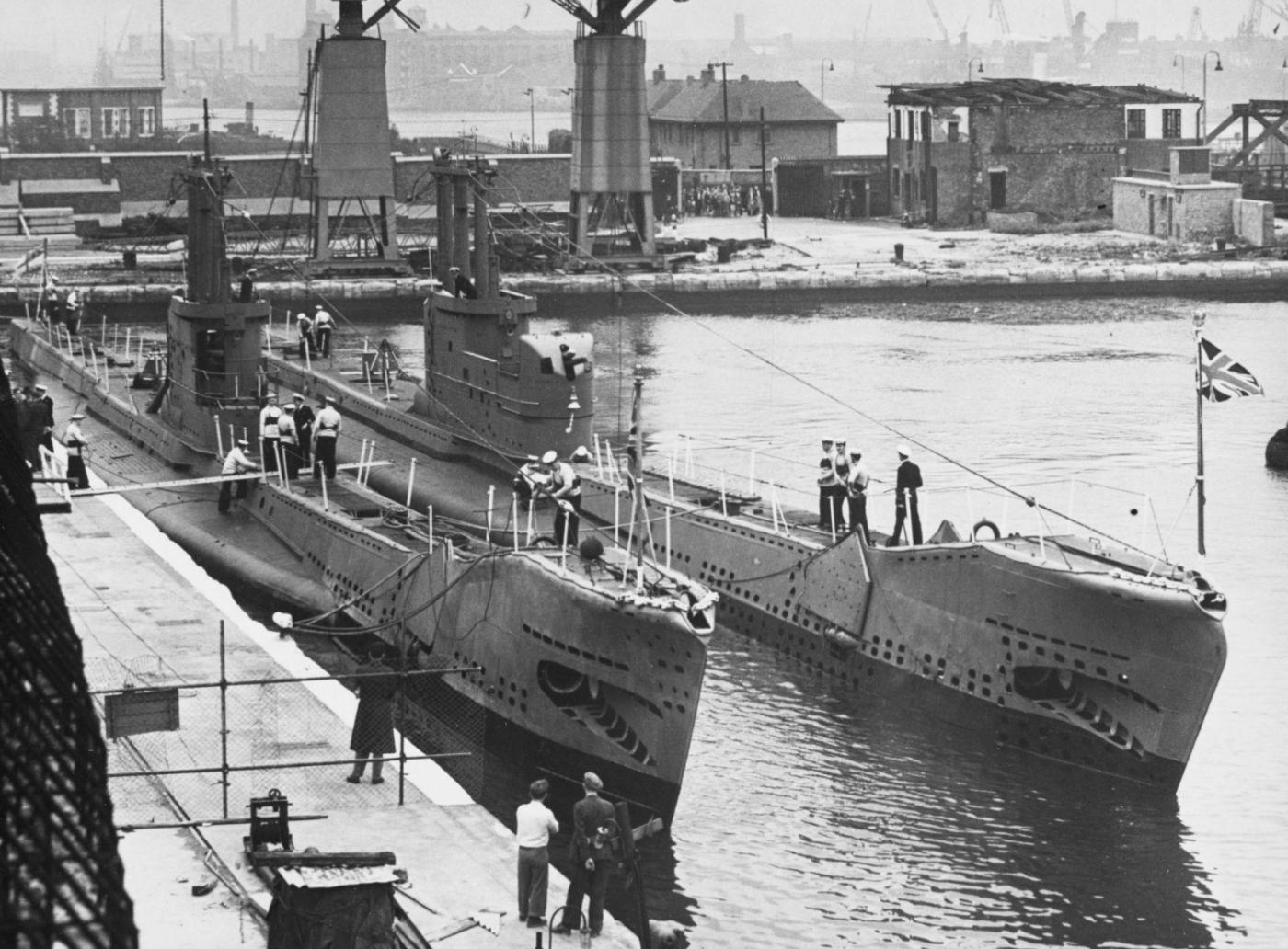
Affray was part of the Amphion class, one of the Royal Navy’s more modern submarine designs at the end of the Second World War. By the early 1950s she was being used mainly for training, and this particular patrol—Exercise Spring Train—was intended to simulate wartime conditions, including the covert landing of commandos along the English coast. It was a demanding but familiar type of operation.
At around 9:00 pm on 16 April, the submarine sent a routine signal giving her position, course, and intention to dive. Nothing seemed out of the ordinary. Soon after, she submerged south of the Isle of Wight and was seen for the last time before disappearing beneath the surface.
Through the night there was silence. That in itself was not unusual, as submarines often operated without communication while submerged. But by the morning of 17 April, when Affray failed to surface and report as expected, concern quickly turned into alarm. Repeated attempts to contact her brought no reply, and before long the Royal Navy declared the submarine missing and began a large-scale search.
At first there was still hope that the submarine might be lying disabled on the seabed with survivors inside. Some ships reported hearing faint tapping sounds, which raised the possibility that the crew were trying to signal for help. But no firm position could be established, and as the hours passed those hopes began to fade.
The search continued for weeks, becoming one of the largest peacetime naval search operations Britain had ever undertaken. Eventually, in June 1951, the wreck of Affray was located on the seabed of the English Channel, lying at a depth of around 280 feet. She was found largely intact, resting upright, which suggested that she had not been destroyed by an explosion or collision but had instead suffered a sudden failure that sent her to the bottom.
Attempts were made to investigate the wreck using divers and underwater equipment, though the depth and conditions made this extremely difficult. Some limited items were recovered, including parts of the submarine’s snorkel mast and small pieces of debris, but the hull itself was never raised. The submarine was effectively left where she lay, becoming a war grave for the 75 men on board.
The most likely explanation for the loss centres on the submarine’s snorkel system. Affray was fitted with a snorkel mast that allowed her diesel engines to run while submerged just below the surface, drawing in air and expelling exhaust. Evidence suggested that the snorkel may have been defective or damaged. One theory is that the mast fractured or failed shortly after the submarine dived, allowing water to pour into the vessel. This could have caused rapid flooding, loss of buoyancy, and a descent to the seabed before the crew had time to react or send a distress signal.
Another possibility considered at the time was that a hatch or valve had been left open or malfunctioned, again leading to sudden flooding. However, the snorkel failure remains the most widely accepted explanation, supported by the limited physical evidence recovered.
Life aboard Affray would have been intensely close-knit, with 75 men sharing tight quarters, relying on routine, discipline, and each other. In a submarine, emergencies develop quickly, and survival depends on immediate response. If the submarine flooded rapidly, the crew may have had little or no chance to save themselves.
The wreck still lies on the seabed today, undisturbed. The loss of Affray marked the end of an era—it was the last Royal Navy submarine to be lost at sea. What happened between the moment she dived on the evening of 16 April and her failure to report on the morning of the 17th remains a sobering reminder of the dangers faced by those who served beneath the waves