Execucted
Eddie Slovik remains the only soldier of the United States Army to be executed for desertion since the American Civil War, making his case one of the most controversial episodes in American military justice during the Second World War. The execution occurred in the final months of the conflict in Europe, at a time when the U.S. Army faced severe manpower shortages, declining morale among replacement troops, and growing anxiety about maintaining discipline under combat conditions.
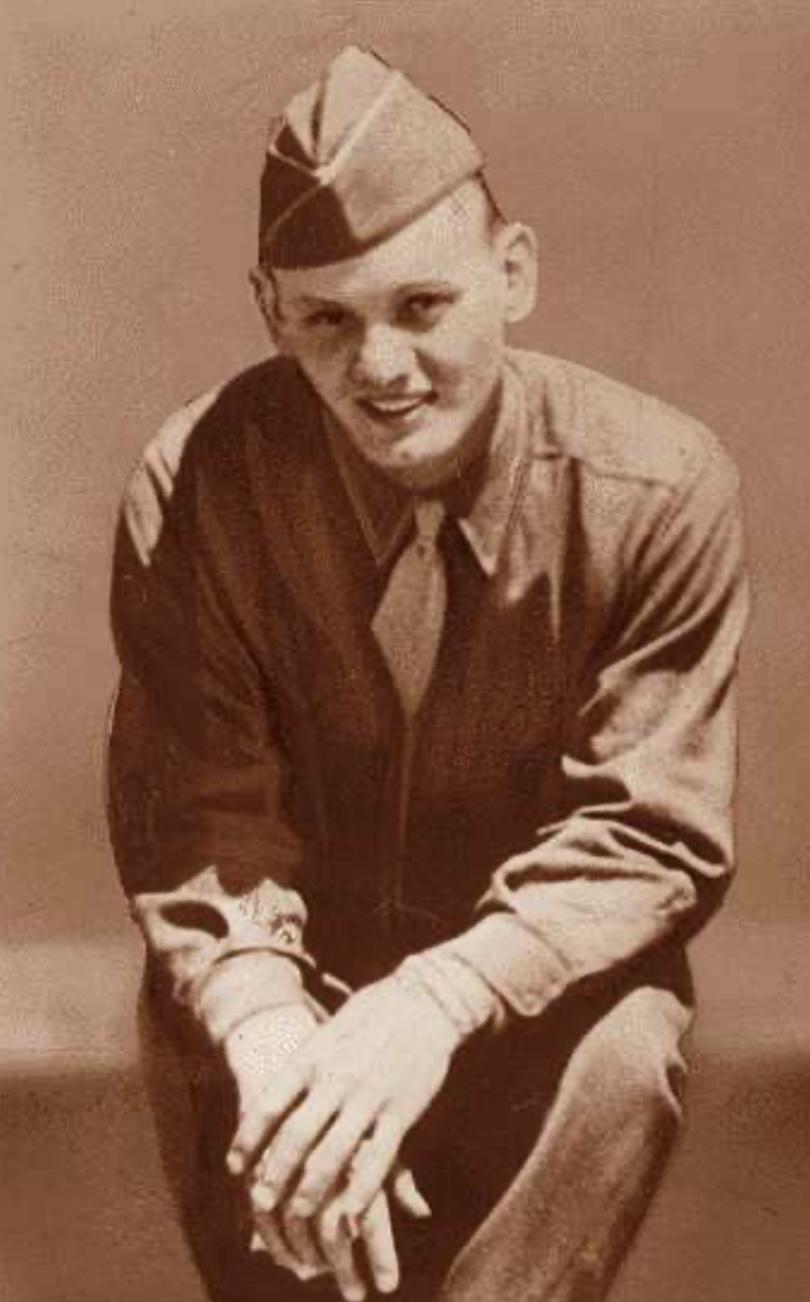
Born in 1920 in Detroit, Michigan, he grew up in a poor and unstable environment shaped by crime, poverty, and limited education. As a young man, he became involved in petty criminal activity and served time in prison for automobile theft before the war. This criminal background would later play a significant role in his fear of military punishment, confinement, and authority. Drafted into the U.S. Army in 1944, he was assigned to infantry service despite lacking any desire or emotional readiness for combat.
He arrived in France in August 1944, shortly after Allied forces had broken out of Normandy but while fighting remained intense and casualties high. Replacement infantrymen were often rushed to the front with little preparation, and many were killed or wounded within days. During an artillery barrage while being transferred to his assigned unit, he became separated from his regiment. Rather than making a sustained effort to rejoin American forces, he sought refuge with a Canadian military police unit and remained with them for several weeks, carrying out minor duties without authorization.
When he was eventually returned to American control, he made no attempt to conceal his actions. Instead, he openly admitted that he had deliberately avoided returning to combat. The most unusual and damaging element of the case was a written confession he voluntarily provided. In October 1944, he submitted a signed statement declaring that he would refuse to fight and would continue to desert if sent back to the front. He acknowledged full awareness that such actions could result in severe punishment, including execution, and stated that imprisonment was preferable to combat.
At the time, desertion was a serious but widespread problem. Approximately 21,000 American soldiers were convicted of desertion during the Second World War. Forty-nine received death sentences, but all except one were later commuted. Senior commanders were increasingly concerned that discipline was eroding, particularly among newly arrived troops with no combat experience. With major operations looming and the German Army preparing what would become the Battle of the Bulge, military leaders feared that visible defiance could spread rapidly if not dealt with decisively.
The court-martial took place in November 1944 and lasted only a few hours. The evidence was overwhelming, relying largely on the written confession and testimony showing that multiple opportunities had been offered to return to duty without punishment. The charge was desertion in the face of the enemy, one of the gravest offenses under military law. The sentence imposed was death by firing squad.
The case was reviewed at multiple levels of command, as required by military procedure. Requests for clemency were rejected, with commanders arguing that commuting the sentence would undermine discipline at a critical point in the war. General Dwight D. Eisenhower personally reviewed the case and chose not to intervene, later explaining that he believed sparing the condemned soldier would have weakened authority and morale across the European theater.
The execution was carried out on January 31, 1945, near the village of Sainte-Marie-aux-Mines in eastern France. The condemned soldier was 24 years old. A firing squad of twelve men carried out the sentence using standard procedures intended to reduce individual responsibility among the shooters. Witnesses reported that he was visibly frightened but did not resist.
After the war, the case attracted renewed attention from journalists, historians, and civil liberties advocates. Critics argued that he had been made an example rather than treated equitably, noting that thousands of other deserters received prison sentences instead. Supporters of the Army’s decision maintained that the execution was lawful, necessary, and justified by the extraordinary pressures of total war.
Despite repeated petitions by his widow and others, the conviction has never been overturned and no posthumous pardon has been granted. The U.S. Army has not executed another soldier for desertion since, even in later conflicts such as Korea or Vietnam.