Einsatgruppen C
Einsatzgruppe C was one of the four main mobile killing units created by the Nazi regime to follow the German army into Eastern Europe after the invasion of the Soviet Union in June 1941. These units were instruments of ideological warfare, tasked with the physical annihilation of people defined by the regime as enemies: primarily Jews, but also Roma, Soviet political commissars, the disabled, and others. Their actions were not spontaneous atrocities but part of a centrally planned program of mass murder authorized at the highest levels of the Nazi state.
The creation and deployment of Einsatzgruppe C occurred under the authority of Adolf Hitler, whose verbal and written directives made clear that the war in the East was to be a war of extermination rather than a conventional military campaign. Operational control came from the SS and, more specifically, from the Reich Security Main Office, which coordinated intelligence, policing, and racial policy. Within this structure, Einsatzgruppe C operated alongside the Wehrmacht in central and northern Ukraine, moving through cities such as Kyiv, Zhytomyr, and Kharkiv as German forces advanced.
The overall commander of Einsatzgruppe C was Otto Rasch, a trained lawyer and senior SS officer who combined bureaucratic efficiency with ideological commitment. Under Rasch were several subordinate units known as Sonderkommandos and Einsatzkommandos, which carried out the actual killings. One of the most notorious leaders within the group was Paul Blobel, who commanded Sonderkommando 4a and became directly associated with some of the largest single massacres of the Holocaust. Coordination with higher SS and police authorities in occupied territories was often handled by figures such as Friedrich Jeckeln, who developed and applied systematic shooting methods to increase efficiency and reduce psychological strain on the perpetrators.
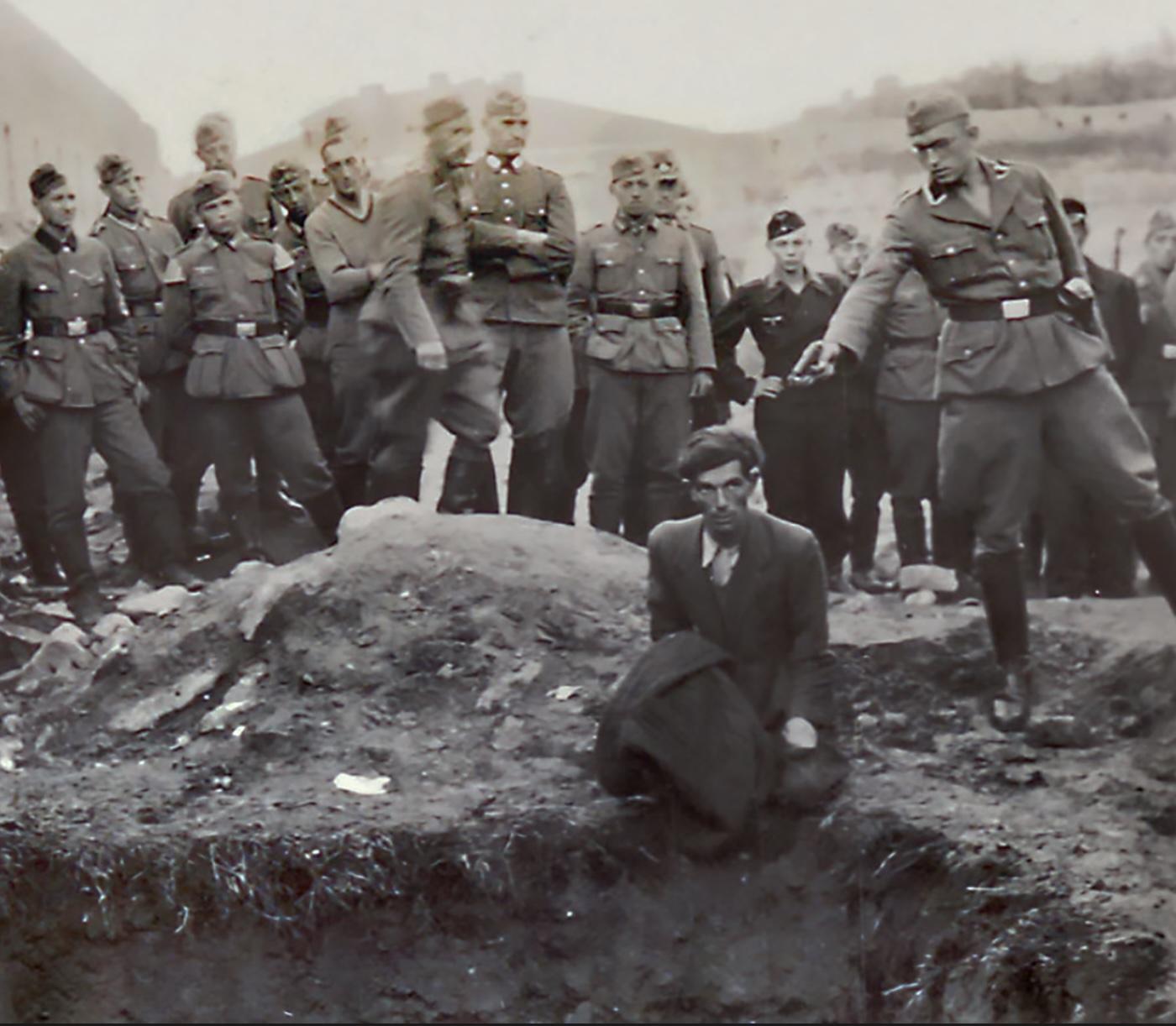
The methods used by Einsatzgruppe C were brutally direct. Victims were typically rounded up through deception or force, marched to ravines, forests, or prepared pits, ordered to undress, and then shot at close range. Mass graves were filled layer by layer with bodies. One of the most infamous atrocities carried out by the group was the massacre at Babi Yar, a ravine on the outskirts of Kyiv, where over two days in late September 1941, approximately 33,771 Jewish men, women, and children were murdered. This operation was meticulously organized, involving cordons of guards, logistical coordination, and written reporting that treated mass killing as an administrative task.
Beyond Babi Yar, Einsatzgruppe C conducted hundreds of smaller massacres across Ukraine. Entire Jewish communities were wiped out in towns and villages, sometimes with the participation or assistance of local collaborators, sometimes solely by German personnel. Victims were often forced to witness the murder of family members before being killed themselves. In some instances, children were thrown alive into pits or shot separately because the killers believed bullets should not be “wasted” on them individually. These acts were recorded in situation reports sent back to Berlin, where numbers killed were tallied with chilling precision.
Estimates of the total number of people murdered by Einsatzgruppe C vary, but surviving documentation indicates that by the end of 1941 the group had killed at least 118,000 people, the overwhelming majority of them Jews. Many historians believe the true number is significantly higher, potentially reaching 150,000 or more when unrecorded killings and later actions are included. These murders formed a crucial bridge between earlier Nazi persecution and the later industrialized killing carried out in extermination camps, demonstrating that genocide on a massive scale was already being implemented through bullets before gas chambers became central.
An especially grim aspect of Einsatzgruppe C’s history is its later involvement in attempts to erase evidence of its crimes. Under orders linked to Operation 1005, Paul Blobel was tasked with overseeing the exhumation and burning of mass graves, including those at Babi Yar, in an effort to conceal the scale of the killings as the Red Army advanced. Prisoners were forced to dig up decomposing corpses and burn them on pyres before being murdered themselves.
After the war, some leaders of Einsatzgruppe C were brought to trial. Otto Rasch avoided prosecution due to claimed ill health and died in custody, while Paul Blobel was convicted at the Einsatzgruppen Trial in Nuremberg and executed in 1951. Despite these trials, many perpetrators reintegrated into postwar society, and the full scope of the group’s crimes only became widely understood through decades of historical research.
Einsatzgruppe C stands as one of the clearest examples of how genocide can be carried out through ordinary administrative structures, professional men, and systematic obedience.