Dulag-Luft
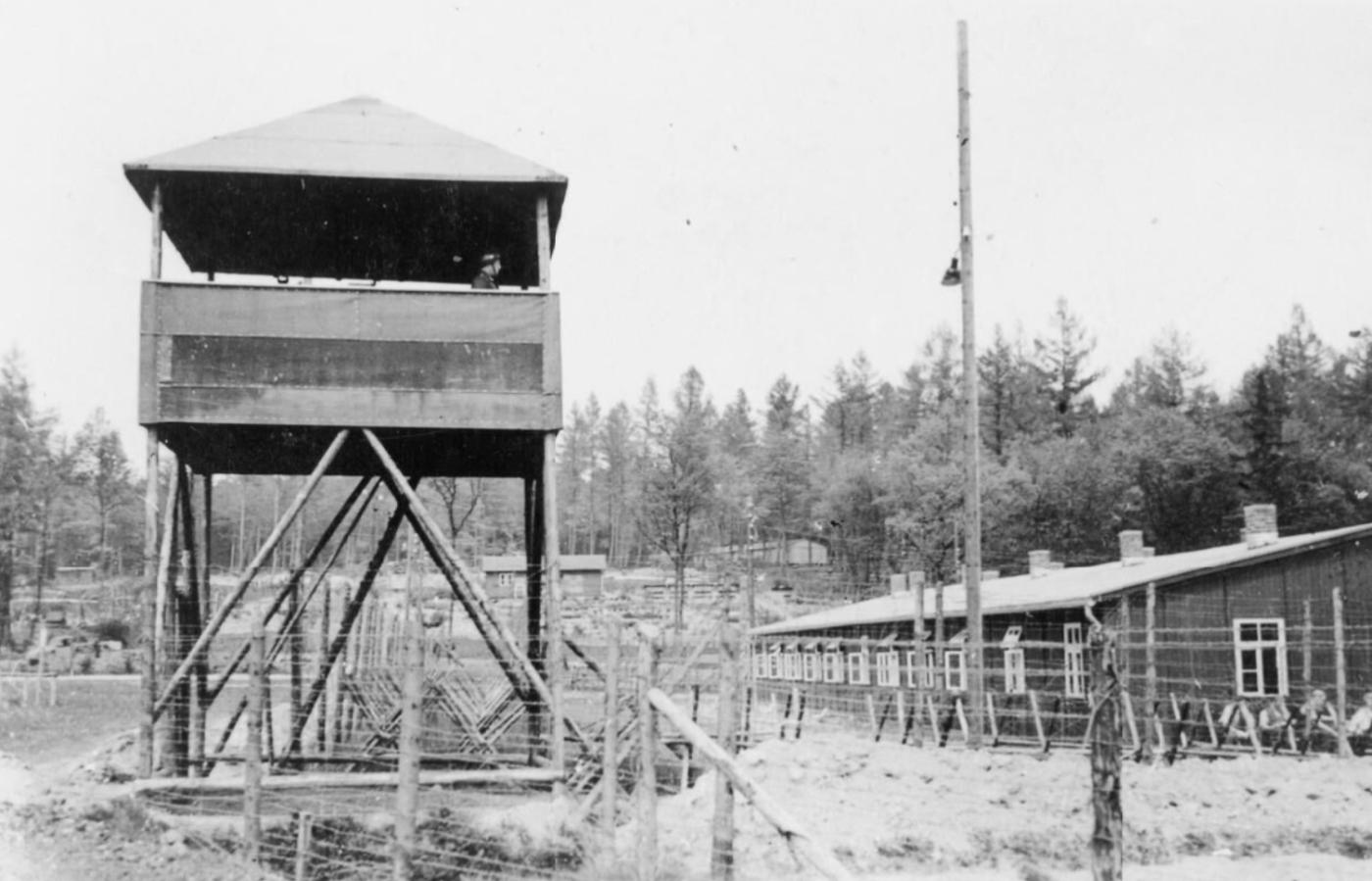
Dulag-Luft, short for Durchgangslager der Luftwaffe, was the central interrogation and transit camp used by the German Luftwaffe for captured Allied aircrew during the Second World War. Located near Frankfurt-am-Main at Oberursel, the camp occupied a pre-war Luftwaffe barracks complex and became one of the most significant intelligence-gathering centres of the air war. Almost every Allied flyer shot down over Europe who survived capture passed through Dulag-Luft at some point, making it a place remembered vividly by tens of thousands of former prisoners.
The camp’s primary purpose was not long-term imprisonment but interrogation. Captured airmen were brought to Dulag-Luft as quickly as possible after capture, often within days, while details of their missions were still fresh. Interrogation was conducted by specially trained Luftwaffe intelligence officers, many of whom spoke excellent English and had a detailed understanding of Allied units, aircraft types, and operational procedures. The Germans relied far more on psychology and deception than on physical coercion. The use of violence was rare, not out of humanitarian concern but because it was counterproductive to extracting reliable information and risked reprisals against German prisoners held by the Allies.
A distinctive feature of Dulag-Luft was the level of sophistication employed in intelligence gathering. Prisoners were often placed in solitary cells and encouraged to talk casually with guards or fellow inmates who were in fact planted informants. Microphones were hidden in walls and ceilings, and conversations were secretly recorded. Interrogators would sometimes confront prisoners with accurate information about their squadron or aircraft to create the impression that resistance was futile, hoping the prisoner would fill in gaps without realising it. Even the camp’s hospital and exercise areas were monitored for overheard conversations. Despite this, most Allied airmen had been trained in resistance techniques and limited their responses to name, rank, and number, though exhaustion, injury, and confusion meant that some information inevitably slipped through.
Living conditions at Dulag-Luft were relatively austere but generally better than in many other German camps. As a Luftwaffe-run facility, it benefited from a degree of rivalry with the German Army, and the Luftwaffe took pride in presenting itself as more professional and “honourable.” Prisoners were housed in small cells or shared rooms, fed basic rations, and allowed limited exercise. Red Cross parcels, when available, made a considerable difference to morale and nutrition. The stay at Dulag-Luft usually lasted from a few days to several weeks, after which prisoners were transferred to permanent camps such as Stalag Luft I, III, or VII.
One of the most interesting aspects of Dulag-Luft was its role as a clearinghouse of information in both directions. While the Germans interrogated prisoners, Allied intelligence later learned a great deal about German methods through debriefings of repatriated airmen. After the war, Dulag-Luft became a case study in intelligence tradecraft, illustrating both the strengths and limitations of psychological interrogation. Many former prisoners later admitted that while they believed they had resisted effectively, the Germans often learned more from casual remarks, body language, and comparisons with known data than from direct questioning.
Escape attempts from Dulag-Luft were rare, largely because prisoners were only held there temporarily and were under close supervision. Nevertheless, some airmen tried to test security, mapping the camp or noting guard routines, partly out of habit and partly to maintain a sense of agency. These observations later proved useful in permanent camps, where escape planning became far more active. A small number of prisoners managed to pass coded information to others before being moved on, contributing to the wider Allied prisoner resistance network.
As the war neared its end, Dulag-Luft processed increasing numbers of captured airmen as Allied bombing intensified. In early 1945, with American ground forces approaching, the camp was evacuated. Records were destroyed or removed, and prisoners were moved eastward to avoid liberation. The site was eventually captured by U.S. forces in March 1945, bringing its wartime role to an end.
After the war, the Oberursel site was used by the U.S. Army and later became part of a residential area. Today, little remains of the original camp structures, but memorials and historical studies ensure that Dulag-Luft is not forgotten. For many former prisoners, it remained one of the most psychologically intense experiences of their captivity, not because of brutality, but because it was the moment when survival, secrecy, and the wider air war all converged in a quiet room with an apparently friendly interrogator asking seemingly harmless questions.