On this day in military history…
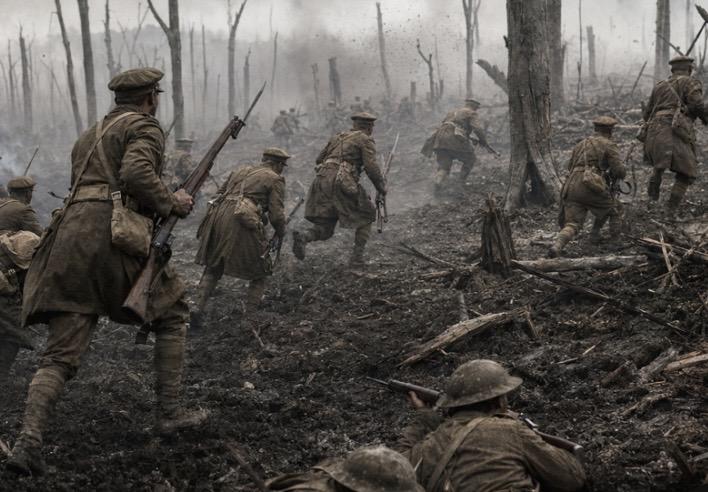
The Battle of Delville Wood was one of the most savage and exhausting struggles fought during the Battle of the Somme, becoming forever associated with the courage and sacrifice of the 1st South African Infantry Brigade. Fought near the ruined village of Longueval in northern France, the main struggle began on 15 July 1916 and continued through a succession of attacks and counter-attacks until early September. To the soldiers who entered its shattered interior, the place soon became known as “Devil’s Wood”, an appropriate name for a battlefield reduced to broken trees, burning undergrowth, shell holes, corpses and mud.
Delville Wood stood immediately east of Longueval and formed an important part of the German second defensive position on the Somme. Before the war it had been a dense area of beech, hornbeam and hazel, divided by a network of paths and grassy rides. Its possession was vital because troops holding the wood could dominate the approaches to Longueval and protect the flank of any advance towards the German positions around Ginchy and Guillemont. Unless the wood was captured and cleared, British troops attempting to move forward across the surrounding ground would remain exposed to machine-gun and artillery fire.
The struggle developed from the British attack on Bazentin Ridge during the early hours of 14 July 1916. The operation was one of the more successful attacks of the Somme offensive and initially caught the German defenders by surprise. British troops broke into sections of the German second line and captured several important positions, but Longueval and Delville Wood remained contested. The 9th Scottish Division was ordered to secure the village, while its attached 1st South African Infantry Brigade was given the task of capturing and holding the wood.
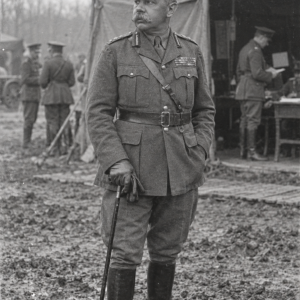
The South African brigade was commanded by Brigadier-General Henry Timson Lukin, an experienced soldier who had previously fought in southern Africa. His formation consisted of four infantry battalions representing different parts of the Union of South Africa. The 1st South African Infantry Regiment drew heavily from the Cape Province, the 2nd from Natal and the Orange Free State, the 3rd from the Transvaal and Rhodesia, while the 4th South African Scottish Regiment included men with strong Scottish connections and traditions.
During the fighting around Longueval, Lieutenant-Colonel William Ernest Tanner of the 2nd South African Infantry Regiment was placed in command of the force ordered into Delville Wood. His instructions were uncompromising. The South Africans were to capture the wood and hold it at all costs. Although this phrase was frequently used during the First World War, at Delville Wood it was to be followed with dreadful consequences.
Shortly after dawn on 15 July, South African troops entered the southern part of the wood. They met limited resistance at first and pushed forward rapidly, clearing much of the position. The Germans continued to occupy parts of the north-western corner and maintained control of several approaches leading towards the wood. This left the South Africans in a dangerously exposed position, with German forces able to fire into them from several directions.
Tanner ordered his men to establish a defensive perimeter and strengthen the network of trenches running through the wood. Digging proved extremely difficult. The soldiers possessed too few proper entrenching tools, while the ground was filled with roots and fallen timber. The shallow trenches they constructed offered little protection from heavy artillery shells. Telephone lines to brigade headquarters were repeatedly cut, runners were killed or wounded and ammunition, water and food became increasingly difficult to bring forward.
The German commanders quickly recognised the importance of Delville Wood and began preparing powerful counter-attacks. German artillery subjected the South African positions to an almost continuous bombardment. High-explosive shells ripped apart the trees, throwing branches, splinters and pieces of iron across the battlefield. Men could be killed not only by shell fragments but by great sections of timber hurled through the air. Gas shells were also used, adding to the misery and confusion.
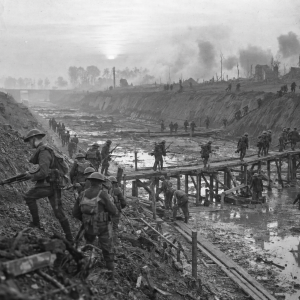
The wood rapidly changed beyond recognition. Trees were stripped of their leaves and branches, fires burned among the fallen timber and the earth was churned into a maze of overlapping shell holes. Thick smoke and dust made it difficult for officers to understand what was happening only a short distance away. Units became mixed together, wounded men lay trapped between the lines and the position of the enemy was often uncertain.
German infantry attacked repeatedly from the north and east. Some assaults developed into close-range firefights among the tree stumps, while others ended in grenade battles and hand-to-hand fighting. Machine guns were positioned along the rides and fired down the narrow clearings whenever groups of soldiers appeared. Men fought from shell holes, behind shattered tree trunks and from the remains of hastily constructed trenches.
The South Africans were not alone in the wider battle. British troops continued fighting through Longueval and attempted to secure the western edge of the wood, while artillery batteries supported the defenders whenever communications allowed accurate targets to be reported. Nevertheless, the brigade inside the wood often felt isolated. The Germans were able to concentrate artillery fire on the position, knowing that the defenders had little space in which to manoeuvre or withdraw.
One of the most serious German attacks came on 18 July after an exceptionally heavy bombardment. Shells fell throughout the wood with such intensity that the landscape appeared to be boiling. German infantry then pushed forward from several directions, forcing their way into parts of the South African perimeter. Lieutenant-Colonel Tanner was wounded and command passed to Lieutenant-Colonel Edward Francis Thackeray of the 3rd South African Infantry Regiment.
Thackeray established his headquarters in the south-western area of the wood and continued directing the defence under almost impossible conditions. He received orders that the wood must still be held. Groups of men who had become separated from their units continued fighting wherever they found themselves. Officers, signallers, stretcher-bearers and headquarters staff were drawn into the battle as the strength of the defending battalions steadily disappeared.
Water became one of the greatest problems. The July heat, smoke, exertion and dust left the men desperately thirsty. Water parties attempting to cross the exposed approaches were frequently struck by shellfire. The wounded suffered terribly, and many men survived on whatever liquid could be found in abandoned bottles or shell holes. Food was almost impossible to distribute, and some soldiers fought for several days with little or nothing to eat.
Medical arrangements were overwhelmed. Regimental aid posts were crowded with wounded men, and stretcher-bearers repeatedly risked their lives carrying casualties through the bombardment. In many places the shelling was so severe that the wounded could not be reached. Soldiers were forced to listen to their comrades calling for help from areas that could not be crossed in daylight.
The South African defenders were gradually compressed into a smaller section of the wood. German troops recovered parts of the northern and eastern edges, but they were unable to destroy the brigade completely or force it from every position. The battle became a test of endurance in which small groups held isolated trenches and shell holes despite exhaustion, thirst and the loss of many of their officers.
Relief was attempted several times, but German artillery made the movement of fresh troops extremely dangerous. British units entering the wood often suffered casualties before reaching the South African positions. Confusion over the location of friendly and enemy forces also made artillery support difficult. A bombardment falling only a few yards short could be as dangerous to the defenders as German fire.
By 20 July the surviving South Africans were finally ordered to withdraw and were relieved by troops of the 3rd Division. Thackeray emerged from the wood with a small and exhausted group of survivors. Their uniforms were torn and filthy, many had lost their equipment and almost every man had witnessed the death or wounding of close friends.
The exact casualty totals vary slightly between accounts, partly because men listed as missing later returned or were confirmed as prisoners. The brigade had entered the fighting with more than 3,000 officers and men. After six days of combat, only a fraction were able to parade when the survivors were assembled. Around 2,300 had been killed, wounded or reported missing, making Delville Wood one of the costliest actions in South African military history.
The withdrawal of the brigade did not end the battle. British and German troops continued fighting for possession of the shattered ground throughout July and August. Sections of the wood changed hands repeatedly as fresh units were sent forward. The Germans constructed new positions, while British forces launched further attacks supported by artillery.
The fighting was especially difficult because neither side could establish a secure and clearly defined front line. A trench occupied during the morning might be abandoned, destroyed or captured before nightfall. Patrols moved among the shell holes, snipers operated from the remains of trees and sudden machine-gun fire could come from an apparently empty part of the wood.
Delville Wood was not considered completely secured until 3 September 1916, when British forces advanced during a wider attack towards Ginchy. By then the original woodland had almost ceased to exist. Contemporary photographs show an open wasteland of splintered trunks and churned earth. Of the thousands of trees that had once covered the area, only one hornbeam is traditionally believed to have survived the destruction. Known as the Last Tree, it still stands within the memorial grounds today.
The battle produced numerous acts of bravery, although many were never formally recorded. Communications runners crossed ground swept by artillery and machine-gun fire, stretcher-bearers repeatedly returned for wounded comrades and small groups continued defending positions after losing contact with their officers. The stubborn defence prevented the Germans from easily recovering the entire wood and helped protect the gains made during the attack on Bazentin Ridge.
Delville Wood also revealed many of the problems that affected British operations during the Somme campaign. Troops were ordered to hold a position that formed a dangerous salient surrounded on three sides. Communications were unreliable, relief arrangements broke down and commanders away from the front often possessed only a limited understanding of the conditions inside the wood. The order to hold at all costs left local commanders with little freedom to shorten their line or withdraw to more defensible ground.
The German defenders also suffered severely. German infantry regiments were repeatedly pushed into the wood to recover lost positions and endured the same artillery fire, thirst, confusion and close-quarter fighting as their opponents. German accounts describe a battlefield filled with smoke, destroyed trees and bodies, where direction was easily lost and units could disappear during a single bombardment.
For South Africa, Delville Wood became a national symbol comparable to Gallipoli for Australia and New Zealand or Vimy Ridge for Canada. The 1st South African Infantry Brigade included English-speaking and Afrikaans-speaking volunteers who had travelled thousands of miles to fight on the Western Front. Their conduct was presented as an example of unity and shared sacrifice within the young Union of South Africa, although the country’s wider wartime contribution also included thousands of Black, Coloured and Indian South Africans serving in labour, transport and support formations.
After the war, the site was purchased by the South African author and politician Sir Percy FitzPatrick and presented to South Africa for use as a memorial. The wood was replanted, although its present appearance is very different from the dense woodland of 1916. The South African National Memorial was designed by Sir Herbert Baker, with sculpture by Alfred Turner, and was unveiled on 10 October 1926.
The central memorial includes a bronze sculpture of two figures representing Castor and Pollux controlling a war horse, intended to symbolise the unity of South Africa’s English-speaking and Afrikaans-speaking communities. The memorial was dedicated not only to the men who fought at Delville Wood but to South Africans who served and died in the different theatres of the First World War.
Unlike several other national memorials on the Western Front, the original Delville Wood memorial did not carry long lists of the missing. South African soldiers with no known grave were commemorated alongside British servicemen on Commonwealth memorials such as Thiepval. A museum was later constructed behind the memorial, and the site eventually developed into a place commemorating South Africans who served in later conflicts as well.
Opposite the wood stands Delville Wood Cemetery, created after the Armistice when graves were brought in from isolated battlefield sites and smaller cemeteries. It contains more than 5,500 First World War burials, most connected with the Somme fighting of 1916. More than half of those buried there remain unidentified, a reminder of the destructive force of the artillery and the difficulty of recovering and identifying men from the battlefield.
Delville Wood occupies a special place in the history of the Somme because it combined the worst features of trench warfare with the confusion of fighting inside dense woodland. Artillery destroyed the natural cover, communications disappeared, units became fragmented and soldiers fought at extremely close range. The wood offered little protection but was too strategically important for either side to abandon.
The South Africans had been ordered to hold the position at all costs, and they obeyed until their brigade had almost ceased to exist as an effective fighting formation. Their stand did not bring a decisive breakthrough, and the wider Somme offensive continued for several more months, but their courage became one of the enduring stories of the First World War.
Today Delville Wood is quiet once again, its replanted trees surrounding carefully preserved trenches, memorials and the solitary Last Tree. Yet beneath the peaceful woodland lie the remains of the battlefield and men who were never recovered. The name Delville Wood continues to represent endurance under impossible conditions and the terrible price paid for a few hundred yards of devastated ground during the summer of 1916.