On this day in military history…
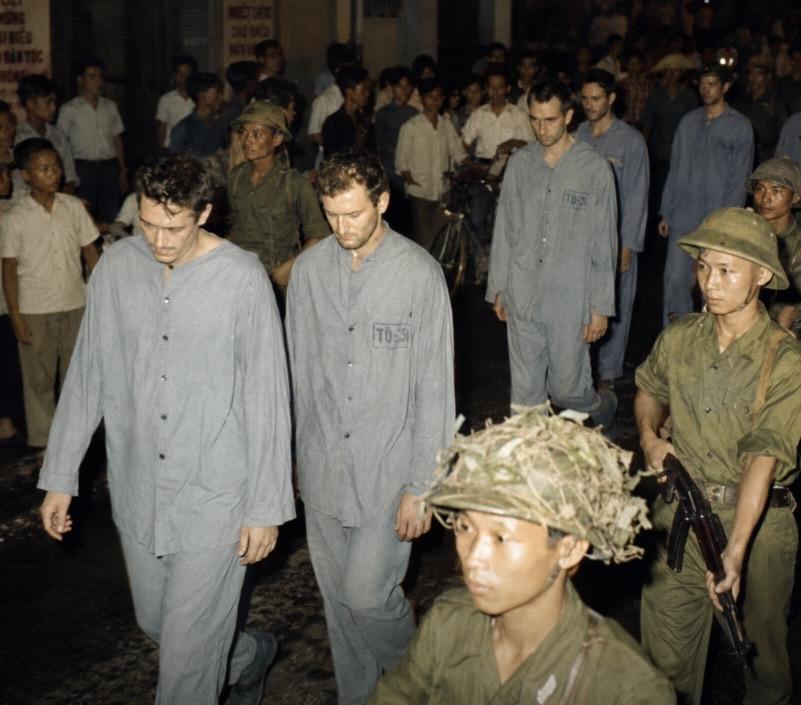
On 6 July 1966, one of the most disturbing episodes involving American prisoners of war during the Vietnam War took place in Hanoi, when around fifty captured U.S. servicemen were forced through the streets of the North Vietnamese capital in front of a large and hostile crowd. The event became known as the Hanoi March, although for the men who were made to take part, it was not a march in any honourable sense. It was a public humiliation, arranged as a propaganda display, intended to show captured American airmen as defeated enemies before the people of North Vietnam.
The men involved were mostly U.S. pilots and aircrew who had been shot down during the expanding American air campaign over North Vietnam. By 1966, American aircraft were striking bridges, roads, fuel depots, supply routes and military targets connected to Hanoi’s war effort. Every aircraft brought down was treated by North Vietnam as proof that American power could be resisted, and every captured pilot became useful for propaganda. These prisoners were valuable because they represented the strength of the United States, but in captivity they were isolated, weakened and completely under the control of their captors.
On that July day, 52 American prisoners were taken from camps west of Hanoi and prepared for a staged public display. They were given numbered shirts, bound, paired together and moved into the city. Many did not know exactly what was about to happen, but they understood they were being used for something political. They had already endured interrogation, harsh treatment, hunger, fear and uncertainty, and now they were being taken out of the prison system and placed directly in front of a crowd.
The North Vietnamese authorities intended the march to be carefully controlled. The prisoners were to be shown as captured invaders who had bombed North Vietnam and were now powerless. They were marched through the streets in pairs, unable to defend themselves, while civilians gathered in large numbers along the route. It was meant to be a dramatic image of victory for Hanoi, a message to its own people and to the wider world that American air power could be beaten.
What followed became far more violent than a simple propaganda parade. The crowd became aggressive and the atmosphere quickly turned dangerous. People shouted abuse, surged forward, spat at the prisoners, punched and kicked them, and threw objects as they were forced along the streets. Some of the men were struck repeatedly as they tried to keep moving. Because they were bound and closely guarded, they had no way to protect themselves. The guards either could not fully control the crowd or chose not to do so, leaving the prisoners exposed to the anger of civilians who had been stirred by years of war and bombing.
For the prisoners, the fear must have been extreme. Inside the camps they had already faced brutality, but at least the danger usually came from guards and interrogators. On the streets of Hanoi they were surrounded by thousands of people, many of them enraged, and there was no certainty that the crowd would stop short of killing them. The men were bruised, battered and humiliated as they were dragged through the city. What had been planned as a show of strength became a scene of cruelty and disorder.
The Hanoi March also revealed the psychological nature of the Vietnam War. North Vietnam wanted to present the captured Americans not as normal prisoners of war, but as criminals who had attacked its towns, roads and people from the air. The men were being displayed as symbols rather than treated as human beings. Their uniforms, names and personal stories did not matter to the crowd. They were simply shown as the enemy, and once that happened the event became almost impossible to control.
To the United States and to the families of prisoners, the march later became one of the clearest examples of how badly American POWs could be treated in North Vietnam. Prisoners of war were supposed to be protected from public humiliation and violence, yet these men had been deliberately placed before a hostile crowd while restrained and helpless. The incident helped confirm fears that captured servicemen were not only being held, but also exploited for propaganda and intimidation.
Many of the men forced through Hanoi on 6 July 1966 would remain in captivity for years. Some were not released until 1973, after the Paris Peace Accords and Operation Homecoming brought many American prisoners back to the United States. By then, the Hanoi March had become part of the grim memory of life as a prisoner in North Vietnam. It was remembered not only because of the number of men involved, but because of the deliberate public nature of the humiliation.
The march stands as one of the most shameful prisoner episodes of the Vietnam War. It was designed to show American weakness, but it also revealed the vulnerability and endurance of men who had no weapons, no freedom and no protection from the anger around them. Forced through the streets in handcuffs, beaten and *blocked text* by civilians, they became unwilling actors in a propaganda display that turned into mob violence.
For North Vietnam, the event was meant to be a victory scene. For the prisoners who survived it, it was another chapter in years of captivity, fear and resistance.