On this day in military history…
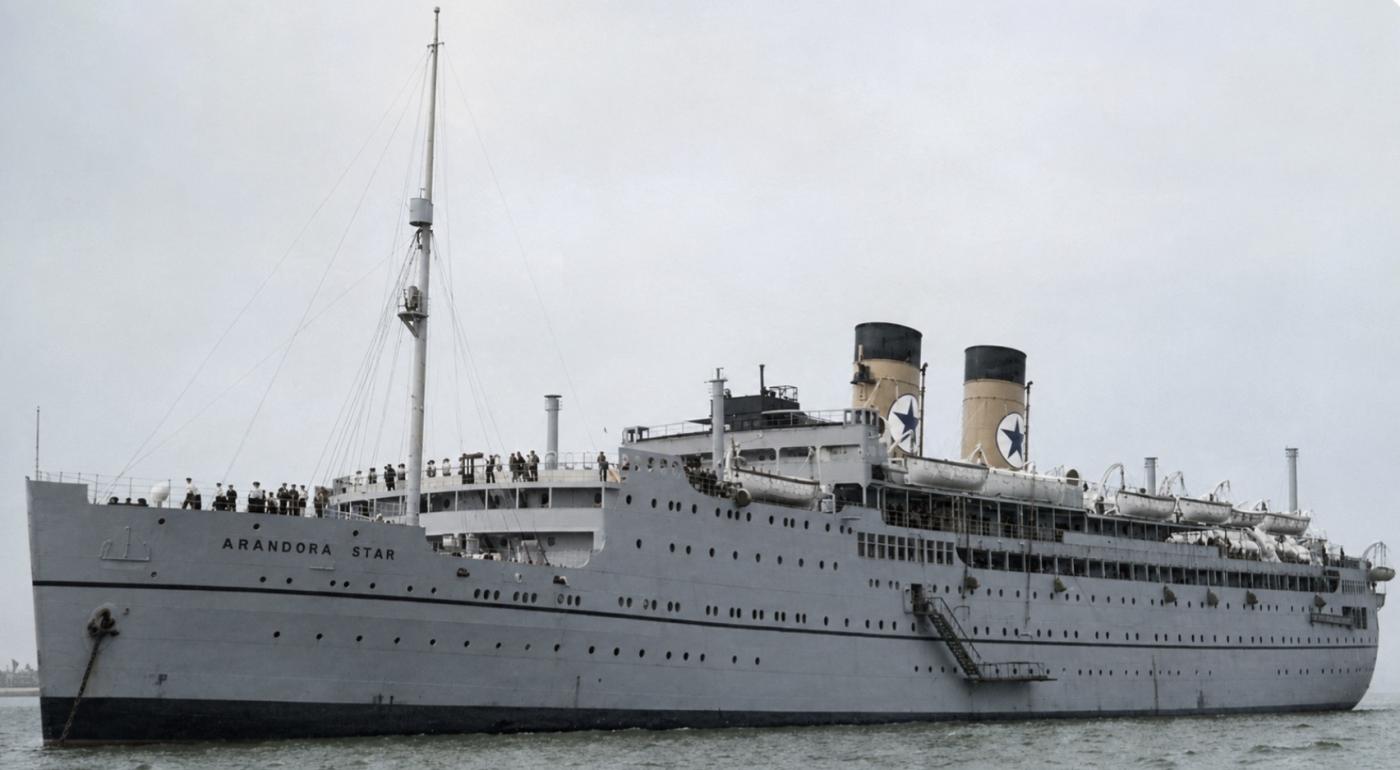
The SS Arandora Star was one of the most tragic British merchant ship losses of the Second World War. She was not a warship in the usual sense, but a former luxury passenger liner that had been taken into wartime service. On 2 July 1940, while sailing from Liverpool to St John’s, Newfoundland, she was torpedoed and sunk by the German submarine U-47. The attack took place in the North Atlantic, off the north-west coast of Ireland, about 75 miles west of Bloody Foreland in County Donegal, with the ship later foundering in the area of 56°30’N, 10°38’W. More than 800 people died.
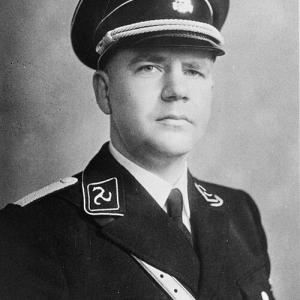
The U-boat responsible was U-47, one of the most famous German submarines of the early war. It was commanded by Kapitänleutnant Günther Prien, already celebrated in Germany for the daring sinking of the British battleship HMS Royal Oak at Scapa Flow in October 1939. U-47 was a Type VIIB submarine, a long-range attack boat suited to Atlantic operations. By the summer of 1940, U-boats were hunting shipping around Britain as part of the Battle of the Atlantic, and merchant vessels sailing without escort were in grave danger.
The Arandora Star had begun life very differently. Built by Cammell Laird at Birkenhead and launched in 1927, she was owned by the Blue Star Line. In peacetime she was known as a handsome passenger liner and cruise ship, sometimes nicknamed “the Wedding Cake” because of her light-coloured paintwork and elegant appearance. She had carried wealthy passengers on cruises to places such as the Mediterranean, Norway, the West Indies and South America. By 1940, however, her luxury fittings and peaceful career belonged to another world.
After Italy entered the war on Germany’s side on 10 June 1940, the British government began mass arrests and internment of many Italians living in Britain. Some were genuine Fascist sympathisers, but many were ordinary civilians who had lived in Britain for years, owned businesses, had British families, or had sons serving in the British forces. German and Austrian civilians were also interned, including some Jewish refugees who had fled Nazi persecution. The policy was driven by fear of invasion and sabotage, but it produced many injustices.
The Arandora Star was chosen to carry internees and prisoners of war across the Atlantic to Canada. On her final voyage she carried Italian internees, German internees, German prisoners of war, military guards, and her own crew. Figures vary slightly between sources, but a commonly given breakdown is 734 Italian internees, 479 German internees, 86 German prisoners of war, 200 military guards and 174 crew. Her master was Captain Edgar Wallace Moulton.
The ship left Liverpool unescorted. This remains one of the most debated parts of the tragedy. She was carrying civilians and prisoners, but she was not marked as a protected hospital ship or Red Cross vessel. She also carried military guards and was part of Britain’s wartime transport system, so to a German U-boat commander she appeared as a legitimate enemy ship. From the British side, the decision to send her alone reflected the desperate shortage of escorts in 1940, when Britain faced invasion fears, the evacuation from Dunkirk had only recently taken place, and the Royal Navy was stretched across many duties.
Early on the morning of 2 July 1940, U-47 sighted the Arandora Star in the Atlantic. Prien fired a torpedo. It struck the starboard side, damaging the engine-room area and cutting power. The loss of electricity meant lights, communications and pumps were badly affected. The ship began to take on water and list. A distress signal was sent, but the damage had been devastating.
The evacuation was chaotic and terrifying. The ship carried lifeboats and rafts, but not all could be launched successfully. Some lifeboats were damaged or unusable after the explosion. Many passengers were trapped, confused, or frightened. Some internees had difficulty understanding orders, and some may not have trusted the crew or guards after their sudden arrest and deportation. There were also reports that parts of the ship were enclosed with barbed wire, which became one of the most bitter memories of the disaster, although accounts differ on exactly how much it obstructed escape.
Captain Moulton and many of his officers remained at their posts. The ship sank quickly, rolling over and going down by the bow. Men were thrown into the cold Atlantic, clinging to wreckage, rafts, or overturned boats. The sea was littered with survivors, bodies, and debris. For those in the water, the danger did not end with the sinking: exposure, injury and exhaustion killed many before rescue arrived.
A Royal Air Force Sunderland flying boat later found survivors and dropped supplies, including first aid material and food. The Canadian destroyer HMCS St Laurent arrived and rescued hundreds of men. Around 868 survivors were picked up, but the loss of life was appalling. Uboat.net lists the dead as including Captain Moulton, 12 officers, 42 crewmen, 37 guards, 470 Italians and 243 Germans. In total, around 805 people were lost.
The sinking was especially devastating for Britain’s Italian communities. Many of the men on board had been taken from homes, cafés, fish-and-chip shops, ice-cream businesses, restaurants and workshops across Britain. Families often did not know where they had been sent until after the disaster. In towns and cities with strong Italian communities, including Glasgow, Liverpool, Manchester, London, Middlesbrough and parts of Wales and Scotland, the news brought shock and anger. For many families, the Arandora Star became not only a wartime loss but a symbol of injustice.
Bodies from the Arandora Star were later washed ashore along the west coast of Ireland and the Hebrides. Some were identified and buried locally; others remained unknown. Irish communities, although Ireland was neutral, treated the dead with dignity. Graves and memorials connected with the disaster can still be found in Ireland, Scotland, England and Wales.
The sinking also had political consequences. It exposed the danger of transporting internees overseas in ordinary ships during the U-boat war. It also added to criticism of Britain’s internment policy, especially the treatment of Italians and anti-Nazi German refugees. The government did not immediately abandon internment, but over time many cases were reviewed and many internees were released.
Günther Prien and U-47 continued operations after sinking the Arandora Star. Prien remained a famous figure in Nazi propaganda, but his career ended less than a year later. U-47 disappeared in the North Atlantic in March 1941 and was lost with all hands. The exact circumstances of her loss remain uncertain.
The Arandora Star disaster is remembered today because it sits at the intersection of naval war, civilian fear, government policy and personal tragedy. It was not simply the story of a ship sunk by a U-boat. It was the story of a luxurious liner turned into a wartime transport, of civilians suddenly treated as enemies, of a country acting under invasion panic, and of hundreds of men dying far from home in the Atlantic. The date, 2 July 1940, remains a day of remembrance for the descendants of those who died and for the communities that still carry the memory of the ship.