On this day in military history…
Operation Catapult was one of the most painful and controversial British naval actions of the Second World War. It began on 3 July 1940, only days after France had signed an armistice with Nazi Germany, and it forced Britain into the shocking position of turning its guns on the fleet of a country that had been its ally only weeks earlier.
The background to the operation lay in the dramatic collapse of France in June 1940. German forces had swept through the Low Countries and France with extraordinary speed, Paris had fallen, and the French government had sought terms. The armistice between France and Germany was signed on 22 June 1940 and came into effect on 25 June. Britain now stood almost alone against Hitler in western Europe. To Winston Churchill and the British War Cabinet, one question immediately became urgent: what would happen to the powerful French Navy?
The French fleet was one of the largest in the world. It included modern battleships, battlecruisers, cruisers, destroyers, submarines and colonial vessels spread across ports in Britain, North Africa, the Caribbean, Alexandria and France itself. If these ships fell into German or Italian hands, the balance of naval power in the Atlantic and Mediterranean could shift dangerously. Britain depended on sea routes for food, oil, weapons and imperial communications. The Royal Navy was strong, but it was already stretched guarding the Atlantic, the Mediterranean, home waters and overseas possessions. Even the possibility that Germany might gain access to French ships was viewed in London as a threat to Britain’s survival.
The French, for their part, insisted that the fleet would never be handed over to Germany. Admiral François Darlan, commander of the French Navy, had given assurances that French ships would be scuttled rather than surrendered. The armistice terms also stated that the fleet would be disarmed under French control, not transferred to Germany. But Churchill did not believe Britain could rely on promises, especially from a defeated government now operating under German pressure. The British feared that Hitler might later force the Vichy French regime to change course.
Operation Catapult was the code name for Britain’s plan to neutralise French warships wherever they could be reached. It was not a single battle but a series of coordinated actions. On 3 July 1940, French vessels in British ports were seized by the Royal Navy. These included ships at Portsmouth, Plymouth and other harbours. Most were taken without major bloodshed, although there was violence aboard the submarine Surcouf, where British and French sailors were killed during the boarding. Elsewhere, British commanders were ordered to present French crews with stark choices: join the British and continue the war, sail to a British port, sail to a neutral port, demilitarise under British supervision, or face destruction.
The most famous and tragic part of Operation Catapult took place at Mers-el-Kébir, near Oran, in French Algeria. There, a powerful French squadron lay at anchor under Vice-Admiral Marcel-Bruno Gensoul. The force included the battleships Dunkerque, Strasbourg, Provence and Bretagne, along with destroyers and other vessels. These ships were not in German hands, but to the British they represented a danger too large to ignore.
The British force sent to deal with them was Force H, based at Gibraltar and commanded by Admiral Sir James Somerville. It included the battlecruiser HMS Hood, the battleships HMS Valiant and HMS Resolution, the aircraft carrier HMS Ark Royal, cruisers and destroyers. Somerville was not eager for the mission. Many British naval officers found the idea of attacking the French deeply distressing. British and French sailors had served alongside one another against Germany only weeks earlier, and many in the Royal Navy regarded the order as morally agonising.
Negotiations began on the morning of 3 July. Captain Cedric Holland, who had once served as naval attaché in Paris and spoke French, was sent to communicate British demands. The French were offered several options. They could sail with the British and continue the fight against Germany and Italy. They could sail to British ports with reduced crews. They could sail to the French West Indies or another distant port where the ships could be demilitarised. Or they could scuttle their vessels. If they refused, the British would use force.
The negotiations were tense and slow. Pride, suspicion, protocol and poor communication all played a part in the disaster that followed. Gensoul felt insulted that the British had not sent a senior admiral directly to him at the start. He also did not fully communicate all the British options to his superiors in the most complete form. Meanwhile, the British intercepted signals suggesting that French reinforcements might be on the way. Churchill and the Admiralty pressed Somerville to act before the French squadron could escape or before darkness made action more difficult.
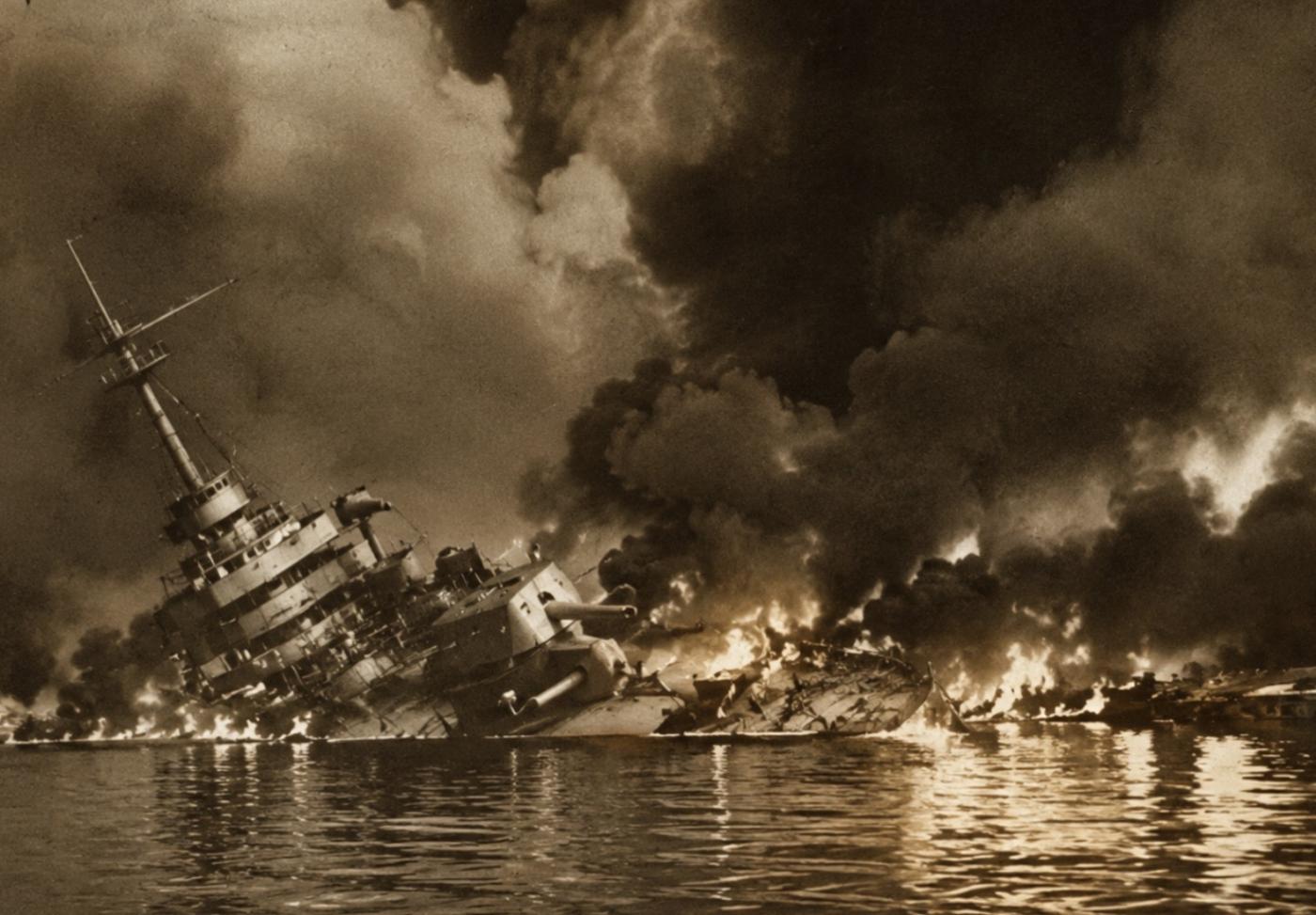
At 5:53 p.m. on 3 July 1940, after the ultimatum expired, the British opened fire. The French ships were moored in a confined harbour, many with their sterns toward the sea, making it difficult for them to manoeuvre or reply effectively. The result was devastating. The old battleship Bretagne was hit, exploded and capsized with terrible loss of life. Provence and Dunkerque were badly damaged. Mogador, a large destroyer, was also hit and crippled. Strasbourg, however, managed to escape from the harbour with several destroyers and eventually reached Toulon.
The main bombardment lasted only a short time, but its consequences were enormous. Around 1,200 to 1,300 French sailors were killed, with many others wounded. British losses were minimal by comparison. For France, the attack was seen by many as a betrayal. For Britain, it was presented as a brutal necessity. Churchill later described the decision as hateful and painful, but argued that it had been essential to show that Britain would continue the war at any cost.
Operation Catapult did not end at Mers-el-Kébir. At Alexandria in Egypt, a British force under Admiral Sir Andrew Cunningham faced a French squadron commanded by Admiral René-Émile Godfroy. There, the outcome was very different. Instead of a battle, patient negotiation produced an agreement. The French ships were immobilised and demilitarised without bloodshed. This contrast has fascinated historians ever since. At Alexandria, personal relations between commanders, local circumstances and calmer diplomacy prevented the tragedy that had unfolded in Algeria.
There were further British attacks after 3 July. On 6 July 1940, aircraft from HMS Ark Royal attacked Dunkerque again at Mers-el-Kébir, causing additional casualties and damage. The British wanted to ensure that the damaged French capital ship could not be quickly repaired and returned to service. This second strike deepened French anger and made reconciliation even harder.
The political consequences were immediate. Vichy France broke off diplomatic relations with Britain. French aircraft carried out retaliatory raids against Gibraltar, though with limited effect. Anti-British feeling increased sharply among many French officers and civilians. The attack also complicated the position of General Charles de Gaulle, who had called on Frenchmen to continue the war from London. To some in France, Britain now looked less like a loyal ally and more like a ruthless power willing to destroy French ships and kill French sailors.
Yet Operation Catapult also had a powerful effect internationally. In the United States, where many people still doubted whether Britain could or would continue fighting, the attack demonstrated Churchill’s determination. Britain had shown that it would take extreme measures rather than negotiate with Hitler or allow strategic assets to fall under Axis influence. The message was grim but clear: Britain was still in the war, and it intended to fight on.
The military value of Operation Catapult remains debated. The French fleet did not, in fact, pass into German service in 1940. Later events showed that many French naval officers remained determined to prevent such an outcome. In November 1942, when Germany moved to occupy Vichy France fully, French crews scuttled the fleet at Toulon rather than let it be seized. This has led some historians to argue that Churchill’s fears, though understandable, may have overestimated the danger of French cooperation with Germany. Others argue that in July 1940 Britain could not afford to gamble its survival on French assurances, however sincerely given.
What makes Operation Catapult so compelling is its tragic moral complexity. It was not a simple case of enemy against enemy. It was a decision made in panic, fear and strategic desperation after the collapse of an ally. The British believed they were preventing a future catastrophe. The French believed they had been attacked without honour by a former friend. Both views contain part of the truth.
For the sailors at Mers-el-Kébir, the arguments of governments and historians came too late. Many died aboard ships that had never fired a shot at Britain. Survivors remembered the sudden violence, the explosions, the burning oil, the trapped men and the sense of disbelief that the shells were British. On the British side, many who took part felt no triumph. They had carried out orders, but the memory of firing on French comrades remained bitter.
Operation Catapult stands as one of the darkest episodes in the history of the Royal Navy and one of the most dramatic examples of Churchill’s wartime leadership. It showed his willingness to make ruthless decisions when he believed Britain’s existence was at stake. It also showed how quickly alliances could fracture under the pressure of defeat. On 3 July 1940, the war at sea entered a new and tragic phase, not because Britain had found a new enemy, but because fear of what might happen next drove it to strike an old friend first.