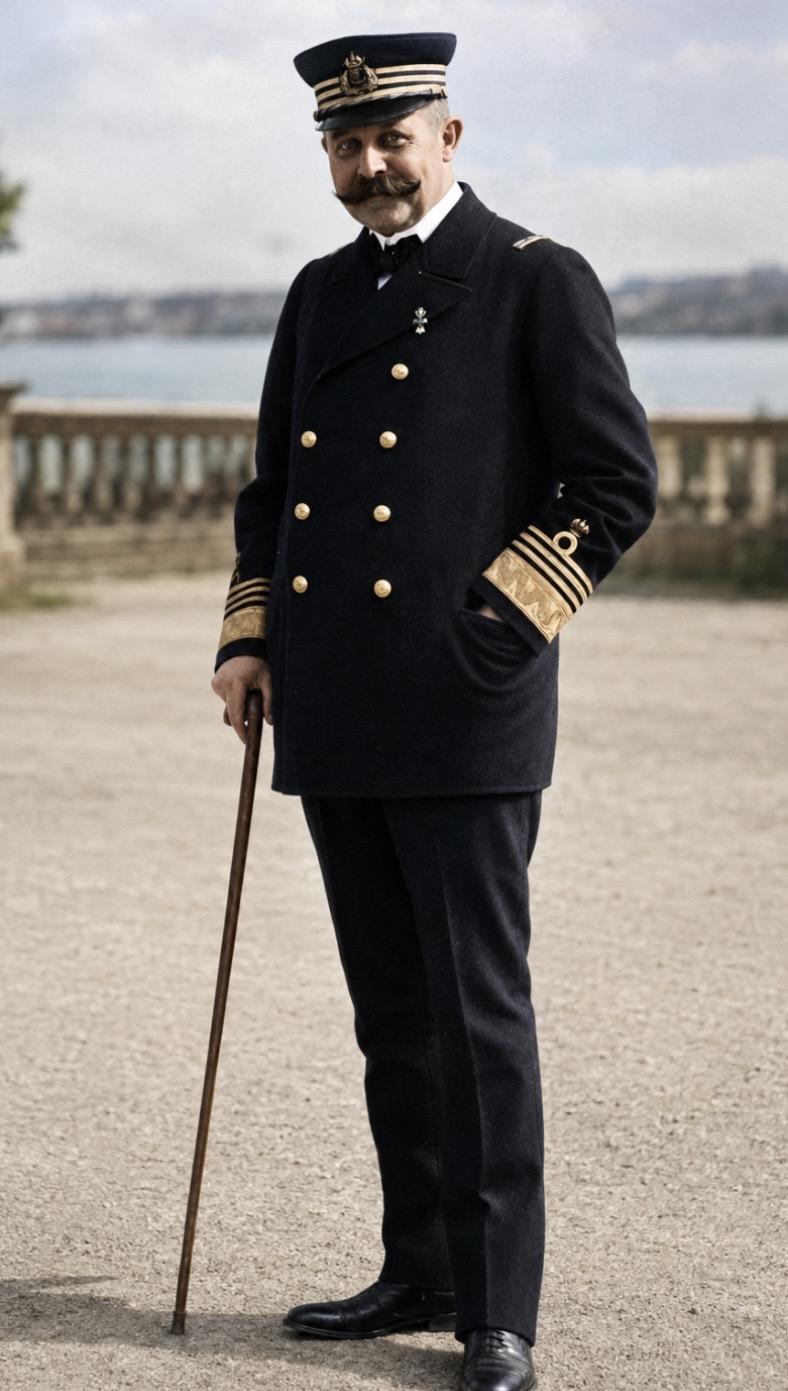
Arch Duke Franz Ferdinand
Archduke Franz Ferdinand of Austria was born on 18 December 1863 in Graz, in the Austrian Empire. He was the eldest son of Archduke Karl Ludwig of Austria and Princess Maria Annunciata of Bourbon-Two Sicilies. As a member of the powerful Habsburg family, he belonged to one of Europe’s most important royal dynasties, although at first he was not expected to become heir to the throne.
His early years were shaped by privilege, discipline, and military training. Like many royals of the time, he was educated privately and prepared for a future role in public life. He entered the Austro-Hungarian army at a young age and rose quickly through the ranks, partly because of his royal status and partly because military service was expected of Habsburg princes. He also travelled widely and developed strong interests in hunting, politics, and the future of the empire.
His importance increased after a series of family tragedies. In 1889, Crown Prince Rudolf, the son of Emperor Franz Joseph, died at Mayerling. This made Archduke Karl Ludwig, Franz Ferdinand’s father, next in line after the emperor. When Karl Ludwig died in 1896, his son became heir presumptive to the Austro-Hungarian Empire, meaning he was expected to become emperor after Franz Joseph.
As heir to the throne, he became a major figure in European politics. He had strong opinions about how the empire should be governed. Austria-Hungary was made up of many different national groups, including Austrians, Hungarians, Czechs, Slovaks, Croats, Serbs, and others. He believed the empire needed reform if it was to survive. He was especially concerned about the power of Hungarian leaders and considered giving more rights to Slavic peoples within the empire. These views made him unpopular with some powerful groups, but they also showed that he understood the serious tensions inside Austria-Hungary.
His personal life also caused controversy. In 1900, he married Sophie Chotek, a Czech noblewoman. Although Sophie came from an aristocratic family, she was not considered equal in rank to a Habsburg archduke. Because of this, their marriage was declared morganatic, meaning Sophie would not share her husband’s royal rank and their children would not inherit the throne. He loved Sophie deeply and accepted these conditions, even though she was often treated as inferior at court.
The assassination took place on 28 June 1914 in Sarajevo, the capital of Bosnia and Herzegovina. At the time, Bosnia was controlled by Austria-Hungary, but many Serbian nationalists wanted it to become part of a greater South Slavic state. He visited Sarajevo with Sophie to inspect military exercises. The date of the visit was highly sensitive because 28 June was Vidovdan, an important day for Serbian national identity.
A group of young Bosnian Serb nationalists planned to kill him because they saw him as a symbol of Austro-Hungarian rule. One of the main groups linked to the plot was the Black Hand, a secret Serbian nationalist organisation. Earlier in the day, one attacker threw a bomb at his car, but it missed and injured others instead. Despite the danger, the visit continued. Later, the driver took a wrong turn, bringing the car close to Gavrilo Princip, one of the assassins. Princip fired two shots, killing both the archduke and Sophie.
He was assassinated because he represented the authority of Austria-Hungary over Bosnia and other Slavic peoples. Nationalists such as Gavrilo Princip believed that killing him would strike a blow against the empire and help the cause of South Slavic independence. However, the assassination had consequences far beyond what the attackers expected. Austria-Hungary blamed Serbia for the murder and issued harsh demands. When Serbia did not fully accept them, Austria-Hungary declared war on Serbia on 28 July 1914. Alliances between the major European powers then turned the conflict into a wider war. This act of violence ultimately led to the beginning off Ww1.