On this day in military history…
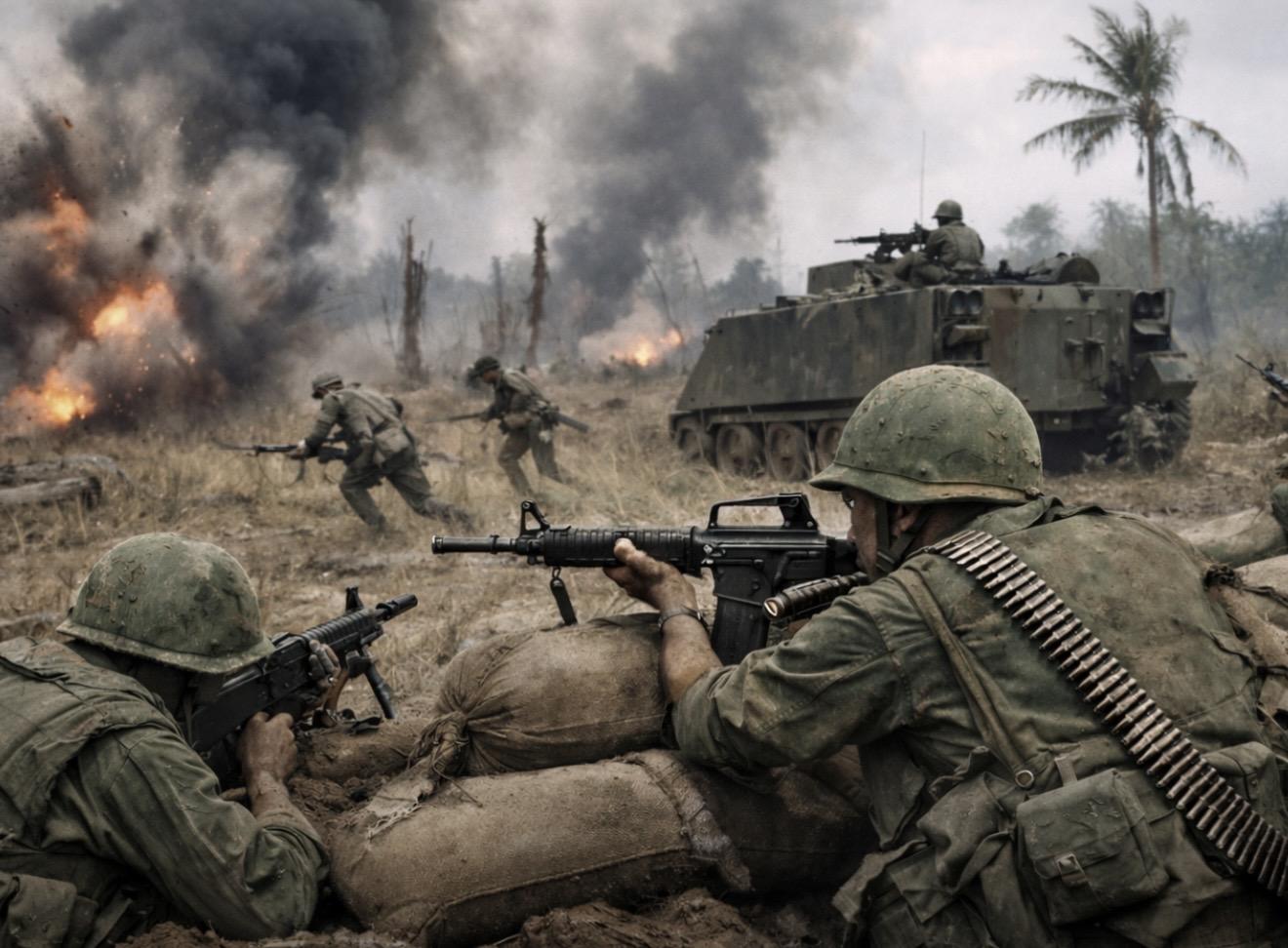
On 13 April 1972 the Battle of An Lộc erupted into one of the most intense confrontations of the Vietnam War, marking a dramatic escalation in the North Vietnamese Easter Offensive. The town of An Lộc, situated in Bình Long Province along Highway 13, held immense strategic value because it lay directly on the main route leading south toward Saigon. Control of this road would allow the People's Army of Vietnam to push deep into South Vietnam and threaten the capital itself, making the town a critical objective in their broader plan to force a decisive outcome in the war.
In the weeks leading up to 13 April, North Vietnamese forces had already begun isolating the area. They captured nearby positions, cut key roads, and encircled An Lộc to prevent reinforcements from reaching the town. By the time the main assault began, the defenders were largely cut off, setting the stage for a prolonged siege. The attacking force consisted of multiple divisions, including the 5th, 7th, and 9th Divisions, supported by armored regiments and heavy artillery. This was not a guerrilla-style attack but a full-scale conventional offensive involving coordinated infantry, tanks, and sustained bombardment.
At dawn on 13 April, the battle began with a massive artillery barrage. Thousands of shells rained down on An Lộc in a concentrated effort to destroy defensive positions and weaken morale. Buildings collapsed, communications were disrupted, and fires spread throughout the town. The bombardment was followed by ground assaults spearheaded by Soviet-designed T-54 tanks and other armored vehicles, a relatively new development in the conflict at this scale. The use of armor signaled a shift in North Vietnamese tactics, reflecting their growing confidence and access to modern equipment supplied by their allies.
The town was defended by units of the Army of the Republic of Vietnam, primarily the 5th Infantry Division, along with Ranger units and local forces. Command of the defense rested with General Lê Văn Hưng, who quickly became central to the battle’s unfolding story due to his determination and refusal to abandon the town. Despite being heavily outnumbered and subjected to continuous bombardment, ARVN troops established defensive positions within the urban environment, turning buildings, rubble, and trenches into strongpoints.
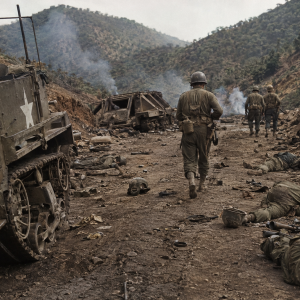
One of the most striking aspects of the opening day was the intensity of the armored assault. North Vietnamese tanks attempted to push directly into the town, aiming to break the defenders quickly through shock and firepower. However, the urban terrain of An Lộc proved difficult for armored maneuver. Narrow streets, debris, and determined defenders slowed the advance. ARVN soldiers used M72 LAW anti-tank weapons at close range, often engaging tanks from concealed positions. Many tanks were destroyed within the town itself, creating obstacles that further hindered the attackers.
Air power played a decisive role almost immediately. Although American ground forces were no longer present in large numbers, the United States provided extensive aerial support. Fighter-bombers struck advancing North Vietnamese units, while helicopter gunships engaged targets within and around the town. Perhaps most significant were the B-52 Stratofortress bombers, which conducted massive strikes on enemy formations outside An Lộc. These strikes were capable of devastating entire units and were often called in at critical moments to halt large-scale assaults.
The first day of the battle also revealed the psychological intensity of the conflict. The combination of constant shelling, close-quarters fighting, and the presence of tanks created an atmosphere of extreme terror,
for both soldiers and civilians. Many civilians had taken shelter in basements and makeshift bunkers, but the scale of destruction made survival increasingly difficult. Entire sections of the town were reduced to ruins within hours, and casualties began to mount rapidly.
Another important feature of the opening phase was the breakdown of traditional supply lines. With Highway 13 cut and the town surrounded, the defenders relied almost entirely on aerial resupply. Cargo aircraft dropped ammunition, food, and medical supplies into the besieged area, often under heavy anti-aircraft fire. Some supplies missed their targets and fell into enemy hands, highlighting the risks involved in sustaining the defense.
The events of 13 April demonstrated that the battle would not be a quick victory for the attackers. Despite the scale of the assault, the defenders held their positions and inflicted significant losses on the advancing forces. The failure to capture An Lộc on the first day forced the North Vietnamese to settle into a prolonged siege, continuing their attacks over the following weeks.
This opening clash set the tone for the entire battle, which would last for months and become one of the defining engagements of the war. It illustrated the changing nature of the conflict, with conventional warfare, heavy weapons, and large-scale operations replacing the earlier emphasis on guerrilla tactics. It also highlighted the importance of leadership, airpower, and determination in shaping the outcome of the fighting.