On this day in military history…
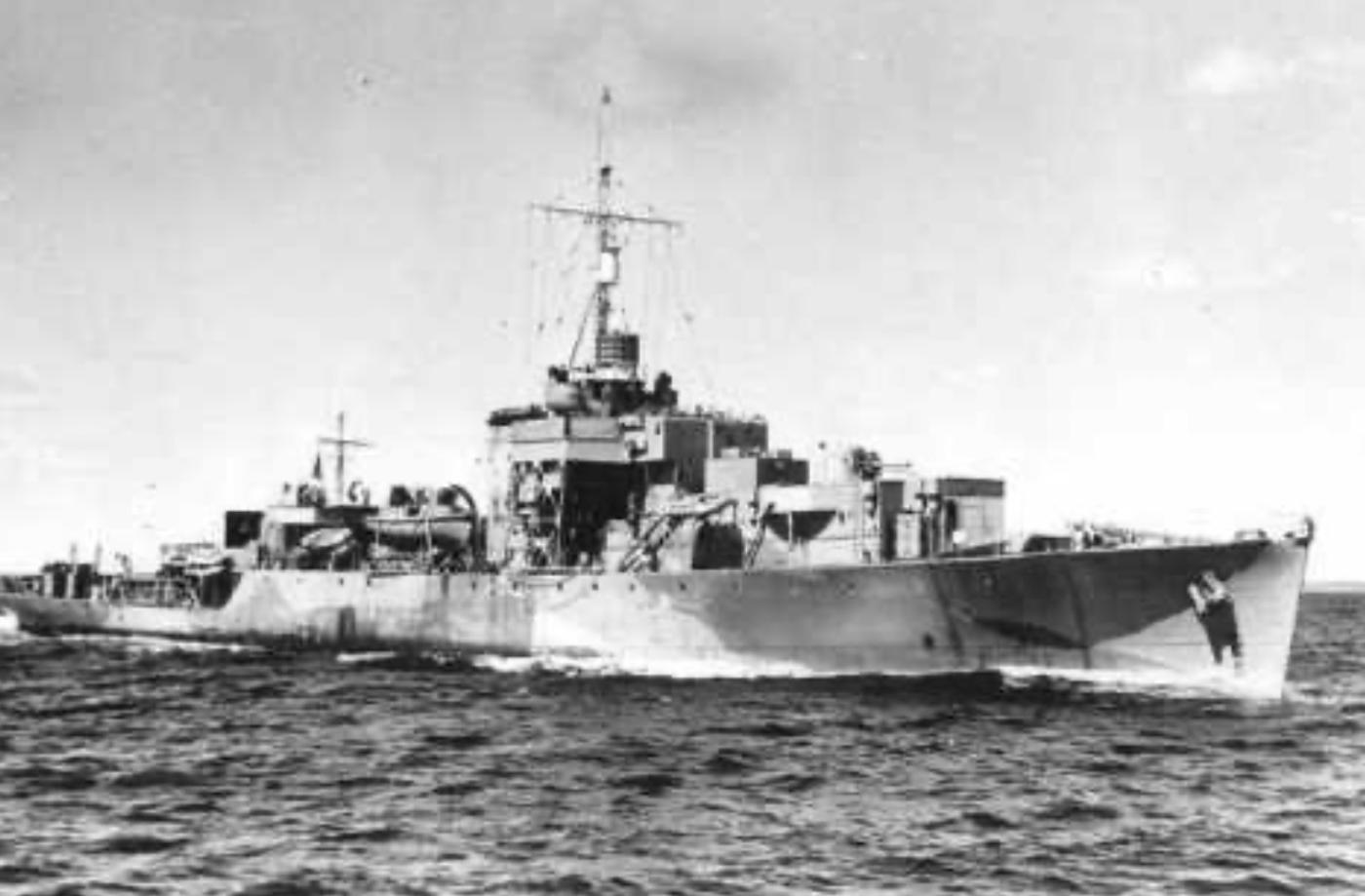
On 16 February 1945, near the closing months of the Second World War, the Canadian frigate HMCS Saint John achieved one of the Royal Canadian Navy’s confirmed U-boat kills in the North Sea. The action took place east of the Moray Firth, a dangerous coastal zone where German submarines still attempted to ambush Allied shipping despite the steadily tightening Allied grip on the seas.
Saint John was part of a Canadian escort group assigned to protect convoys moving along Britain’s east coast. These waters were shallow, noisy, and crowded with wrecks and seabed features, which made submarine hunting especially difficult. German U-boats often exploited this by settling directly on the bottom, shutting down most movement and hoping Allied sonar operators would mistake them for harmless seabed clutter. It was a tactic born of desperation late in the war, but one that still posed real danger if successful.
The commanding officer of Saint John at the time was Lieutenant-Commander W. R. Stacey of the Royal Canadian Naval Reserve. Under his command, the ship detected a suspicious contact that did not behave like a natural feature. Careful tracking convinced the crew that a submarine was lying motionless on the seabed. Rather than wait for the U-boat to move or surface, Stacey ordered an immediate attack.
Saint John carried modern anti-submarine weapons for the period, including depth charges designed to explode at preset depths. The frigate manoeuvred over the contact and released a deliberate pattern of charges intended to bracket the target. The explosions shook the water column and the seabed below. Shortly afterward, oil and debris rose to the surface, a classic and grim confirmation that the submarine had been fatally damaged.
The German submarine destroyed in the attack was U-309. Her commander was Oberleutnant zur See Herbert Loeder. U-309 was a Type VIIC U-boat, the workhorse model of the German submarine fleet, and by 1945 she had been fitted with a snorkel device that allowed her to run diesel engines while submerged. This innovation was meant to reduce vulnerability to Allied aircraft, but it offered little protection against well-coordinated escort ships operating with radar, sonar, and aggressive tactics.
All forty-seven officers and men aboard U-309 were killed. There were no survivors. As was often the case with submerged sinkings, the exact identity of the destroyed submarine was not immediately confirmed, and only later analysis matched the loss to U-309, which had failed to return from patrol.
The sinking was significant beyond the loss of a single U-boat. It marked the fifth German submarine destroyed by Canadian ships of Saint John’s escort group, highlighting how far the Royal Canadian Navy had come since the early, hard-pressed days of the Battle of the Atlantic. By 1945, Canadian escorts were confident, well-trained, and equipped to hunt rather than merely defend.
There is also a quieter postwar footnote to the story. Decades after the war, a wreck believed to be U-309 was located off the east coast of Scotland in diving depth. The submarine still rests on the seabed, a silent reminder of the final phase of the undersea war, when German crews continued to fight in increasingly hopeless circumstances and Canadian escorts like Saint John enforced Allied control of the North Sea right up to the war’s end.