On this day in military history…
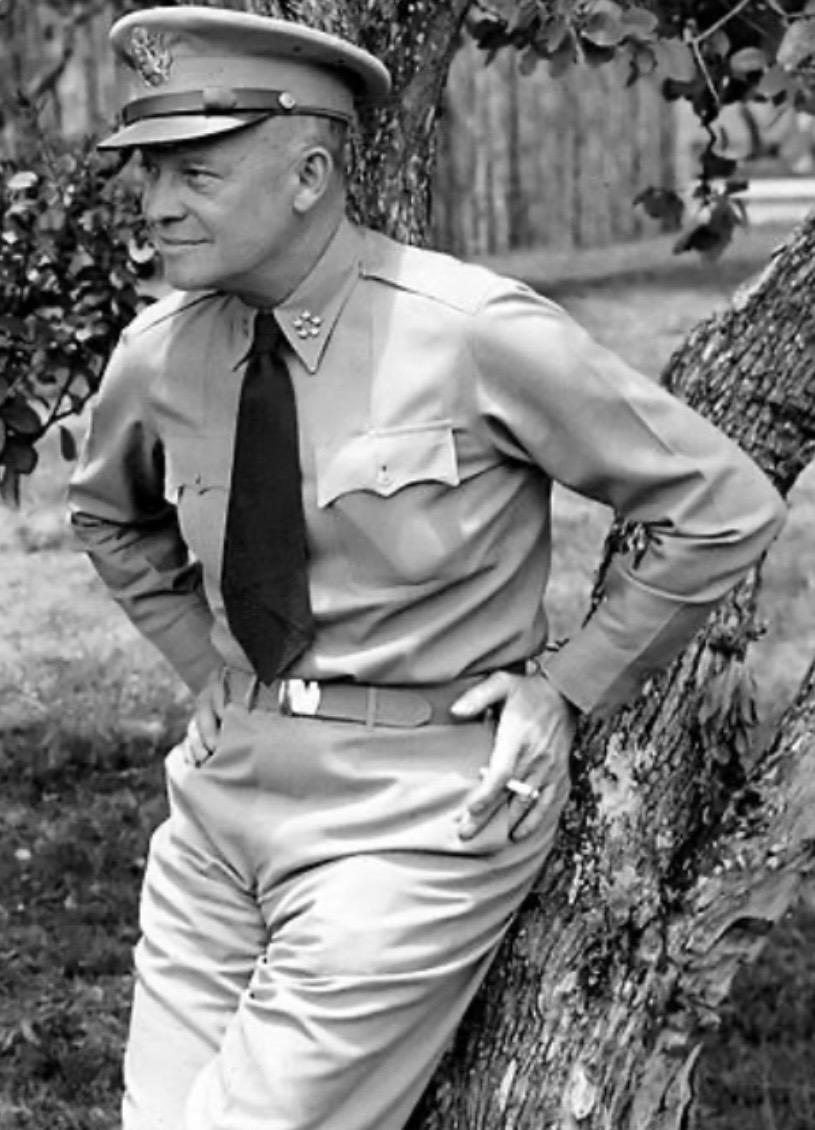
On 11 February 1943, Dwight D. Eisenhower was promoted to the rank of lieutenant general, making him a three-star officer at a crucial moment in the Second World War. At the time, Eisenhower was serving as Allied Commander-in-Chief in the Mediterranean Theater of Operations, a role that placed him in charge of all Anglo-American military forces fighting in North Africa and preparing for the next phase of the war against Axis Europe. His headquarters was located in Algiers, Algeria, a city that had rapidly become the political and military hub of Allied planning after the landings of Operation Torch in November 1942.
Eisenhower’s promotion was not a routine step up the ladder but a deliberate move to reinforce his authority over an exceptionally complex coalition command. He was responsible for coordinating American, British, and Free French forces, each with different doctrines, senior officers, and political pressures. Many of the British commanders he worked with already held high ranks, and Eisenhower’s elevation to lieutenant general ensured there could be no ambiguity about his position at the top of the Allied command structure in the Mediterranean.
The driving force behind the promotion was General George C. Marshall, the U.S. Army Chief of Staff. Marshall had identified Eisenhower early in the war as an officer with rare strategic vision and exceptional administrative ability. Although Eisenhower had no direct combat command experience before 1942, Marshall valued his calm judgment, his talent for large-scale planning, and, above all, his skill in managing strong personalities within an alliance. Marshall believed that Eisenhower’s responsibilities had outgrown his existing rank and personally recommended the promotion to President Franklin D. Roosevelt, who approved it promptly.
When the promotion took effect, Eisenhower was in the midst of one of the most challenging periods of his career. The North African campaign was far from settled, and German forces were still resisting fiercely in Tunisia. Senior Axis commanders, including Erwin Rommel, were exploiting weaknesses in inexperienced American units. Eisenhower was juggling battlefield crises, political negotiations with French leaders, and constant pressure from London and Washington over future strategy. The rank of lieutenant general strengthened his hand as he reorganized Allied command arrangements and prepared to make difficult decisions about leadership and tactics.
The timing of the promotion is especially striking because it came just days before the U.S. Army suffered a serious setback at the Battle of Kasserine Pass. Rather than undermining Eisenhower’s position, the promotion allowed him to act decisively in the aftermath. He supported sweeping changes to command structures, endorsed tougher discipline, and backed the rise of more aggressive field commanders, including George S. Patton. These actions played a key role in transforming Allied performance in North Africa in the months that followed.
Eisenhower himself viewed the promotion less as a personal achievement and more as a practical necessity. Those close to him noted that he remained characteristically reserved, focused on the immense responsibilities of coalition warfare rather than on rank or prestige. Yet the significance of 11 February 1943 is hard to overstate. In little more than a year, Eisenhower had risen from relative obscurity to become a three-star general commanding vast multinational forces, working alongside figures such as Field Marshal Bernard Montgomery, and shaping Allied strategy at the highest level.
Although his promotion to full four-star general would not come until December 1944, after his success as Supreme Allied Commander in Europe, the step taken on 11 February 1943 marked the point at which Eisenhower’s ascent became firmly established. From his headquarters in Algiers, he emerged not merely as an American general, but as the central coordinating figure of the Allied war effort, a role that would define both the remainder of the conflict and his place in history.