On this day in military history…
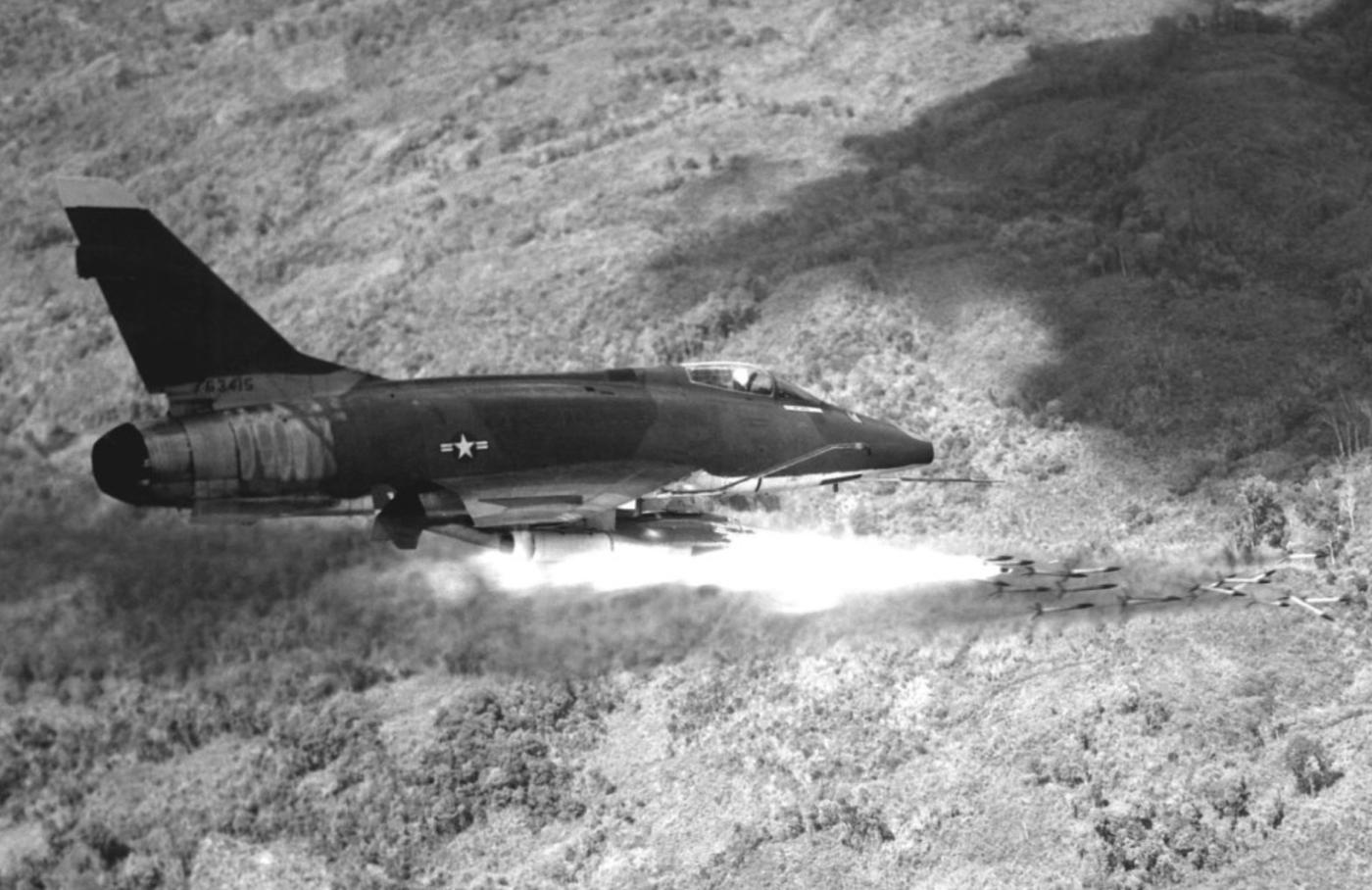
Operation Flaming Dart marked the point at which the United States moved from an advisory and largely defensive role into openly striking North Vietnam. It was conceived as a limited reprisal operation rather than a sustained bombing campaign, intended to show that attacks on U.S. personnel in South Vietnam would bring immediate consequences. Politically, it was meant to signal resolve without committing to full escalation; militarily, it was an experiment in coercive air power aimed at influencing Hanoi’s behavior rather than destroying its war-making capacity.
The direct trigger was the Viet Cong attack on Camp Holloway near Pleiku, which killed and wounded American personnel and destroyed aircraft on the ground. The response was approved at the highest level, with President Lyndon B. Johnson authorizing retaliatory strikes. The decision was deliberately centralized because of the risk of widening the war and the need to balance military action with diplomatic consequences.
Flaming Dart I was launched on 7 February 1965. U.S. Navy carrier aircraft flew 49 sorties against military targets just north of the Demilitarized Zone, primarily around the Đồng Hới area. These targets included barracks and support facilities believed to be linked to infiltration into South Vietnam. The main strike aircraft were A-4 Skyhawks carrying 250-pound bombs and rockets, supported by F-8 Crusaders for escort and suppression of antiaircraft fire, along with reconnaissance aircraft to assess damage. Weather limited accuracy and forced some planned attacks to be abandoned, a problem that would persist throughout the air war over North Vietnam.
Although the operation was intended to be limited, North Vietnamese defenses responded aggressively. Antiaircraft fire was heavy, and one U.S. Navy aircraft was shot down, killing its pilot. Damage assessments showed that the physical effects were modest, with only a small portion of the target complex destroyed or seriously damaged. This gap between political intent and military effect became an early warning sign of how difficult it would be to achieve clear results through limited bombing alone.
A second wave, known as Flaming Dart II, followed another attack on Americans and expanded the scale of the operation. This phase involved a coordinated effort by U.S. Navy, U.S. Air Force, and Republic of Vietnam Air Force units. Naval aircraft launched 99 fighter-bomber sorties from multiple carriers against targets near the DMZ, while U.S. and South Vietnamese aircraft struck nearby installations in parallel. A-4 Skyhawks and A-1 Skyraiders delivered most of the ordnance, with F-8 Crusaders and F-4 Phantoms providing escort, suppression of air defenses, and protection against possible MiG interception.
Across both phases, the total tonnage of bombs dropped was relatively small by later Vietnam standards, amounting to only a few hundred tons. This reflected the operation’s purpose: Flaming Dart was designed to punish and warn rather than to devastate. South Vietnam’s leadership, particularly Air Vice Marshal Nguyễn Cao Kỳ, was publicly associated with the strikes to emphasize that they were a joint response, though planning and execution were largely controlled by U.S. command structures, especially naval aviation.
In retrospect, the importance of Operation Flaming Dart lay less in the damage it caused than in the precedent it set. It normalized direct attacks on North Vietnam and revealed both the risks and the limited effectiveness of short, retaliatory air strikes. The experience helped push U.S. decision-makers toward a sustained bombing campaign, making Flaming Dart the opening step in a much larger and more consequential air war.