On this day in military history…
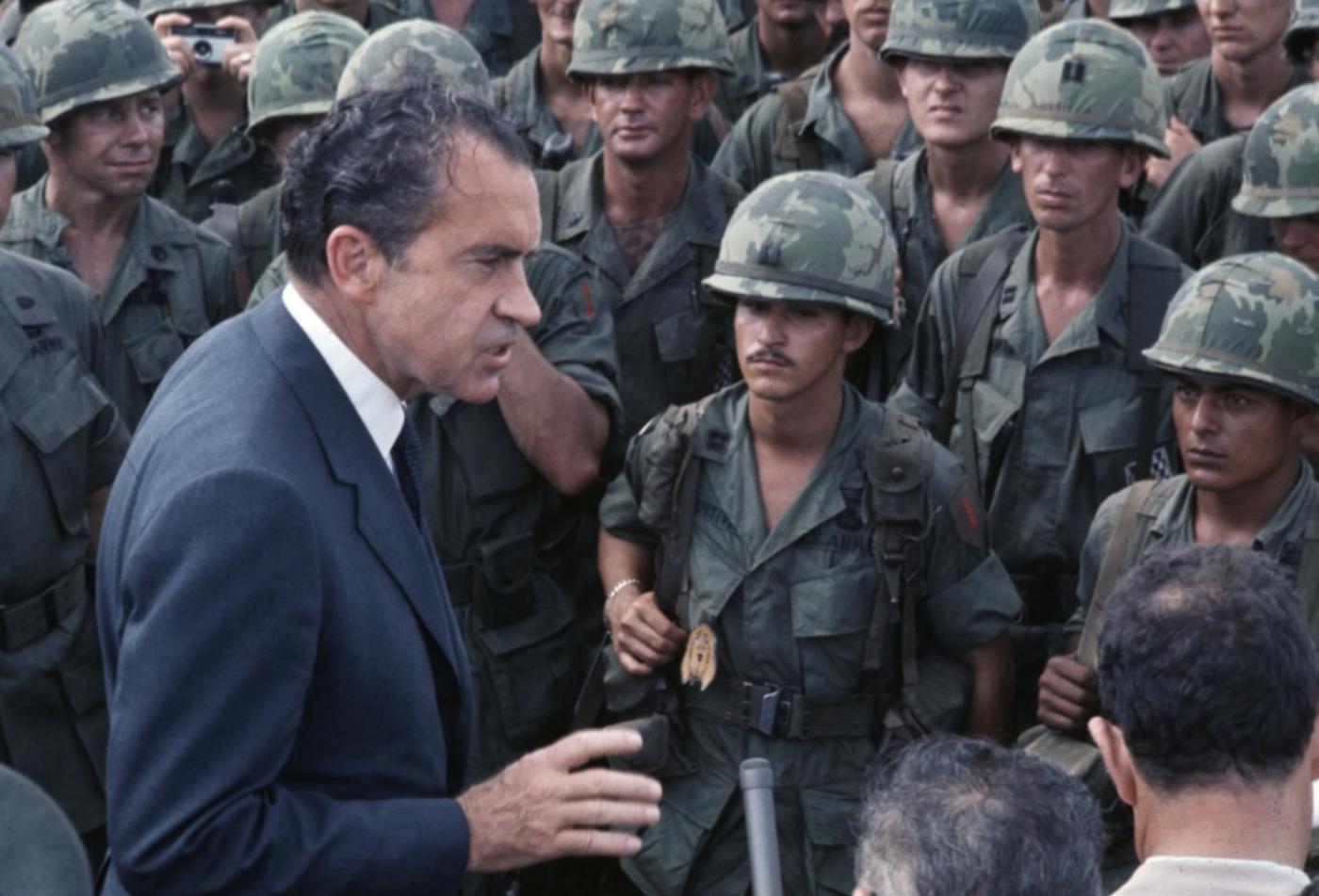
On 25 January 1972, President Richard Nixon delivered a nationally televised address in which he publicly presented an eight-point peace plan intended to bring about an end to United States involvement in the Vietnam War. The announcement was historically important because it was the first time the full details of an American peace proposal were made public. Nixon stated that the plan had already been presented privately to North Vietnam during the Paris peace negotiations, which had been deadlocked for months. By taking the proposal directly to the public, Nixon aimed to increase pressure on North Vietnam, reassure a war-weary American population, and influence international opinion at a critical stage of the conflict.
The peace plan was based on the idea that military disengagement should be separated from the political future of South Vietnam. Nixon argued that peace could be achieved if both sides agreed to end fighting and withdraw their forces, while allowing the South Vietnamese people to decide their own government without outside interference. The first point of the plan called for an immediate ceasefire throughout Indochina once an agreement was reached. This ceasefire was meant to stop all military operations by American, South Vietnamese, North Vietnamese, and allied forces and create a stable environment for implementing the rest of the agreement.
The second major point proposed the complete withdrawal of all United States and allied troops from South Vietnam within six months. This withdrawal was to be matched by the withdrawal of North Vietnamese forces from the South during the same period. Nixon stressed that the withdrawals would be mutual and simultaneous, rejecting North Vietnam’s demand that American forces leave unconditionally before any further negotiations. Closely connected to this was the third point, which dealt with prisoners of war. Nixon proposed that all military prisoners held by both sides, including American prisoners of war, would be released as the troop withdrawals took place, treating the issue as a humanitarian obligation rather than a political bargaining tool.
Another central part of the plan concerned the political future of South Vietnam. Nixon rejected the demand that the existing South Vietnamese government and President Nguyen Van Thieu be removed as a condition for peace. Instead, the fourth and fifth points outlined a political process in which the current government would remain temporarily while free elections were organized. These elections were to be held under international supervision, and all political groups, including the Viet Cong, would be allowed to participate. The leadership of South Vietnam would therefore be decided by the South Vietnamese population rather than imposed through military victory or foreign pressure.
The plan also included provisions for international supervision and guarantees. One point called for the establishment of an international body made up of neutral nations to oversee the ceasefire, troop withdrawals, and elections. This was intended to ensure that all sides complied with the agreement and did not take advantage of the situation for military or political gain. Another point extended the agreement beyond Vietnam itself by calling for respect for the independence, sovereignty, and neutrality of Laos and Cambodia, both of which had been deeply affected by the war through bombing campaigns and cross-border fighting.
The final element of the eight-point plan addressed postwar reconstruction. Nixon offered United States participation in rebuilding Indochina, including North Vietnam, once peace had been established. He presented this not as compensation or reparations, but as an effort to promote reconciliation and long-term stability after years of destruction. This offer was intended to show that the United States was willing to move toward a cooperative relationship if the war came to an end.
Underlying all eight points was Nixon’s broader goal of achieving what he described as peace with honor. The plan was closely linked to the policy of Vietnamization, under which American troops were gradually withdrawn while South Vietnamese forces assumed greater responsibility for fighting. By early 1972, U.S. troop levels had already been greatly reduced, and the plan sought to secure a negotiated exit that avoided the appearance of outright defeat. The decision to announce the plan publicly also reflected domestic political pressures, as opposition to the war continued to grow and a presidential election was approaching.
North Vietnam rejected the proposal at the time, arguing that it preserved a U.S.-supported government in South Vietnam and failed to recognize what it saw as the political realities created by years of conflict. Despite this rejection, many elements of the January 25 peace plan later appeared in the 1973 Paris Peace Accords, particularly the ceasefire, the withdrawal of U.S. forces, and the exchange of prisoners. As a result, Nixon’s eight-point peace plan remains an important moment in the history of the Vietnam War, revealing both the outlines of a possible settlement and the deep disagreements that continued to delay peace.