On this day in military history…
On 5 February 1940, only a few months into the Second World War, the Royal Navy achieved the first confirmed sinking of a German U-boat by surface warships, a moment that carried both practical and symbolic importance at a time when the outcome of the naval war was still deeply uncertain. The U-boat destroyed was U-41, and the ship responsible was the British destroyer HMS Antelope. The encounter took place in the stormy waters to the northwest of Scotland, near the Outer Hebrides, an area that would soon become one of the most heavily contested maritime regions of the entire conflict.
U-41 was a Type IXA submarine, a large ocean-going boat designed for long-range operations against Allied shipping. She had only recently entered service and was on her very first war patrol. The submarine was commanded by Gustav-Adolf Mugler, an experienced officer who had previously served in the Reichsmarine before the war. His mission was to intercept British merchant traffic in the approaches to the British Isles, a task made difficult by severe winter weather and increasingly alert British patrols.
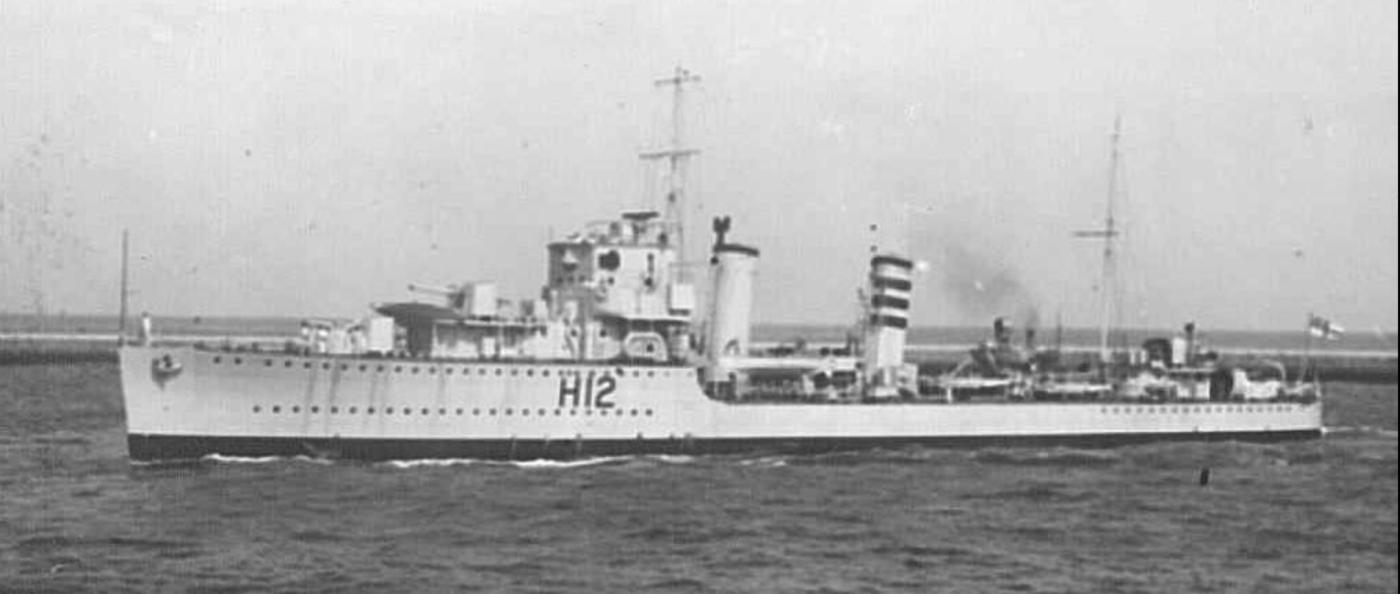
HMS Antelope was an A-class destroyer, commissioned in 1930 and already a decade old by the time war broke out. She was fast, well-armed for her size, and increasingly adapted to anti-submarine warfare as the U-boat threat grew. At the time of the engagement she was commanded by Richard Trelawny Vivian, an officer noted for his coolness under pressure and firm ship handling. Antelope was operating as part of a patrol tasked with protecting shipping routes and hunting submarines reported in the area.
In the early hours of 5 February, U-41 attempted to attack shipping in the vicinity of the Hebrides. During this operation, the submarine was detected, either by visual sighting of a periscope or through hydrophone contact, by British forces. Antelope quickly closed the contact and began a deliberate attack. Using ASDIC, the early sonar system that was still relatively new and imperfect, Antelope was able to maintain contact long enough to carry out a depth charge attack.
Antelope dropped a pattern of depth charges that detonated close to the submarine. These explosions caused catastrophic damage to U-41. The pressure hull was breached, and the submarine sank rapidly. There was no opportunity for the crew to abandon ship, and no survivors were recovered. All forty-six men aboard U-41, including Mugler, were killed. The suddenness of the sinking meant that, for some time, the Germans were uncertain exactly what had happened to the boat.
The action itself was brief, but its consequences were far-reaching. Although other U-boats had been lost earlier in the war due to mines or accidents, this was the first clear case of a German submarine being sunk by British surface warships in open combat during the conflict. For the Royal Navy, still haunted by memories of heavy losses to submarines in the First World War, the sinking was an important morale boost. It demonstrated that U-boats were not invulnerable and that coordinated patrols using sonar and depth charges could be effective.
For the Germans, the loss of U-41 was a sobering reminder of the dangers faced by submarines operating close to well-defended waters. Early in the war, German doctrine still underestimated the speed with which British anti-submarine tactics would improve. The sinking contributed to a growing understanding within the U-boat arm that operations near the British coast carried extreme risks, especially during daylight and in poor weather when detection was more likely.
An interesting footnote to the incident is how little physical evidence remained. Unlike later sinkings where wrecks were located and photographed, U-41 disappeared into deep Atlantic waters, leaving only oil slicks and debris to mark her end. For decades, the exact resting place of the submarine was unknown, reinforcing the sense of sudden and total loss experienced by her crew’s families.
In retrospect, the sinking of U-41 on 5 February 1940 stands as a quiet but significant milestone in the Battle of the Atlantic. It did not alter the course of the war overnight, but it marked the moment when the balance between hunter and hunted began, slowly and painfully, to shift. The men of HMS Antelope returned to their patrol knowing they had struck an early blow in what would become the longest continuous campaign of the Second World War, while U-41 and her crew became the first U-boat casualties of a struggle that would claim tens of thousands of lives before it finally ended.