On this day in military history…
The capture of the German Sixth Army at Stalingrad by the Soviet Red Army stands as one of the most decisive moments of the Second World War, marking the first complete destruction of a full German field army and shattering the myth of Nazi invincibility. At the center of this catastrophe was Friedrich Paulus, commander of the Sixth Army, whose surrender in February 1943 symbolized a turning point not only on the Eastern Front but in the entire war.
The battle for Stalingrad began in the summer of 1942 as part of Hitler’s strategic push toward the oil fields of the Caucasus and control of the Volga River. The city itself carried enormous symbolic weight because it bore the name of Joseph Stalin, and Adolf Hitler became personally fixated on capturing it. Paulus’s Sixth Army, supported by elements of the Fourth Panzer Army, was assigned to seize the city. What German planners expected to be a rapid victory instead evolved into one of the most brutal and destructive battles in military history.
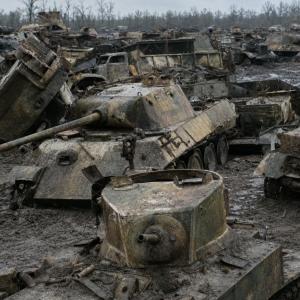
By September 1942, German forces had advanced deep into Stalingrad, but the fighting turned into relentless close-quarters combat. Soviet defenders clung to factories, apartment buildings, basements, and rubble, often fighting room by room and floor by floor. Red Army units deliberately fought at extremely close range, reducing the effectiveness of German tanks, artillery, and air support. The Germans referred to this kind of fighting as a rat war, a struggle where progress was measured in meters and casualties mounted at an appalling rate.
While Paulus concentrated on crushing the remaining Soviet resistance inside the city, the Soviet high command was preparing a massive counteroffensive. This plan, known as Operation Uranus, avoided the heavily defended German positions within Stalingrad itself. Instead, it targeted the weaker Axis armies guarding the flanks of the Sixth Army, especially Romanian units that lacked adequate anti-tank weapons and armor.
On 19 November 1942, the Red Army launched powerful attacks north and south of Stalingrad. Soviet tank and infantry formations broke through the Axis lines with remarkable speed. Within days, Soviet forces linked up near Kalach on the Don River, completely encircling the Sixth Army and trapping more than 250,000 German and allied troops inside the city and its surrounding areas.
Paulus immediately realized the seriousness of the situation and urged permission to break out before the encirclement solidified. Adolf Hitler categorically refused, ordering the Sixth Army to hold its positions and promising that the Luftwaffe would supply the trapped forces by air. This decision proved disastrous. The German airlift was incapable of delivering more than a fraction of the supplies needed. Food, fuel, ammunition, and medical supplies quickly ran out, while wounded soldiers froze or died untreated as winter temperatures plunged far below zero.
As the weeks passed, the Red Army steadily tightened its grip. A German relief attempt in December failed to reach the encircled forces, and once again Paulus was forbidden to attempt a breakout. By this point, his army was exhausted, starving, and increasingly incapable of coordinated resistance. Entire units collapsed, and discipline deteriorated as soldiers searched desperately for food and shelter among the ruins.
In January 1943, the Soviets launched their final offensive to eliminate the trapped German forces. Massive artillery barrages shattered the remaining German defenses, and Soviet troops advanced relentlessly through the rubble. Paulus’s headquarters was forced to move repeatedly as Soviet units closed in. On 30 January 1943, Hitler promoted Paulus to field marshal, a clear signal that he was expected to die rather than surrender, since no German field marshal had ever been captured alive.
Paulus chose not to take his own life. On 31 January 1943, Soviet troops entered his headquarters in the southern sector of the pocket, and Paulus surrendered along with his staff. Two days later, on 2 February, the remaining German forces in the northern sector also surrendered. The Battle of Stalingrad was over.
Approximately 90,000 German and Axis soldiers were taken prisoner, including more than twenty generals. Only a small fraction would survive captivity and return home after the war. The destruction of the Sixth Army was a devastating blow to German morale and a powerful propaganda victory for the Soviet Union.
The capture of Paulus and the surrender of his army marked a decisive shift in the balance of the war. From Stalingrad onward, the Red Army seized the strategic initiative and drove German forces steadily westward. The battle proved that the Wehrmacht could be surrounded and destroyed, and it stands as one of the clearest turning points of the Second World War.