On this day in military history…
During the opening days of the 1991 Gulf War, one of the most powerful moments to reach Western audiences came not from the battlefield but from Iraqi state television, when two captured British airmen were shown to the world under obvious duress. Flight Lieutenant John Peters and Flight Lieutenant John Nichol had been shot down over Iraq on 19 January 1991 while flying a low-level strike mission in a Tornado GR1 against an Iraqi airbase. Their aircraft was hit by anti-aircraft fire, forcing them to eject and begin an ordeal that would become emblematic of the brutality of the conflict.
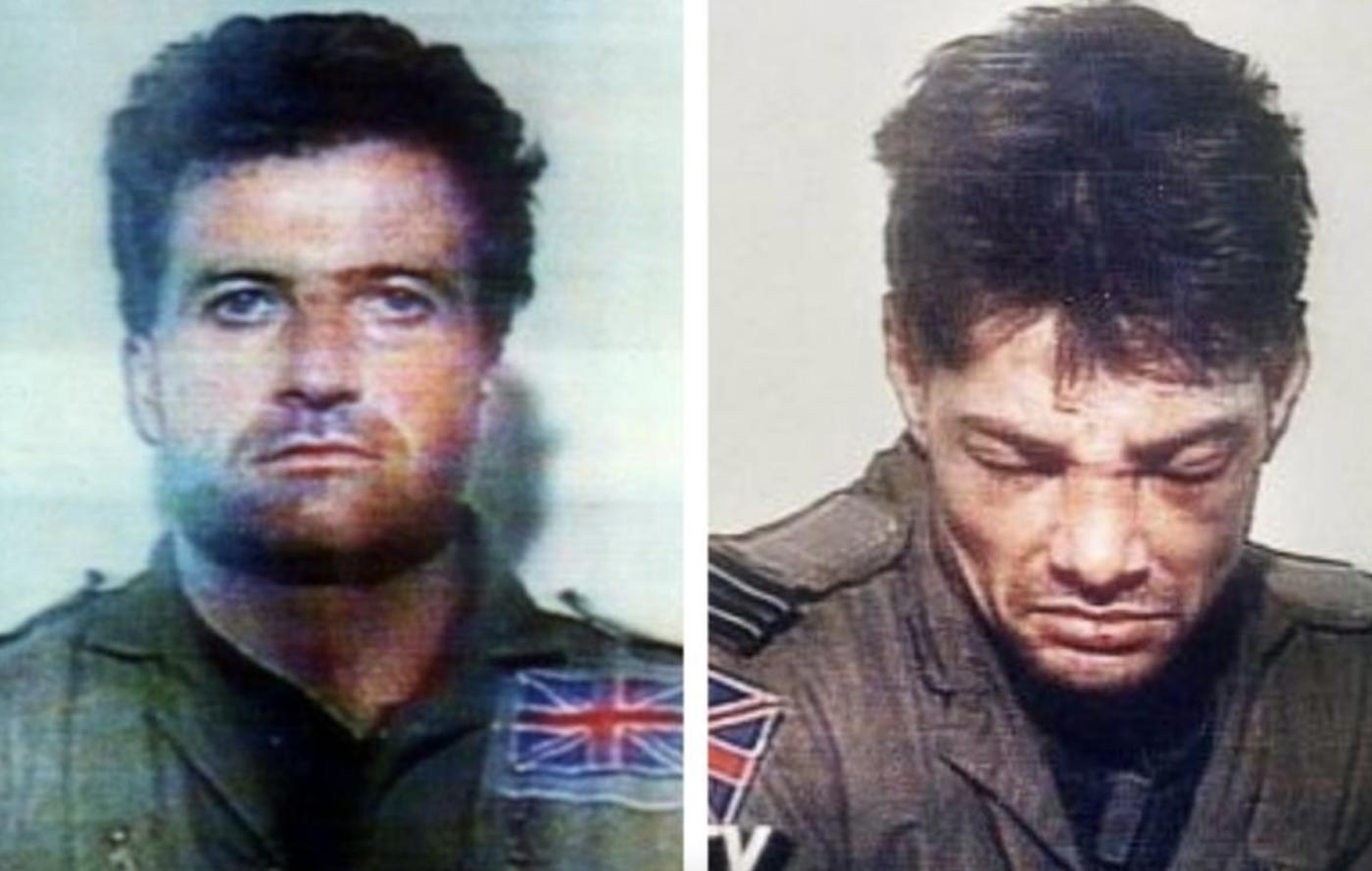
Both men were quickly captured by Iraqi forces after parachuting to the ground. Almost immediately they were beaten by soldiers and civilians, suffering injuries to their faces and bodies. Within days, Iraqi television broadcast grainy footage and still photographs of the two men being interrogated. The images shocked viewers: Peters’ face was swollen and bruised, one eye almost closed, while Nichol appeared exhausted and injured. The physical condition of both men made it clear that they had been assaulted, directly contradicting Iraqi claims that prisoners were being treated humanely in accordance with international law.
The most disturbing aspect of the broadcasts was the forced statement. Sitting stiffly, clearly in pain and reading from prepared text, Peters was made to condemn the air campaign and accuse the coalition of aggression. Nichol was also paraded, though he spoke less, his condition visibly deteriorating. It was immediately apparent to Western governments and the public that the men were being coerced. Under the Geneva Conventions, prisoners of war are protected from public humiliation and from being forced to make political statements, and Iraq’s actions were widely denounced as a clear violation of those rules.
The reaction in Britain was one of outrage and anger. Newspapers published the images on their front pages, while politicians from across the political spectrum condemned the treatment of the airmen. The British government formally protested to Iraq through diplomatic channels, and the footage strengthened public resolve behind the war effort rather than weakening it. For many viewers, the images became some of the most emotionally charged of the entire conflict.
After the cameras were turned off, the conditions for Peters and Nichol worsened. They were moved between different detention facilities, often blindfolded, handcuffed, and subjected to further beatings. Food was scarce, water was limited, and medical care was minimal or nonexistent. Both men later described periods of near starvation, with weight loss so severe that uniforms no longer fitted properly. Interrogations were frequent and aggressive, designed to extract information or confessions rather than to comply with prisoner-of-war protocols.
Despite the mistreatment, the two men, like many coalition prisoners, attempted to support one another psychologically. Maintaining routines, sharing scraps of information, and focusing on survival became crucial coping mechanisms. Their captors repeatedly threatened them, sometimes staging mock executions or hinting that they would be used again for propaganda purposes. The uncertainty of their fate was often as damaging as the physical abuse.
Their ordeal ended only after the ground war concluded and coalition forces achieved a rapid victory. As Iraqi authority collapsed, prisoners were gathered and eventually handed over to the Red Cross. Peters and Nichol were finally freed in early March 1991, thin, injured, and deeply traumatized but alive. Their return to Britain was marked by relief and public sympathy, though both men later spoke openly about the long-term psychological effects of captivity.
In the years that followed, their experience influenced how the British military prepared aircrew for the possibility of capture, placing greater emphasis on resistance to interrogation and survival training. John Nichol later became a vocal advocate for veterans and mental health awareness, while John Peters continued his career in the Royal Air Force.