On this day in military history…
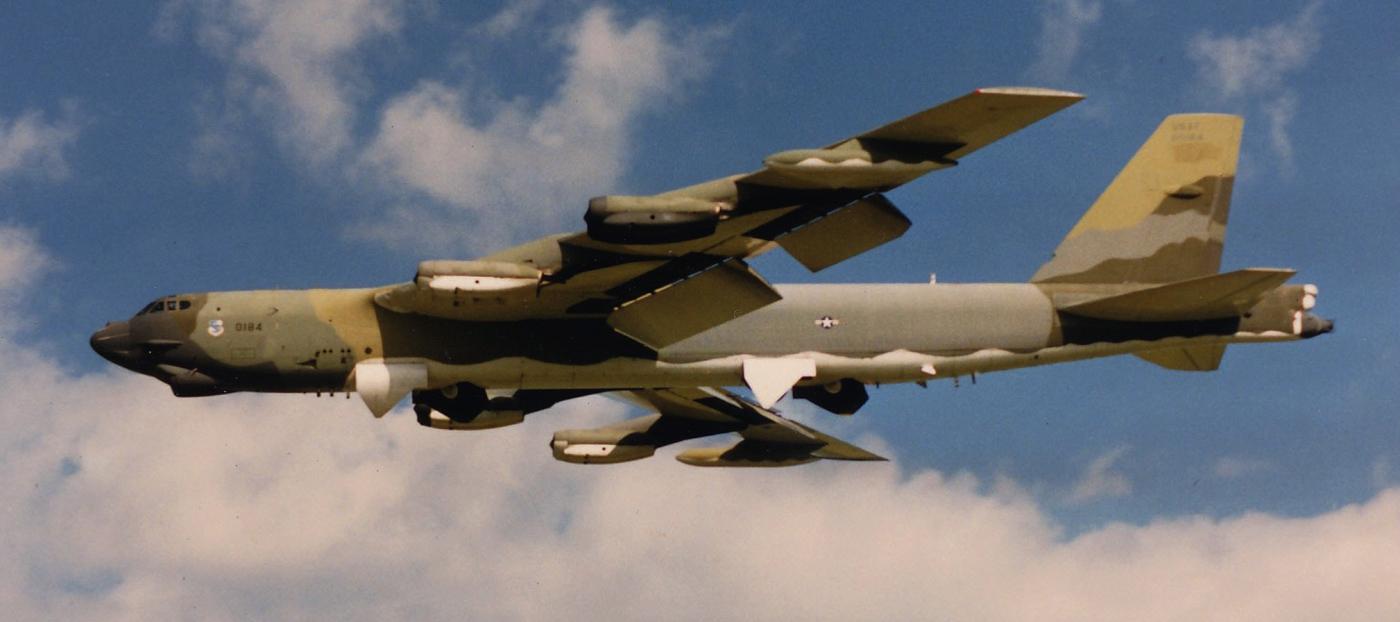
the early hours of 21 January 1968, a United States Air Force B-52G Stratofortress on a Cold War nuclear patrol mission crashed into the sea ice near Thule Air Base in north-west Greenland while carrying four hydrogen bombs. The aircraft was part of Operation Chrome Dome, a continuous airborne alert system in which nuclear-armed bombers flew near the Soviet Union so that the United States could retaliate instantly if war broke out. The plane, call sign HOBO 28, had taken off from Plattsburgh Air Force Base in New York and was orbiting near Thule to verify radar coverage when a small malfunction turned into a catastrophic emergency.
The cause of the disaster began inside the cabin. The B-52 was bitterly cold at high altitude, and the crew had placed cushions and other materials near a heater vent to stay warm. This blocked the airflow, causing the heater to overheat and ignite a fire. At first the crew tried to extinguish it, but the fire spread rapidly through wiring, insulation, and oxygen lines. Thick smoke filled the cockpit and electrical systems began to fail. Within minutes, the aircraft was becoming uncontrollable.
The aircraft commander was Captain John Haug, and he and his six crew members realized that the bomber could not be saved. As the fire intensified and instruments went dark, Haug ordered the crew to abandon the aircraft. Six of the seven men ejected or parachuted safely, though one broke both legs when he landed. The navigator, who did not have an ejection seat, was forced to bail out through a hatch. One crewman died during the escape, struck by debris or killed by the extreme conditions outside the aircraft.
With no one at the controls, the burning B-52 continued flying for a short time before plunging into the frozen waters of North Star Bay just a few miles from Thule Air Base. On impact, the aircraft exploded, breaking apart across the ice. The conventional high explosives in the hydrogen bombs detonated, though the nuclear cores did not produce a nuclear blast. Instead, the force of the explosion shattered the weapons and scattered plutonium, uranium, tritium, and other radioactive materials across a wide area of ice, snow, and seawater.
The crash created one of the most serious nuclear contamination incidents in history. A cloud of radioactive debris spread across the crash site, embedding itself in the ice and drifting into the surrounding ocean. When the Danish government learned what had happened, there was immediate political outrage. Denmark officially had a policy banning nuclear weapons on its territory, and although Greenland was administered by Denmark, the United States had secretly flown nuclear-armed aircraft over and around it for years. The discovery that hydrogen bombs had crashed and ruptured on Danish-controlled land was deeply embarrassing and politically explosive.
A massive cleanup operation, known as Project Crested Ice, was launched within days. More than 700 Danish and American personnel were sent to the crash site in extreme Arctic conditions, working in temperatures that often fell below −40°C. They wore protective suits and masks and used bulldozers, shovels, and vacuum systems to scrape away contaminated snow and ice. Everything that showed even slight radioactive readings was packed into steel containers, loaded onto ships, and transported to the United States for disposal. The ice itself was cut out in large blocks and removed, along with wreckage from the bomber and pieces of the shattered bombs.
The operation lasted months and cost tens of millions of dollars. Thousands of tons of contaminated material were removed, but it was never possible to guarantee that everything radioactive had been recovered. Some contamination sank into the sea, and traces of plutonium were later found in sediments near the crash site. For years afterward, Danish workers who participated in the cleanup complained of health problems, and the Danish government accused the United States of downplaying the dangers they had been exposed to.
One of the most troubling aspects of the incident was that not all parts of the weapons were ever conclusively accounted for. While the U.S. Air Force stated that all four bombs were destroyed and recovered, evidence later suggested that one bomb’s uranium secondary stage may never have been found, raising fears that radioactive material still lies buried under the Arctic seabed.
The Thule crash had major political and military consequences. It forced the United States to end its airborne nuclear patrols, as the risk of accidental nuclear contamination became impossible to ignore. It also severely strained relations between Denmark and the United States, exposing how little control Denmark truly had over what happened in Greenland during the Cold War.
Today, the crash remains a chilling reminder of how close the world came to catastrophe during the nuclear standoff between East and West. A simple blocked heater vent, something as mundane as a cushion placed in the wrong spot, was all it took to bring a nuclear-armed bomber down onto the ice of Greenland, scattering radioactive debris across one of the most remote places on Earth and leaving a legacy that is still not fully resolved.