New Wolf Pack Formed
In 1943 the German Kriegsmarine continued its effort to disrupt Allied shipping in the Atlantic by organizing U-boat formations known as wolf packs, coordinated groups of submarines directed by BdU, the U-boat High Command. One of the more notable of these formations in the later period of the Battle of the Atlantic was the Raubgraf wolf pack, whose name translated to “robber baron,” fitting the German practice of giving wolf packs aggressive or historical names. The Raubgraf group represented Germany’s attempt to maintain offensive pressure on Allied convoy routes at a time when the balance in the Atlantic was shifting increasingly against the U-boat arm due to improved Allied radar, air coverage, escort carriers, and code-breaking.
Raubgraf was assembled in the autumn of 1943 during a period when German naval command sought to concentrate available submarines into larger formations in order to overwhelm increasingly powerful convoy escorts. The wolf pack operated under the direction of BdU, headed by Admiral Karl Dönitz, who had pioneered the wolf pack system earlier in the war. Operational control was exercised through shore-based command centers in occupied France and Germany, with signals relayed via radio to submarines scattered across the North Atlantic.
The submarines assigned to Raubgraf were primarily Type VII and Type IX U-boats, the workhorses of the German submarine fleet. The Type VII boats were smaller and more maneuverable, designed for operations in the North Atlantic, while the longer-range Type IX boats could remain at sea for extended periods and were sometimes used to patrol more distant waters or support wolf pack operations by attacking stragglers. By late 1943 the number of boats assigned to any given wolf pack fluctuated frequently due to losses, mechanical issues, and redeployment. Raubgraf at its peak consisted of roughly 15 to 20 U-boats, though not all were always present in the same operational area at once.
Among the U-boats associated with the Raubgraf formation were several commanded by experienced officers, though by 1943 the U-boat arm was suffering heavy casualties among veteran commanders. Many new captains had less experience than those lost earlier in the war. Commanders in the pack included officers such as Kapitänleutnant and Oberleutnant zur See ranks, typical for U-boat captains. While individual command rotated and boats were frequently reassigned between groups, the pack operated as a coordinated force under central direction rather than under a single flotilla commander at sea. Orders were issued by BdU headquarters, which received intelligence on convoy routes through radio intercepts, reconnaissance aircraft, and reports from U-boats already on patrol.
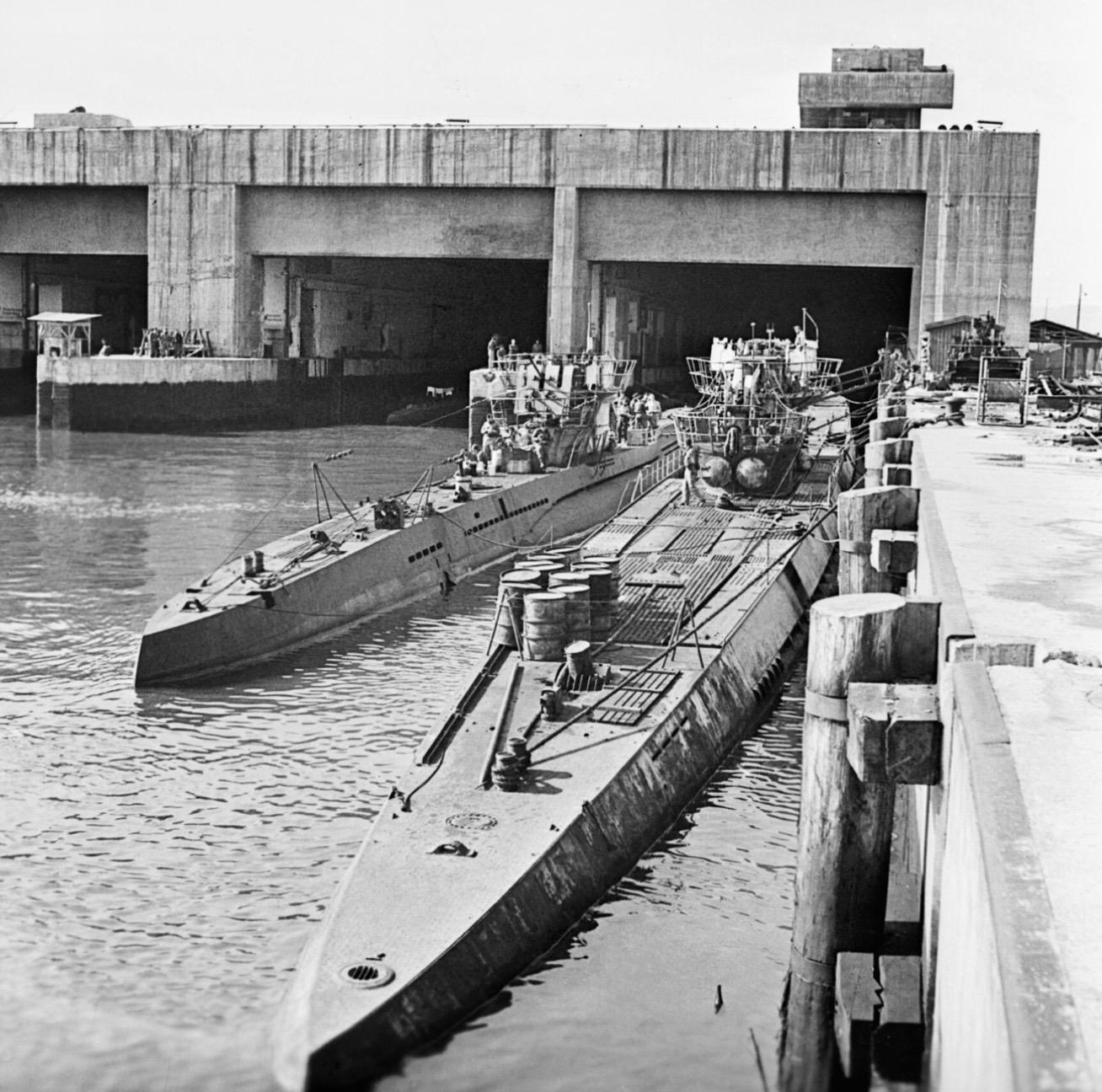
The submarines that formed Raubgraf sailed primarily from bases in occupied France, particularly from the heavily fortified U-boat pens at Lorient, Saint-Nazaire, Brest, and La Pallice. These Atlantic bases allowed German submarines to enter the ocean directly without having to pass through the heavily defended English Channel or North Sea approaches. By 1943, however, Allied air patrols from Britain and later from escort carriers made even the Bay of Biscay dangerous. U-boats often traveled submerged by day and surfaced at night while leaving port areas to avoid air attack.
Raubgraf operated mainly in the North Atlantic convoy routes between North America and the United Kingdom. German command attempted to position the wolf pack across likely convoy paths, forming a patrol line. When one U-boat sighted a convoy, it would shadow the ships and transmit contact reports back to BdU. Other submarines in the pack would then be directed to converge on the convoy for a coordinated night surface attack, the traditional German tactic earlier in the war. However, by 1943 Allied radar and escort tactics made night surface attacks far more dangerous, forcing many U-boats to attack submerged or from longer range.
The Raubgraf wolf pack engaged several Allied convoys during its operational period, though the results were increasingly limited compared to earlier years of the war. Allied convoy escorts now included improved sonar (ASDIC), high-frequency direction finding, and long-range aircraft such as Liberators equipped with radar and Leigh Lights for nighttime detection. Escort carriers provided continuous air cover over convoy routes, making it difficult for U-boats to approach undetected. As a result, Raubgraf and similar wolf packs often suffered losses or were driven off before they could inflict heavy damage.
Despite these challenges, the formation represented Germany’s continued reliance on wolf pack tactics as its primary method of commerce warfare. The U-boats of Raubgraf attempted coordinated attacks on multiple convoys, firing torpedoes at merchant ships and sometimes engaging escort vessels. When successful, they could still sink individual ships, but sustained convoy destruction on the scale seen in 1940–1942 was no longer achievable.
By late 1943 the increasing effectiveness of Allied anti-submarine warfare severely limited the success of formations like Raubgraf. Losses among U-boats mounted, and many submarines were sunk by escort ships or aircraft before they could reach their patrol areas. German command began introducing new technologies such as snorkels and acoustic torpedoes in an attempt to regain the initiative, but these measures came too late to reverse the overall trend of the Atlantic campaign.
The Raubgraf wolf pack stands as an example of Germany’s persistence in submarine warfare even as the strategic situation deteriorated. It reflected both the strengths and weaknesses of the wolf pack system: the ability to coordinate multiple submarines against convoys across vast ocean areas, and the vulnerability of that system once the Allies gained technological and intelligence superiority. By the end of 1943, while wolf packs like Raubgraf continued to sail from French bases and patrol the Atlantic, the era when such groups could seriously threaten the Allied supply lifeline was rapidly coming to an end.