2nd Offensive at Verdun.
The German second brutal offensive at the Battle of Verdun formed part of one of the longest and most devastating struggles of the First World War. The battle itself began on 21 February 1916 and continued until December, but what historians often describe as the second phase or renewed offensive emerged after the initial German successes had stalled and the fighting evolved into a sustained attempt to bleed the French army white. The overall German plan was directed by General Erich von Falkenhayn, the Chief of the German General Staff, who believed that France could be forced out of the war by a battle of attrition. He argued that by attacking a position the French considered sacred, they would commit endless troops to its defence and suffer catastrophic losses. The German Fifth Army, commanded by Crown Prince Wilhelm and operationally directed by his chief of staff General Konstantin Schmidt von Knobelsdorf, carried out the assault.
The German forces committed to Verdun were immense. In the opening phases and subsequent renewed offensives, more than a million German soldiers rotated through the battlefield over the course of the campaign. In the early months alone, approximately 140,000 German troops were concentrated for the assault, supported by one of the most powerful artillery bombardments seen up to that point in the war. By the time of the second brutal push in mid-1916, German commanders had reinforced their efforts with fresh divisions, determined to break French resistance and capture the remaining forts and high ground around Verdun. They brought in heavy siege guns, including massive 420 mm and 305 mm howitzers, as well as thousands of field guns and mortars. Their artillery tactics relied on prolonged bombardments intended to obliterate French trenches, forts, and supply lines before infantry advances.
Weapons played a central role in the German offensive. Heavy artillery caused the majority of casualties, turning the Verdun battlefield into a landscape of craters and shattered fortifications. Flamethrowers were used with devastating effect in close-quarters fighting, especially during assaults on fortified positions and trenches. Poison gas shells were also deployed to disrupt French defences and force soldiers from protected positions. Machine guns, rapid-fire artillery, and coordinated infantry assaults were combined in carefully planned attacks designed to overwhelm French defenders. German storm troops, trained for infiltration and assault tactics, were used to spearhead some advances, demonstrating evolving methods of modern warfare.
The French response was determined and relentless. The defence of Verdun was initially organised under General Philippe Pétain, who became a national hero for stabilising the front and ensuring a constant flow of reinforcements and supplies. He implemented a rotating system that cycled French divisions in and out of the line to maintain morale and combat effectiveness, meaning that a large proportion of the French army eventually fought at Verdun. The vital supply route known as the Voie Sacrée, or Sacred Way, kept Verdun supplied with men, ammunition, and food. Later in the battle, command passed to General Robert Nivelle, who continued the defensive strategy and eventually launched counter-attacks to retake lost ground.
The Allied forces resisting the German offensive were primarily French, though British actions elsewhere, particularly the launching of the Battle of the Somme in July 1916, helped relieve pressure by forcing Germany to divert troops and resources. Over the course of the Verdun campaign, roughly 1.1 to 1.2 million French soldiers were engaged. The French used their own heavy artillery, machine guns, and fortified positions to slow and eventually halt German advances. They also relied heavily on counter-battery fire, attempting to silence German guns that had caused such destruction. French infantry endured constant shelling, gas attacks, and repeated assaults, yet continued to hold key positions such as Fort Souville and the heights overlooking Verdun.
Casualties at Verdun were enormous and remain among the highest of any single battle in the war. Estimates vary, but the total number of casualties for both sides reached around 700,000, with approximately 300,000 to 330,000 killed. The French suffered roughly 377,000 casualties, including about 162,000 dead, while German casualties were around 337,000, with roughly 143,000 killed. The battle became synonymous with attrition, where both sides aimed to wear down the other through relentless combat rather than achieve swift breakthroughs. Soldiers on both sides endured horrific conditions, including constant artillery bombardment, mud, disease, and psychological trauma.
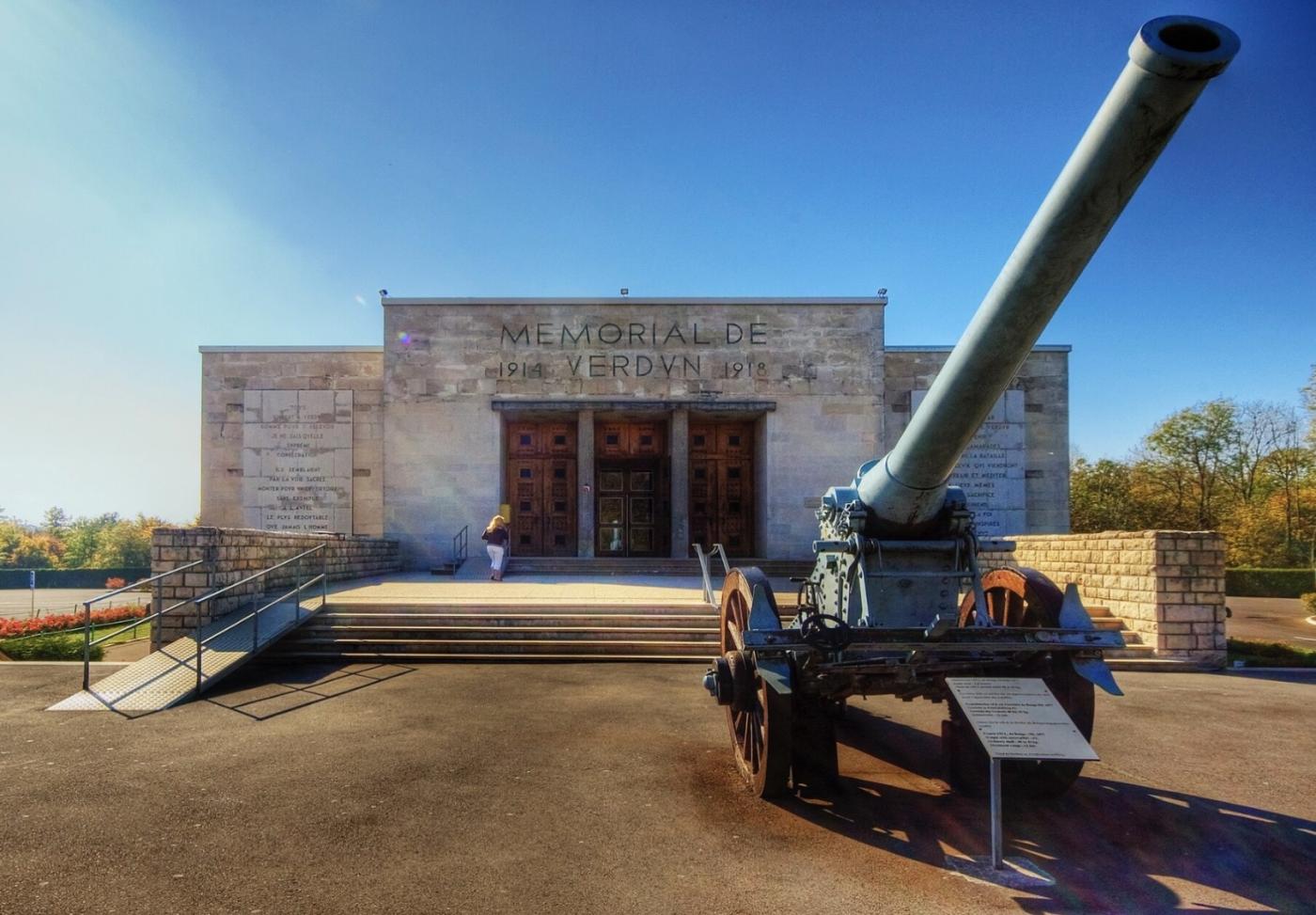
The Battle of Verdun became known in First World War history as a symbol of endurance, sacrifice, and the brutal reality of industrialised warfare. It demonstrated the devastating power of modern artillery and the difficulty of achieving decisive victories on the Western Front. Verdun also became a powerful symbol of French national resistance, encapsulated in the phrase “They shall not pass.” The battle showed the limits of attrition strategies and contributed to shifts in military thinking about how to conduct large-scale offensives. Interesting aspects of the battle include the near-total destruction of the landscape around Verdun, where entire villages were wiped out and never rebuilt, and the fact that by the end of the war, the battlefield remained littered with unexploded shells and human remains. Verdun’s legacy endured long after the guns fell silent, standing as one of the most iconic and tragic struggles of the First World War.