On this day in military history…
On 7 March 1936 Adolf Hitler ordered German troops to march into the Rhineland, a region of western Germany that had been designated a demilitarised zone under the Treaty of Versailles after the First World War. The decision marked one of the most significant early acts of defiance by Nazi Germany against the post-1919 international order and represented a major turning point in European politics. Although the action appeared dramatic and risky, it was carefully calculated by Hitler, who believed that the former Allied powers lacked the will to oppose him.
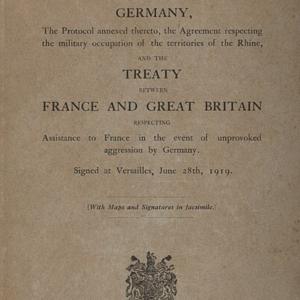
The Treaty of Versailles, signed in 1919, had imposed strict limitations on Germany after its defeat in the First World War. Among its many conditions was the requirement that Germany keep the Rhineland free of military forces. This region bordered France, Belgium and the Netherlands and had long been viewed by France as a buffer zone that would provide security against future German aggression. By prohibiting German troops and fortifications there, the treaty aimed to make it harder for Germany to launch a surprise attack on France and to ensure that France would have time to respond if war threatened again.
The demilitarisation of the Rhineland was reinforced by later agreements, including the Locarno Treaties of 1925. Under these agreements, Germany, France and Belgium accepted their western borders as permanent, and Britain and Italy agreed to guarantee them. Germany’s acceptance of these treaties helped it regain a degree of diplomatic respectability during the 1920s, and many European leaders believed that a stable peace had finally been achieved. However, Adolf Hitler, who became German chancellor in 1933, had always intended to overturn the Versailles settlement and restore German military strength and territorial power.
Throughout the early 1930s Hitler moved gradually to dismantle the restrictions imposed on Germany. He withdrew from the League of Nations in 1933, began rearming Germany in secret and then openly, and introduced conscription in 1935 in direct violation of the treaty. Each step tested the willingness of Britain and France to respond. Their reactions were limited to protests and diplomatic criticism rather than military action, which encouraged Hitler to push further. The remilitarisation of the Rhineland became a key objective because it would strengthen Germany’s western defences and free Hitler to pursue expansion in eastern Europe without fear of a French attack from the west.
International developments in 1935 and early 1936 helped convince Hitler that the time was right. One important factor was the crisis caused by Benito Mussolini’s invasion of Ethiopia in 1935. When Italy attacked Ethiopia, the League of Nations condemned the aggression and imposed sanctions on Italy. Britain and France were distracted by this crisis and also concerned about maintaining good relations with Italy as a potential ally against Germany. Hitler observed how the League’s sanctions proved ineffective and how Mussolini faced little real military opposition for his actions. The apparent weakness and division among the major powers reinforced Hitler’s belief that bold moves would go unchallenged.
Another factor was the Franco-Soviet Mutual Assistance Pact signed in 1935. This agreement between France and the Soviet Union was intended as a defensive alliance against German aggression. Hitler used it as a pretext to justify his decision to remilitarise the Rhineland, claiming that the pact threatened Germany and violated the spirit of the Locarno agreements. In reality, the French-Soviet pact was limited and required League of Nations approval before any military cooperation could occur, but Hitler portrayed it as a direct danger to German security in order to present his move as defensive rather than aggressive.
The decision to send troops into the Rhineland was not without risk. The German army in 1936 was still relatively weak compared with the combined forces of France and its allies. Hitler instructed the troops involved that if French forces intervened militarily, they were to withdraw immediately. Only a small number of battalions were sent at first, supported by lightly armed forces. Hitler later admitted that the forty-eight hours after the troops crossed into the Rhineland were the most nerve-wracking of his life, because a determined French response could have forced Germany into a humiliating retreat and potentially weakened his regime at home.
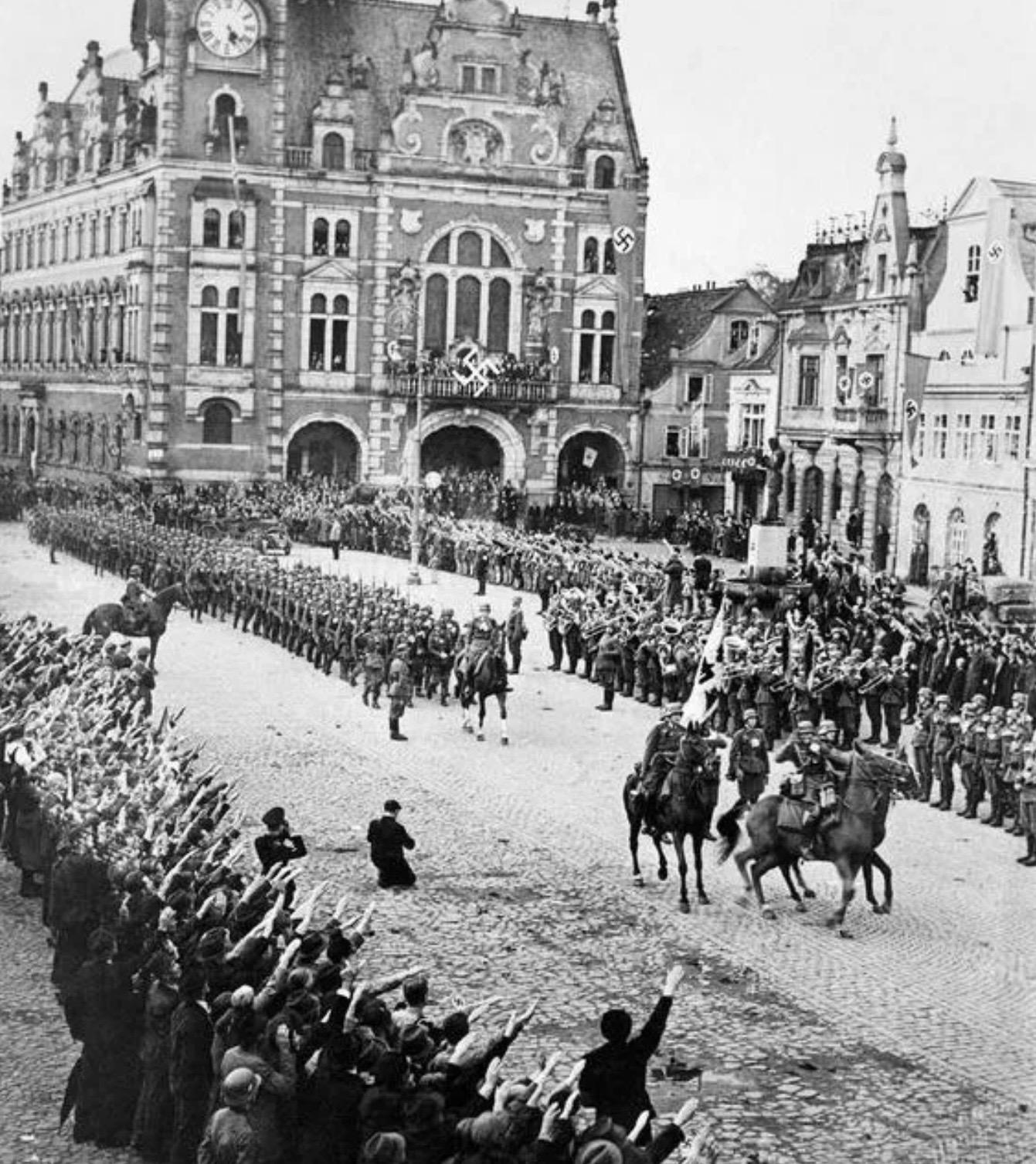
On the morning of 7 March 1936 German forces marched into the Rhineland, entering cities such as Cologne, Bonn and Koblenz. They were greeted by cheering crowds and widespread nationalist enthusiasm within Germany. Many Germans viewed the demilitarisation of the Rhineland as a symbol of national humiliation imposed by Versailles, and Hitler’s action was seen as restoring German sovereignty and pride. At the same time, German diplomats announced that Germany would consider new peace agreements and proposed a twenty-five-year non-aggression pact with France and Britain, presenting the remilitarisation as part of a broader effort to secure peace.
France was the country most directly threatened by the move, but its response was cautious and hesitant. The French government was politically divided and facing domestic economic difficulties. Military leaders advised that while France could probably defeat German forces in the Rhineland at that moment, they preferred not to act without British support. France had a strong army but lacked confidence and feared the political consequences of acting alone. The French government therefore appealed to the League of Nations and sought diplomatic consultation rather than immediate military action.
Britain also responded with restraint. Many British politicians and members of the public believed that Germany was simply moving troops into its own territory and that the Treaty of Versailles had been too harsh. There was little appetite in Britain for another war less than twenty years after the First World War. British leaders favoured negotiation and saw Hitler’s move as understandable from a German perspective, even if it technically violated international agreements. As a result, Britain did not support French proposals for military intervention.
The League of Nations condemned Germany’s action but took no effective measures to reverse it. Without a unified military response from Britain and France, the remilitarisation of the Rhineland became a fait accompli. Hitler had successfully defied the Versailles and Locarno treaties without facing serious consequences. This success greatly strengthened his position both within Germany and internationally. It boosted his popularity at home, where he was celebrated for restoring national honour, and it demonstrated to other countries that the Western powers were unwilling to use force to enforce the post-war settlement.
The strategic consequences were profound. With German troops now stationed in the Rhineland, France lost its buffer zone and faced a fortified German frontier. Hitler soon began constructing the Westwall, or Siegfried Line, a system of defensive fortifications along Germany’s western border. This made it much harder for France to contemplate military action against Germany in the future. The remilitarisation also allowed Hitler to pursue expansionist ambitions elsewhere, including the annexation of Austria in 1938 and the occupation of Czechoslovakia, without fear of a swift French invasion.
Many historians consider the remilitarisation of the Rhineland to be one of the most critical missed opportunities to stop Hitler before the outbreak of the Second World War. At the time, Germany was not yet strong enough to resist a determined French and British military response. Some German generals were nervous about the operation and worried that a confrontation with France could lead to disaster. If Hitler had been forced to retreat, it might have undermined his authority and possibly altered the course of German politics. Instead, the lack of opposition encouraged him to take increasingly bold risks.
The events of March 1936 demonstrated the fragility of the international system created after the First World War. The failure of Britain, France and the League of Nations to respond decisively signalled that treaties could be violated without severe consequences. Hitler drew the lesson that the Western democracies were reluctant to fight and could be intimidated by rapid, decisive action. The remilitarisation of the Rhineland therefore stands as a key step in the breakdown of collective security in Europe and in the chain of events that ultimately led to the Second World War.