Vietnam Air Battle
On 7 March 1972 one of the most intense and wide-ranging air battles of the later Vietnam War unfolded over North Vietnam and the Gulf of Tonkin, marking a dramatic surge in aerial combat after nearly three years in which large-scale air-to-air fighting had been relatively limited. By early 1972 both the United States and North Vietnam were probing each other’s strength as tensions rose ahead of what would soon become the Easter Offensive, and the skies over the north suddenly became crowded with fighters, strike aircraft and interceptors in numbers not seen since the height of Operation Rolling Thunder.
During the day’s operations more than 150 aircraft from both sides were involved in a series of linked engagements stretching from the Red River Delta to the coast. The United States committed a large strike package drawn from the US Air Force’s 7th Air Force in South Vietnam and US Navy carrier air wings operating from the Gulf of Tonkin. These packages included dozens of F-4 Phantom II fighters acting as escort and MiG-combat air patrols, supported by F-105 Thunderchief and A-7 Corsair II strike aircraft, EB-66 electronic warfare planes, and KC-135 tankers orbiting offshore. In response, the North Vietnamese air defence network scrambled a significant portion of its fighter force, including MiG-17 Frescos, MiG-19 Farmers and MiG-21 Fishbeds from bases around Hanoi, Kep and Phuc Yen.
As the American strike formations approached heavily defended targets, North Vietnamese ground controllers directed waves of interceptors toward them. Radar-guided ground control interception allowed MiG pilots to climb into advantageous positions before diving into the American formations. US radar warning receivers detected the incoming fighters and multiple flights of F-4 Phantoms moved to engage. What followed was a complex series of dogfights involving more aircraft than had met in a single day since 1968, with some American pilots later remarking that the level of action surpassed anything they had seen since the peak years of Rolling Thunder.
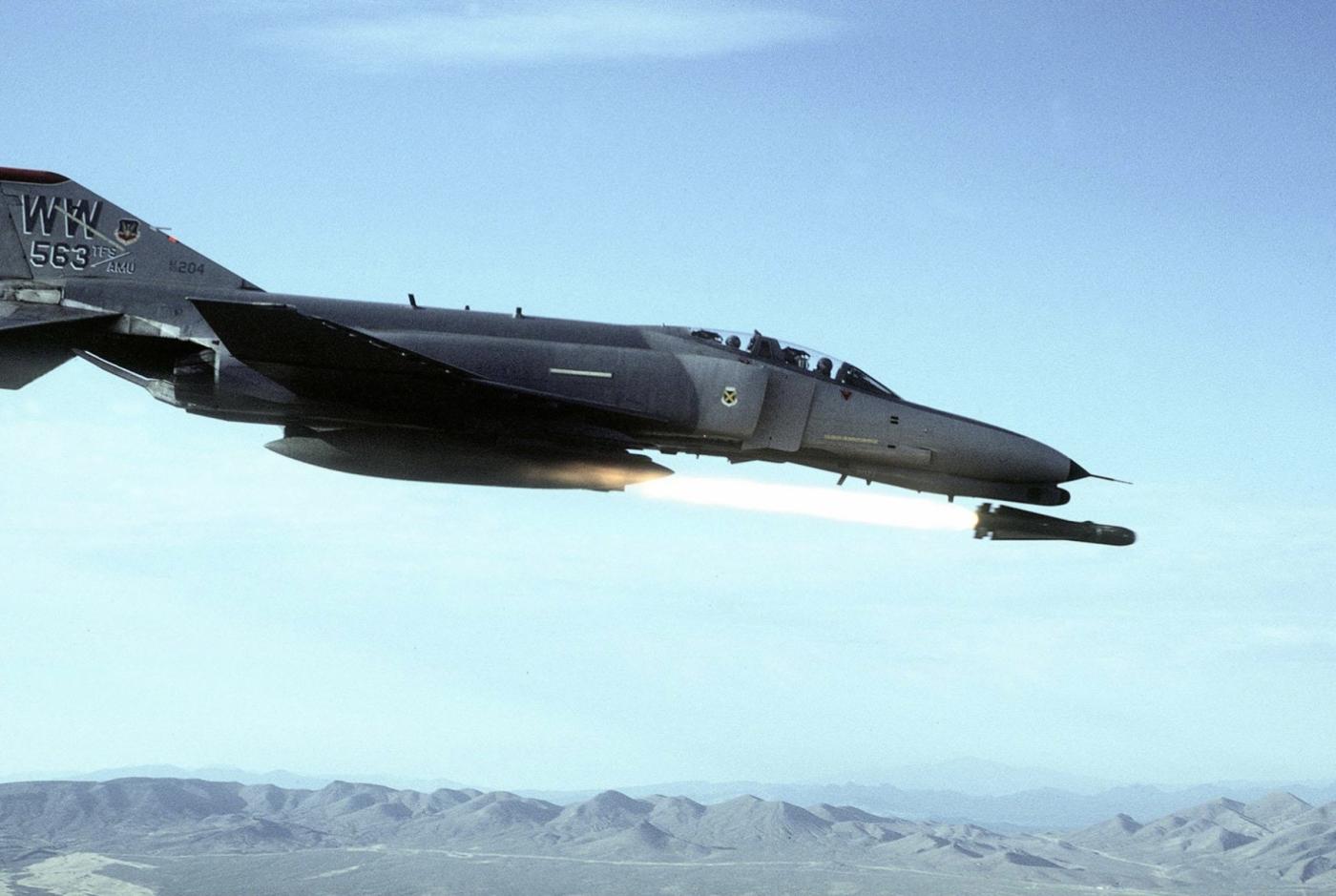
US Navy F-4J Phantoms from carrier squadrons were among the first to score successes. Using AIM-7 Sparrow radar-guided missiles, they intercepted and downed several MiG-21s attempting high-speed attacks on the strike packages. One Navy Phantom crew was credited with destroying a MiG-21 at medium altitude after a stern chase guided by airborne radar controllers from an E-2 Hawkeye. Almost simultaneously, US Air Force F-4E Phantoms operating under MiGCAP duties engaged MiG-17s that had climbed to attack lower-flying strike aircraft. These engagements often devolved into turning dogfights where the more agile MiG-17s tried to outmanoeuvre the heavier Phantoms. Several MiG-17s were shot down by Sidewinder infrared-guided missiles fired from close range, while others were driven off.
MiG-19s, which had only been introduced into North Vietnamese service in limited numbers, also joined the fighting. Flying from bases near Hanoi, they attempted high-speed passes through the American formations. US F-4 crews reported at least two MiG-19s destroyed during the day, one by a Navy Phantom using an AIM-9 Sidewinder and another by an Air Force Phantom using an AIM-7 Sparrow. The MiG-19’s speed and heavy cannon armament made it dangerous in head-on attacks, but it was vulnerable when engaged by coordinated Phantom pairs using radar and missile advantage.
By the end of the day US forces claimed a total of around seven North Vietnamese fighters shot down in the multiple engagements of 7 March. Most of these were MiG-21s and MiG-17s, with a smaller number of MiG-19s. American losses to enemy fighters were limited, though several aircraft were damaged by anti-aircraft fire and surface-to-air missiles, which remained the most lethal element of North Vietnam’s air defence network. North Vietnamese sources later acknowledged losses but often reported lower numbers, as was typical for both sides during the conflict.
What made the 7 March fighting particularly notable was not only the number of aircraft involved but the intensity and coordination on both sides. For the United States it was a sign that North Vietnam was willing to commit its fighter force in strength again after years of more cautious operations. For North Vietnam it demonstrated that its pilots, guided by an increasingly sophisticated radar network and backed by Soviet-supplied aircraft and missiles, could still challenge large American strike formations.
Pilots who flew that day frequently described the skies as crowded and chaotic, with multiple contrails, missile launches and radio calls filling the air. Some crews reported seeing more enemy aircraft in a single mission than they had encountered over several previous tours combined. The engagements also highlighted improvements in American training and tactics, particularly those influenced by the US Navy’s TOPGUN programme and revised Air Force combat training, which emphasised missile employment and coordinated flight tactics against MiG opponents.
The surge in aerial combat on 7 March 1972 foreshadowed the even larger and more famous air battles that would erupt later that spring during Operation Linebacker and the Easter Offensive. It marked the moment when the long relative lull in large-scale air-to-air combat ended and the air war over Vietnam returned to a level of intensity that rivalled the most active periods of the conflict’s earlier years.