On this day in military history…
On 18 January 1991, only hours into the opening phase of the Gulf War, a small, fast-moving action in the northern Persian Gulf quietly made history. It marked the first time prisoners of war were captured following a coordinated strike that blended modern naval missile power with helicopter-borne assault, a signal of how warfare itself was changing at the dawn of the 1990s.
The wider conflict had begun just the day before with the launch of the coalition air campaign that sought to overwhelm Iraqi command and control through speed, precision, and relentless pressure. While much public attention focused on dramatic air strikes over Baghdad, the opening naval actions were just as significant. Iraqi forces occupied a string of small islands off the Kuwaiti coast, using them as observation posts to monitor shipping and potentially threaten coalition vessels with missiles or mines.
One of these positions was on Failaka Island, where Iraqi troops were dug in but isolated. In the early hours of 18 January, coalition commanders decided to neutralize the position using a combination of sea-launched missiles and attack helicopters, an approach that had never before resulted in the capture of enemy soldiers. United States Navy frigates moved into position under cover of darkness, their sensors fixed on the coastline while helicopters waited for the signal to strike.
The attack opened with precision missile fire from the frigates, smashing communications equipment and defensive positions. Almost immediately afterward, attack helicopters swept in at low altitude, their rotors echoing across the island as they targeted remaining strongpoints. The coordination between ship and helicopter was exacting, with naval firepower suppressing resistance while the helicopters dominated the battlefield from above.
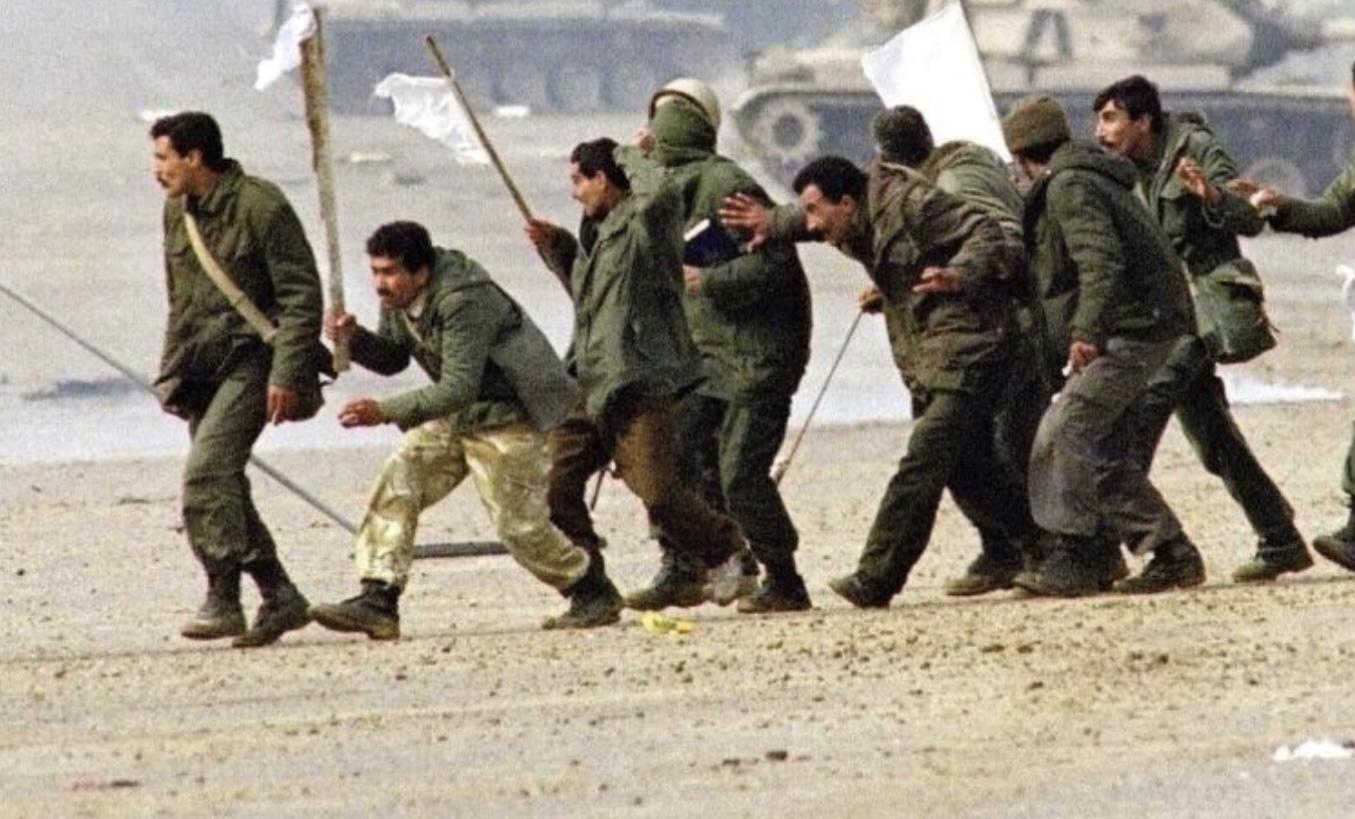
What followed surprised even the attackers. Instead of fighting to the last, dozens of Iraqi soldiers emerged from bunkers and trenches, waving makeshift white flags. Cut off, disoriented by the sudden violence, and facing weapons they had little chance of countering, they chose surrender. Coalition forces secured the island without a prolonged firefight, capturing prisoners who became the first Iraqis taken into custody as a direct result of a joint missile and helicopter assault.
This moment was more than a minor tactical success. It demonstrated the psychological impact of combined operations executed with speed and precision. The prisoners later described confusion and fear, explaining how the initial missile strikes shattered any sense of command, while the sudden appearance of helicopters convinced them that resistance was pointless.
The action also carried wider significance. It showed how modern naval forces could project power ashore with accuracy and coordination, rather than simply controlling the sea. The events of 18 January 1991 offered an early glimpse of future warfare, where integrated forces could overwhelm an enemy not only through destruction, but through shock, isolation, and the rapid collapse of morale.