WW1 loans
The First World War imposed a financial burden on Britain on a scale never previously experienced in its history. In 1914, total annual government expenditure had been roughly £200 million. By the final year of the war, annual spending exceeded £2,600 million. Over the entire conflict from 1914 to 1918, Britain’s direct wartime expenditure amounted to approximately £9.5 billion. To grasp the magnitude of this figure, it was more than ten times the national debt that existed before the war began. When the war broke out in August 1914, Britain’s national debt stood at about £650 million; by 1919 it had risen to around £7.4 billion.
Much of this money went to sustaining the enormous expansion of Britain’s armed forces. In 1914 the British Army was relatively small by continental standards, but by 1918 it had mobilized millions of men. Paying soldiers’ wages, providing pensions for the wounded and dependents of the dead, and maintaining troops overseas consumed vast sums. Soldiers’ basic pay was modest, but the cumulative cost of maintaining millions in uniform was immense. Naval expenditure was also extremely high. The Royal Navy, the largest in the world, required constant supplies of coal, ammunition, ship maintenance, and new construction. Battleships, cruisers, destroyers, and submarines were expensive to build and maintain, and Britain continued to invest heavily in naval dominance throughout the war.
A significant share of expenditure went on munitions. The shell crisis of 1915 exposed serious shortages, leading to the creation of the Ministry of Munitions under David Lloyd George before he became prime minister. The government poured money into factories producing artillery shells, rifles, machine guns, and explosives. Entire new industrial plants were constructed, and existing factories were expanded or converted to war production. By 1918 Britain was producing millions of shells annually. The cost included not only raw materials such as steel and chemicals but also wages for hundreds of thousands of workers, including many women who entered heavy industry for the first time.
Another major expense was support for allies. Britain made large loans to countries such as France, Russia, and Italy to enable them to purchase supplies and continue fighting. These inter-allied loans ran into hundreds of millions of pounds. In addition, Britain financed military campaigns in multiple theatres beyond the Western Front, including Gallipoli, Mesopotamia, East Africa, and Palestine. Each campaign required transport ships, medical services, engineering works, and logistical support. The global nature of the British Empire meant that defending trade routes and colonies added further strain.
Food and raw materials were also costly. As a trading nation dependent on imports, Britain had to pay for vast quantities of grain, meat, and other essentials from overseas. German submarine warfare increased shipping losses, pushing up freight rates and insurance costs. The government intervened increasingly in food markets, guaranteeing prices to farmers and subsidizing imports. By the later years of the war, state control over food supply and distribution added administrative and financial burdens.
To pay for this unprecedented expenditure, Britain relied on a combination of taxation and borrowing. Taxation increased dramatically. Income tax, which had been relatively low before 1914, was raised multiple times during the war. By 1918 the standard rate had reached 6 shillings in the pound, or 30 percent. Super-tax on higher incomes increased as well. The government also introduced or expanded taxes on excess business profits, targeting companies that benefited from wartime demand. Customs and excise duties on goods such as alcohol and tobacco were raised. Overall, taxation accounted for roughly 30 percent of the total cost of the war.
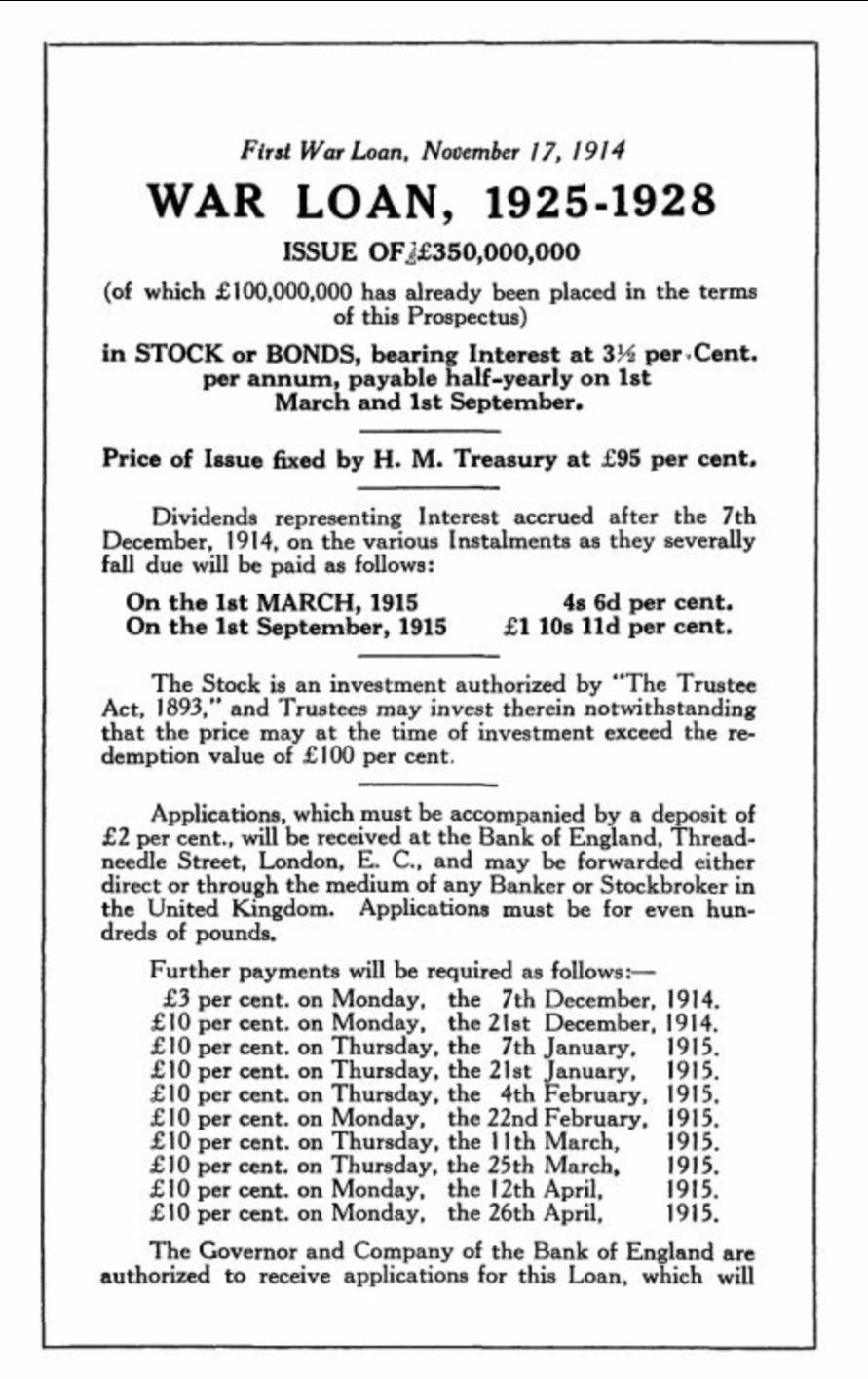
However, the majority of funding—about 70 percent—came from borrowing. The government issued a series of war loans to the public. These were heavily promoted as patriotic investments, with posters urging citizens to lend their savings to the nation. Interest rates were attractive enough to encourage subscription, and millions of people participated. Treasury bills provided short-term borrowing from financial institutions. The government also borrowed extensively from the banking system, effectively creating credit that expanded the money supply.
Britain did not rely solely on domestic sources. From 1916 onward, as the strain intensified, the government borrowed heavily from the United States. Before America entered the war in 1917, American banks provided loans; after U.S. entry, the American government extended substantial credit. By the end of the war, Britain owed the United States over £850 million. This marked a significant shift in global financial power, as Britain, long the world’s leading creditor nation, became a major debtor.
Repayment of the war debt was a long and complex process rather than a single event. Britain continued servicing interest on its First World War debt throughout the interwar period and beyond. The loans owed to the United States were finally settled on 31 December 2006, when the British government made the last repayment on its wartime borrowings from America. Domestic war debt, much of it converted into long-term government bonds known as consols, was refinanced repeatedly over the twentieth century. In fact, some government bonds originally issued to fund the First World War were not fully redeemed until 9 March 2015, when the UK Treasury paid off the remaining undated gilts that traced their origins back to First World War borrowing.
The financial strain had significant economic consequences. Inflation rose sharply during the war years, roughly doubling prices between 1914 and 1918. While wages increased in some sectors, especially munitions, many civilians found their purchasing power reduced. The national debt required ongoing interest payments long after the fighting ended, placing pressure on postwar budgets. Servicing the debt became a central issue in British politics throughout the 1920s.
In total, the First World War cost Britain not only billions of pounds but also its former position as the world’s dominant financial power. The immense sums spent on soldiers’ pay, munitions, naval supremacy, allied support, and global logistics were financed through unprecedented taxation, mass public borrowing, and heavy reliance on American credit. The final repayments, stretching into the twenty-first century, underline just how profound and long-lasting the financial impact of the war proved to be.