On this day in military history…
The first successful sea-based missile engagement of the Gulf War involved the U.S. Navy frigate USS Nicholas during the opening weeks of the conflict, a moment that quietly marked a turning point in modern naval air defense. As coalition forces moved to expel Iraqi troops from Kuwait in January 1991, U.S. and allied warships operated close to the northern Persian Gulf, an area heavily threatened by mines, shore-based missiles, and air attack. Iraqi forces possessed Chinese-built HY-2 Silkworm anti-ship missiles positioned along the Kuwaiti and Iraqi coasts, weapons specifically designed to target large surface vessels and oil tankers operating offshore.
USS Nicholas, an Oliver Hazard Perry–class frigate equipped with the Standard Missile-1 medium-range surface-to-air missile system, was assigned to operate near Kuwait’s coastline alongside other coalition ships. On the night of 24–25 January 1991, the frigate was already involved in a dangerous surface action, providing cover while U.S. Navy SEALs and Kuwaiti forces boarded and captured the Iraqi minelayer Ibn Khaldoon. This operation was significant in its own right, as it was one of the first coalition naval surface actions of the war and eliminated a vessel actively laying mines in coalition shipping lanes.
Shortly after this boarding operation, Iraqi forces launched a Silkworm missile from a coastal battery aimed at coalition naval units operating offshore. The missile flew at very low altitude, skimming the surface of the water to reduce radar detection and reaction time. Radar operators aboard USS Nicholas detected the incoming threat, quickly identified it as hostile, and alerted the ship’s combat information center. With only moments to react, the frigate was cleared to engage.
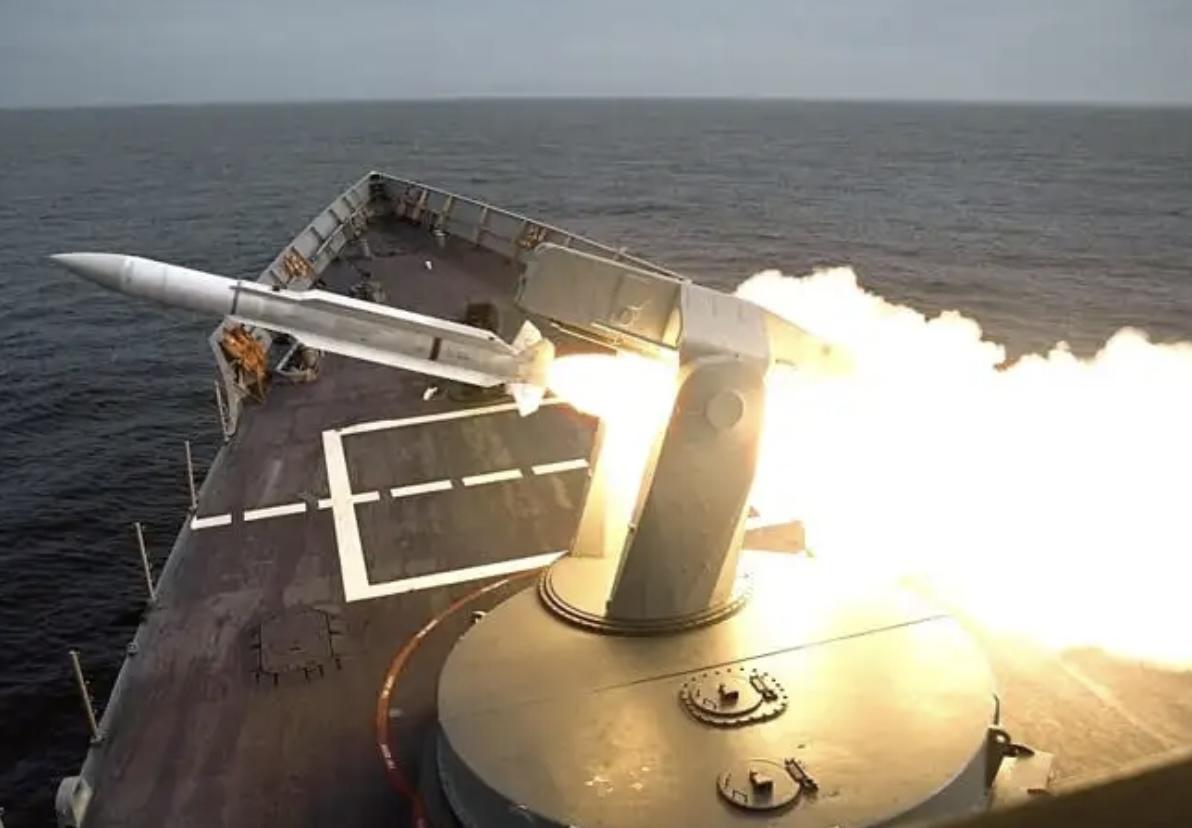
Using its Mk 13 missile launcher, USS Nicholas fired a Standard SM-1 surface-to-air missile. Guided by the ship’s radar, the missile successfully intercepted and destroyed the Silkworm in mid-air before it could reach the task group. This engagement is widely regarded as the first time during the Gulf War that a ship-launched surface-to-air missile destroyed an incoming anti-ship missile in combat, and one of the earliest real-world demonstrations of modern naval missile defense performing under wartime conditions.
One particularly interesting aspect of the engagement is that USS Nicholas was not a large, specialized air-defense cruiser or destroyer, but a relatively small frigate originally designed for escort and general-purpose duties. Its success demonstrated the effectiveness of the Standard Missile system and the importance of crew training, coordination, and rapid decision-making under combat pressure. The event also reinforced coalition awareness of the danger posed by shore-based missile batteries, even when operated by a technologically inferior opponent.
In the wider context of the Gulf War, the action involving USS Nicholas illustrated how naval warfare had evolved. Coastal missile threats, mines, and asymmetric attacks could challenge even the most advanced fleets. The successful interception not only protected coalition ships at a critical moment but also validated decades of investment in naval air defense technology,