On this day in military history…
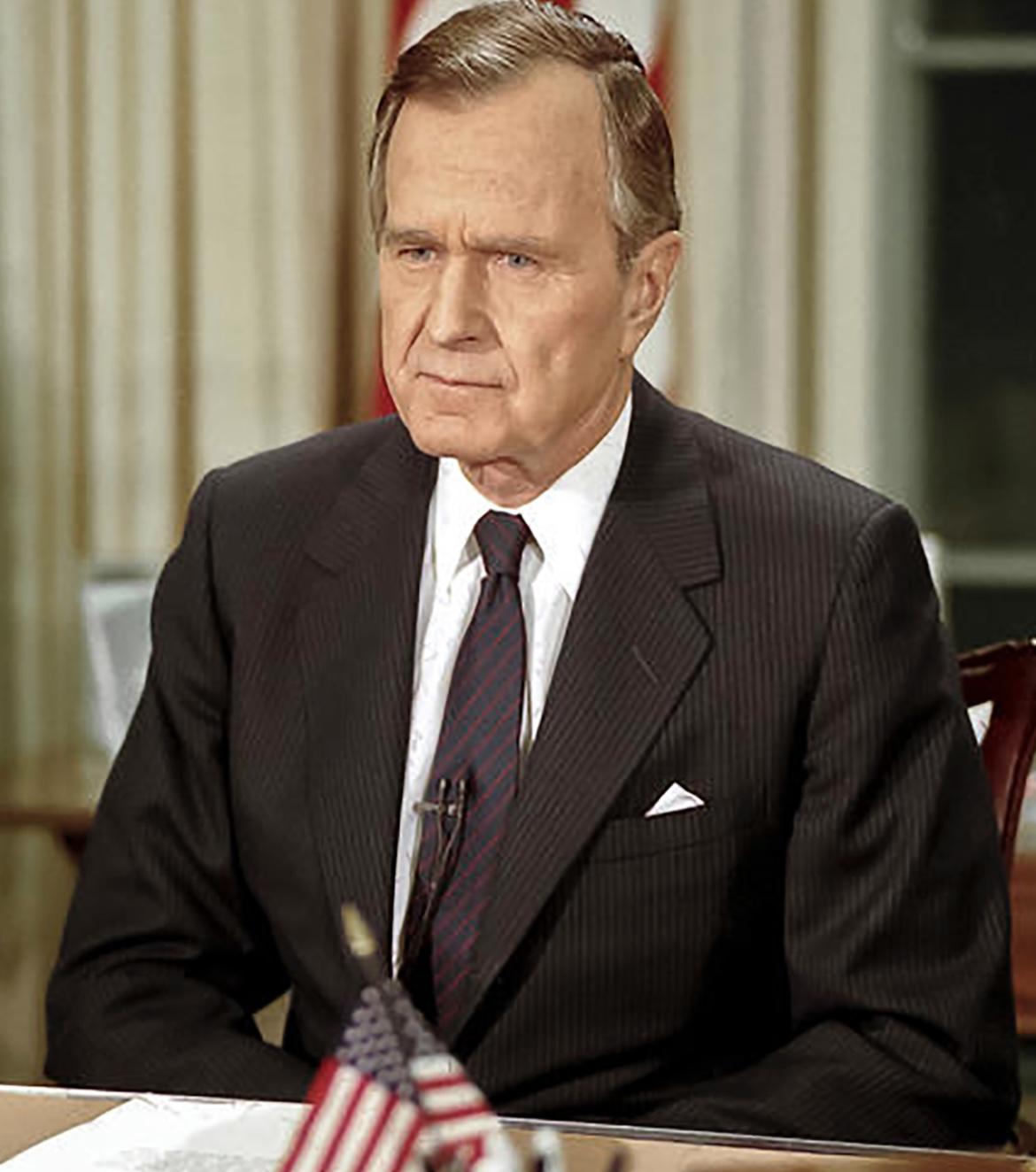
On 14 January 1991, President George H. W. Bush signed into law the Authorization for Use of Military Force Against Iraq Resolution of 1991, a decisive legal step that empowered the president to employ U.S. armed forces to implement earlier United Nations resolutions responding to Iraq’s invasion and annexation of Kuwait. The authorization followed intense debate in the United States Congress and passed narrowly, reflecting the gravity of committing the country to a major war only weeks after the end of the Cold War. The law explicitly tied U.S. action to international legitimacy by directing that force be used to uphold the authority of the United Nations, rather than as a unilateral campaign.
The context for the signing was a months-long diplomatic and military buildup after Iraqi forces crossed into Kuwait in August 1990. A broad coalition had assembled under U.S. leadership, with troops and matériel flowing into Saudi Arabia during Operation Desert Shield. Diplomacy continued alongside the buildup, including last-minute efforts to persuade Baghdad to withdraw. The January 14 signature came just one day before the deadline set by the United Nations for Iraqi compliance, underscoring how closely the U.S. timetable was synchronized with international decisions.
At the United Nations, the decisive green light for force had already been given by the United Nations Security Council through Resolution 678, adopted on 29 November 1990, which authorized member states to use “all necessary means” to uphold prior resolutions if Iraq did not withdraw by 15 January 1991. The vote was 12 in favor, two against, and one abstention, a rare instance of post–Cold War consensus among the permanent members, including cooperation between the United States and the Soviet Union. While this authorization preceded the U.S. law by several weeks, its practical effect became operative only after the January 15 deadline passed, meaning that international authority to use force took effect immediately after President Bush signed the congressional resolution.
Following the start of hostilities on 17 January 1991, the United Nations continued to play an active role. Subsequent Security Council votes after January 14 did not reauthorize the war itself, which was already covered by Resolution 678, but they did reinforce and shape the conflict’s legal framework. In March and April 1991, the Council adopted resolutions setting the terms for a ceasefire, demanding Iraq’s acceptance of disarmament obligations, recognition of Kuwait’s sovereignty, and compliance with weapons inspections. These postwar votes passed with strong majorities, signaling continued international backing for the coalition’s objectives even after active combat had begun.
An interesting feature of the January 14 authorization is how narrowly it passed in Congress compared with the breadth of international support. In the Senate, the vote was 52–47, while the House approved it 250–183. Many legislators expressed concern about casualties and the risk of a prolonged regional conflict, yet the administration argued that congressional backing was essential both constitutionally and diplomatically, demonstrating to allies and adversaries alike that the United States was politically unified. President Bush himself emphasized that the authorization was not a declaration of war in the traditional sense but a conditional mandate linked to United Nations enforcement.