
On this day in military history…
On 13 January 1943, Adolf Hitler formally endorsed a decisive shift in German wartime policy that historians commonly describe as the legal and administrative beginning of total war in the Third Reich. This move came at a moment of acute crisis. The German Sixth Army was encircled at Stalingrad, Allied bombing was intensifying over German cities, and the Wehrmacht was suffering manpower losses that could no longer be replaced through traditional conscription alone. The proclamation did not appear as a single dramatic public speech, but rather as a series of decrees and authorisations that concentrated extraordinary powers in the hands of the Nazi leadership to mobilise every remaining human and economic resource for the war effort.
The order was signed in Berlin, within the Reich Chancellery complex, which at that time functioned as both Hitler’s official workplace and the symbolic centre of Nazi authority. The atmosphere surrounding the decision was tense and inward-looking. Unlike earlier declarations of war or territorial ambitions, this proclamation was not designed to impress the public but to force the German state into a mode of survival. It authorised the regime to override civilian protections, labour norms, and long-standing exemptions that had previously kept large parts of the population away from direct military service.
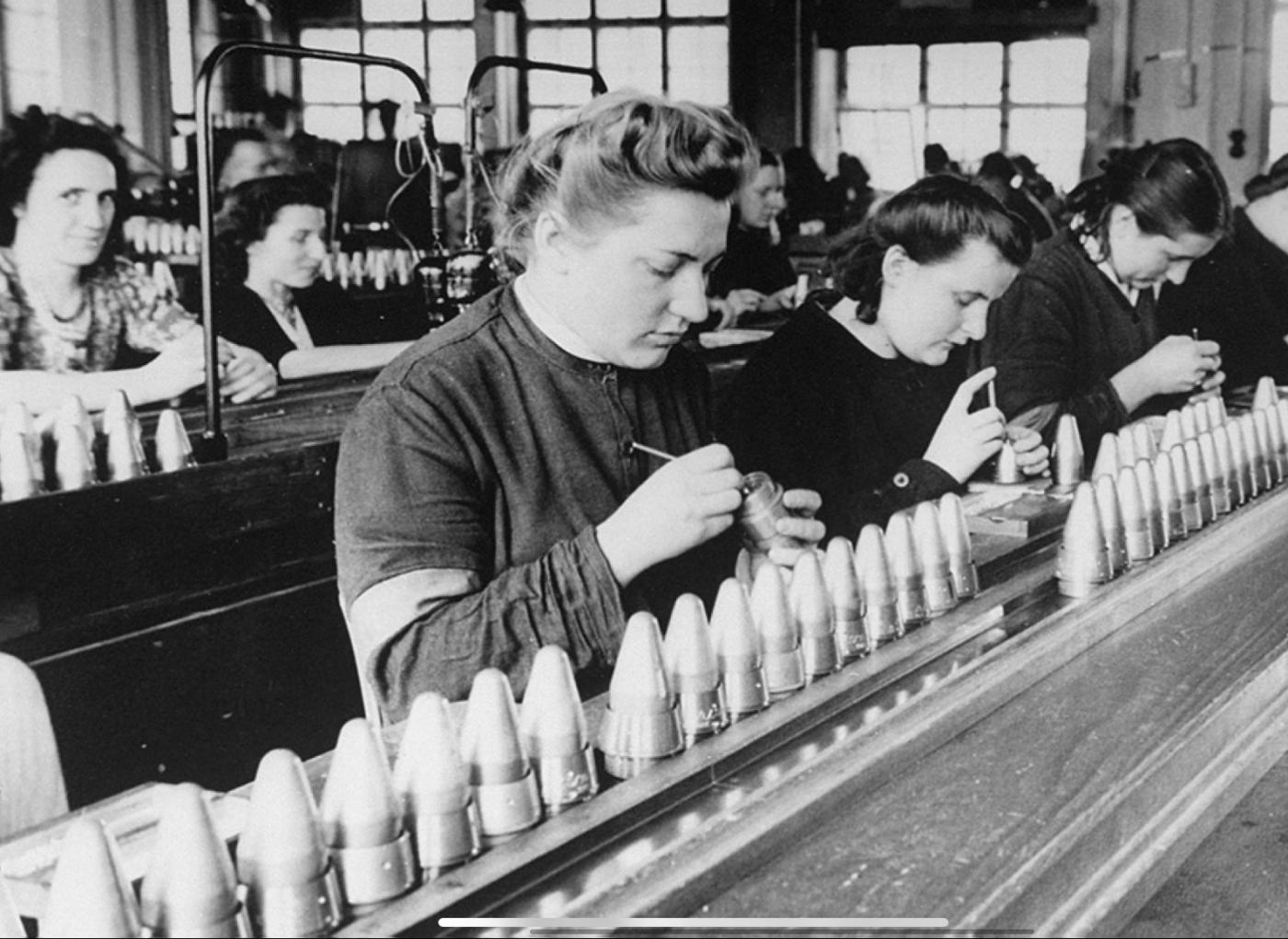
One of the most immediate consequences was a radical restructuring of the labour force. Men who had been deemed essential to industry, transport, and administration were progressively released for military service, particularly those in younger and middle age brackets who had initially been protected as indispensable specialists. Their places were increasingly taken by women, older men, and foreign forced labourers. German women were drawn into factories, offices, transport networks, and even anti-aircraft auxiliary units in far greater numbers than before, although the regime continued to frame their participation as a temporary sacrifice rather than a permanent social change. This expansion of women’s labour was crucial, because it allowed the army to reclaim hundreds of thousands of men who had previously remained behind the lines.
Age limits for mobilisation were also extended. Younger teenagers were funnelled into pre-military training organisations, while older men, previously considered too old for frontline duty, were reassigned to rear-area security, construction units, and later combat formations. Although the most extreme example, the Volkssturm, would not be formally created until late 1944, the legal groundwork for mobilising nearly all males from adolescence to old age was laid during this early 1943 shift toward total war.
Estimating how many additional soldiers this policy ultimately produced is difficult, because mobilisation occurred in waves rather than through a single call-up. Most historians agree that the measures introduced from early 1943 onward freed and generated several million additional men for military purposes across the remainder of the war. Of these, roughly one to one and a half million can be directly linked to the reclassification of previously exempt workers and the substitution of women and forced labour in industry during 1943 alone. However, these gains came at a cost. Many of the newly mobilised soldiers were older, less physically fit, or insufficiently trained, which reduced overall combat effectiveness and increased casualty rates.
An often-overlooked aspect of the January 1943 decision is how reluctant Hitler himself initially was to use the language of total war in public. He feared that openly admitting Germany’s desperation might undermine morale. For this reason, the ideological framing of total war was later pushed more aggressively by Joseph Goebbels, culminating in the famous Sportpalast speech in February 1943. Yet the legal reality preceded the rhetoric. By mid-January, Germany was already committed to a form of warfare in which civilian life, gender roles, and age boundaries were subordinated entirely to military necessity.
In retrospect, the proclamation symbolised a turning point where the Nazi regime abandoned any remaining distinction between front and home front. While it temporarily increased the number of soldiers available to fight, it also accelerated the exhaustion of German society. The mobilisation of women and older men kept the war going longer than Germany’s material situation justified, but it could not reverse the strategic imbalance. Instead, it marked the beginning of a prolonged collapse in which total mobilisation led not to victory, but to deeper social strain and ultimately total defeat.