On this day in military history…
Operation Cedar Falls was a major United States–South Vietnamese ground offensive conducted in January 1967 during the Vietnam War, focused on the Iron Triangle, a long-standing Viet Cong stronghold northwest of Saigon. The Iron Triangle had resisted repeated clearing efforts for years and was regarded by U.S. commanders as one of the most important enemy base areas in South Vietnam. Bordered by rivers and dense jungle, it served as a staging ground for attacks, a logistics hub, and a political center for Viet Cong influence in the surrounding provinces and even the capital region itself.
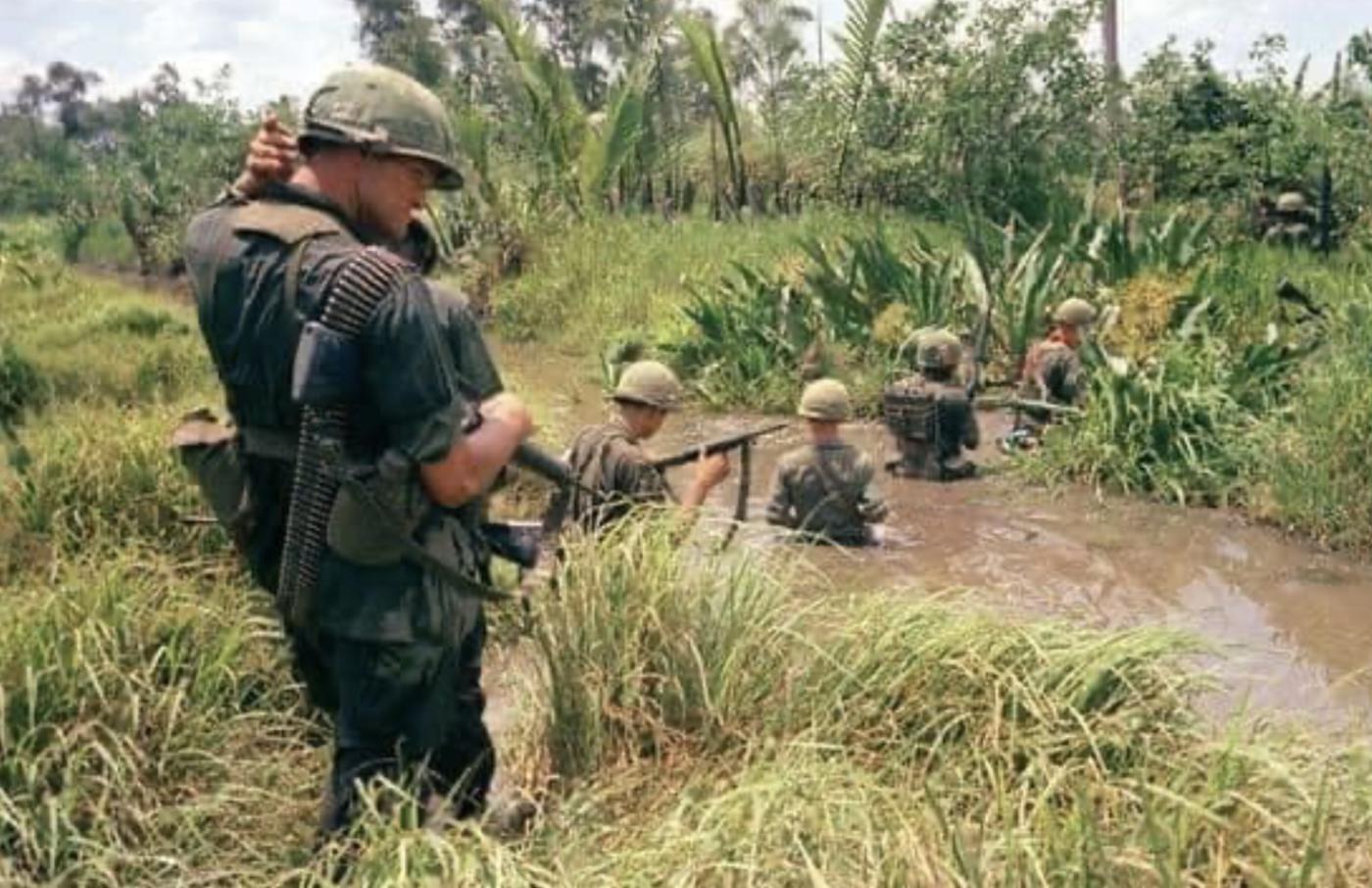
The operation took place from 8 to 26 January 1967 and was organized under II Field Force, Vietnam, commanded by Jonathan O. Seaman. Large elements of the 1st Infantry Division and the 25th Infantry Division formed the core of the attacking force, supported by armored units, engineers, artillery, and South Vietnamese Army troops. At the time, Cedar Falls was one of the largest and most carefully planned ground operations of the war, involving more than 30,000 troops. The scale reflected a belief that previous operations had failed because they lacked the troop density needed to seal off enemy escape routes.
The Iron Triangle itself was valuable to the Viet Cong not just for its terrain but for its population and infrastructure. Villages in the area provided food, recruits, intelligence, and concealment, while extensive tunnel networks allowed fighters to evade airpower and artillery, store supplies, and move unseen. U.S. planners increasingly viewed the area as a complete system rather than simply hostile terrain. As a result, the objectives of Cedar Falls went beyond defeating enemy units in combat. The aim was to dismantle the entire Viet Cong presence by destroying base camps, uncovering tunnel complexes, seizing documents and supplies, and removing the civilian population that sustained guerrilla operations.
The plan relied on a large encirclement combined with methodical sweeps through the interior. Blocking forces were positioned along rivers and likely withdrawal routes, while infantry and armored units advanced inward, supported by engineers clearing jungle and opening access routes. Bulldozers and specialized equipment were used extensively, both to uncover bunkers and to permanently alter the landscape so that it could no longer serve as effective cover. This deliberate reshaping of the terrain was intended to prevent the Iron Triangle from quickly reverting to an enemy sanctuary after the operation ended.
One of the most controversial aspects of Cedar Falls was the evacuation of civilians. Several thousand residents were forcibly removed from villages within the Iron Triangle and relocated to government-controlled areas. The village of Bến Súc became the most well-known example. U.S. and South Vietnamese forces sealed the village, searched it thoroughly, evacuated its inhabitants, and then destroyed most of the structures. From a military perspective, this was intended to deny the Viet Cong a key logistical and political center. From a humanitarian and political standpoint, it generated lasting criticism and became emblematic of the broader tensions in U.S. strategy between population protection and population control.
Combat during Cedar Falls was generally limited and scattered. Viet Cong main force units largely avoided direct engagement, relying instead on mines, booby traps, sniper fire, and brief ambushes. This pattern frustrated many U.S. commanders, who had hoped the encirclement would force the enemy into decisive battles. Instead, much of the operation consisted of slow, dangerous clearing work, particularly around tunnel systems. Cedar Falls nevertheless played a role in expanding U.S. experience with underground warfare, accelerating the use of specialized soldiers tasked with entering, mapping, and destroying tunnels, a practice that became increasingly common later in the war.
Casualty figures reflected the nature of the fighting. U.S. forces suffered dozens of killed and several hundred wounded, primarily from mines and small-arms fire. South Vietnamese casualties were lower but still significant. Viet Cong losses were officially reported in the hundreds killed, along with large quantities of weapons, rice, and equipment captured or destroyed, though later analysis suggested many enemy fighters successfully escaped the cordon. Thousands of civilians were displaced, a result that was militarily intentional but politically damaging.
In the immediate aftermath, U.S. commanders described Operation Cedar Falls as a success. The Iron Triangle had been penetrated more thoroughly than ever before, its villages dismantled, its tunnels exposed, and its infrastructure heavily damaged. Much intelligence material was recovered for evaluation although In the longer term, however, the results were mixed. Viet Cong forces gradually re-infiltrated the area once major U.S. units withdrew, and the operation reinforced doubts about whether large, resource-intensive offensives could produce lasting control without sustained presence and effective political reconstruction.