On this day in military history..
The fighting at Slim River on 7 January 1942 was one of the most decisive actions of the Malayan campaign and marked the effective destruction of the British defensive line in central Malaya. The engagement took place around the Slim River valley and the nearby road and railway crossings, a narrow corridor that controlled access south toward Kuala Lumpur. By early January the British and Indian formations had already been driven back by weeks of rapid Japanese advances, air attacks, and infiltration tactics, and the defenders at Slim River were exhausted, under-strength, and poorly supplied.
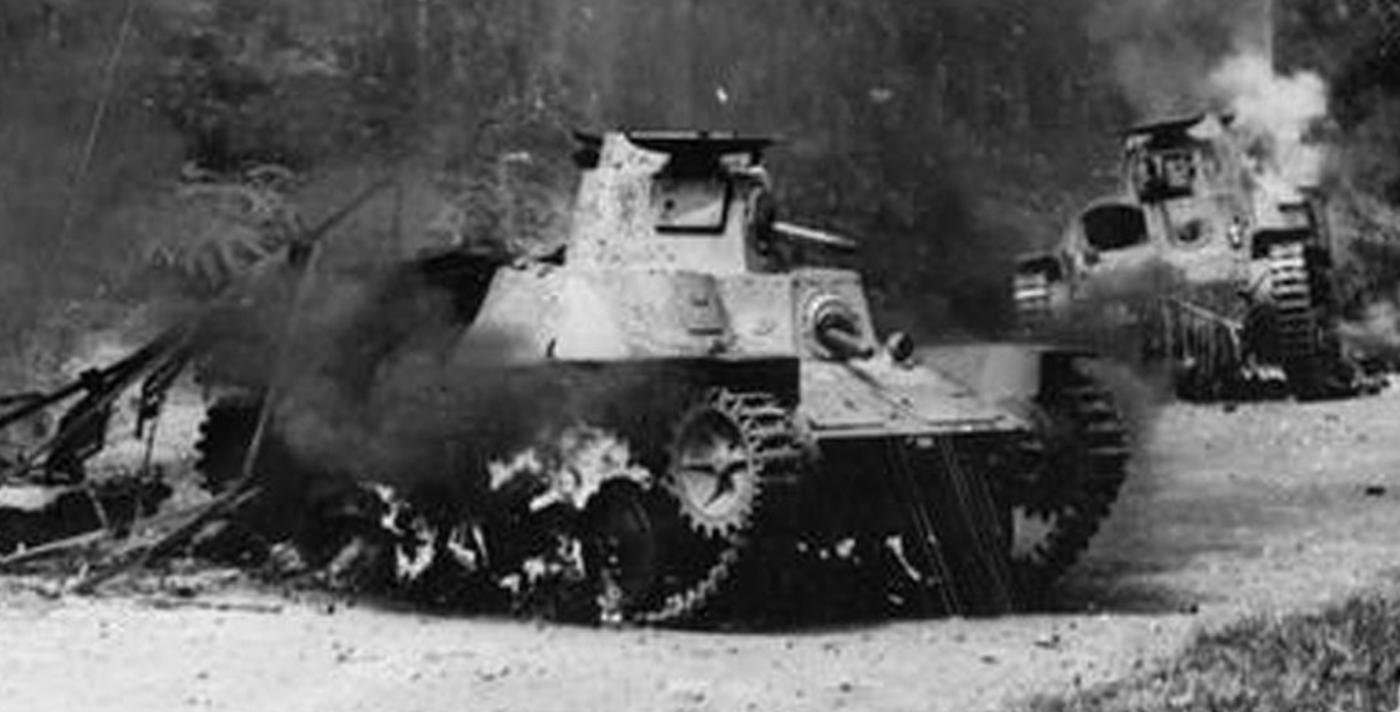
The Japanese advance into the area was part of the wider offensive directed by Tomoyuki Yamashita, commander of the Japanese 25th Army, whose operational concept emphasized speed, surprise, and night movement. The immediate assault at Slim River was carried out by elements of the Japanese Imperial Guard Division, reinforced with tank units and engineers. The attacking force is generally estimated at around four thousand men, supported by a column of light and medium tanks, mainly Type 95 Ha-Go and a smaller number of Type 97 Chi-Ha tanks, which had already proven highly effective against British positions elsewhere in Malaya.
Opposing them were units of the British Indian Army, primarily the 11th Indian Division, which had been pushed back into a thin defensive line straddling the river and the main north–south road. The defence was under the overall command of Lieutenant General Arthur Percival, the British commander in Malaya, while local control lay with divisional and brigade commanders whose formations had suffered heavy losses in earlier fighting. The troops at Slim River included Indian infantry battalions from the 12th and 28th Indian Brigades, along with British artillery and supporting units. In total, the defenders numbered several thousand men, but they were spread out, short of anti-tank weapons, and had little protection against armored assault.
On 7 January the Japanese opened the action with artillery fire and probing attacks, testing the British positions and drawing attention to the forward defences. These preliminary shellings and skirmishes masked Yamashita’s real intention: a night attack designed to punch straight through the road defenses with tanks leading the way. Late that night, Japanese armor advanced rapidly down the road in near darkness, headlights blazing at times to disorient defenders, while infantry followed closely behind, bypassing strongpoints and attacking gun crews and headquarters areas.
The British and Indian troops were taken almost completely by surprise. Many anti-tank obstacles were incomplete or poorly sited, and several anti-tank guns were knocked out or overrun before they could be brought to bear. Japanese tanks drove straight through roadblocks and into rear areas, firing machine guns and cannon at point-blank range. Communications between units quickly collapsed, and in the confusion some defenders believed they were under attack from multiple directions at once. By the early hours of 8 January, the Japanese had crossed the Slim River bridges intact, a critical success that sealed the fate of the defence.
Casualties among the defenders were severe. Large numbers of British and Indian soldiers were killed, wounded, or captured as entire battalions were broken up or surrounded. Japanese losses were comparatively light, a reflection of the shock effect of the armored night assault and the inability of the defenders to mount a coordinated response. The collapse at Slim River forced a rapid British retreat southward, opening the way to Kuala Lumpur, which fell shortly afterward without serious resistance.
One of the most striking aspects of the battle was its demonstration of how Japanese armor, often underestimated by British commanders before the campaign, could be used aggressively in jungle and plantation terrain. The success of tanks operating at night along narrow roads overturned prewar assumptions that such vehicles would be ineffective in Malaya. The battle also highlighted serious shortcomings in British preparedness, including inadequate anti-tank defenses, overextended units, and a lack of effective air support.
The outcome at Slim River was a decisive Japanese victory and a turning point in the Malayan campaign. It shattered the remaining confidence of the defending forces and accelerated the retreat toward Singapore, where the campaign would end little more than a month later.