On this day in military history…
In the opening months of 1916, Britain stood at a turning point in the Great War. What had begun in 1914 with patriotic enthusiasm and an army built on voluntary enlistment was now straining under the sheer scale of industrialised conflict. Casualties on the Western Front had reached levels no one had anticipated, and the optimism that Britain’s volunteer spirit alone could sustain the war effort was fading. It was in this atmosphere that Prime Minister Herbert Asquith’s government took the historic step of introducing compulsory military service for the first time in British history.
From the outbreak of war, Britain had relied on volunteers rather than conscription, a tradition rooted in political principle and national pride. The early months of the conflict saw huge numbers of men answer the call, inspired in no small part by Lord Kitchener’s appeal for recruits and the powerful imagery used in recruitment campaigns. However, by late 1915 it was clear that voluntary enlistment could no longer meet the army’s needs. The horrors of battles such as Loos had drained manpower, and the expanding demands of trench warfare required a steady, predictable supply of trained soldiers rather than waves of short-lived enthusiasm.
Asquith’s government had long resisted conscription, fearing political backlash and division, particularly among Liberals who viewed compulsory service as an infringement on personal liberty. But military necessity overrode these concerns. On 5 January 1916, the Military Service Bill was introduced to Parliament, marking a decisive shift in British war policy. After intense debate, the Military Service Act became law later that month.
The act applied initially to single men aged between 18 and 41 who were not in reserved occupations. These were men considered physically fit for service and not essential to the functioning of the nation at home. Key workers such as those in munitions factories, coal mining, agriculture, and transport were exempt, as their labour was deemed vital to sustaining the war effort. Clergymen, schoolteachers, and certain professionals were also excluded, as were men who were medically unfit. Provision was made for conscientious objectors, though in practice many faced tribunals, suspicion, and in some cases imprisonment for refusing to serve.
At first, married men were excluded from conscription in an attempt to limit social disruption, but this distinction did not last long. By May 1916, the Military Service Act was extended to include married men as well, reflecting the ever-growing demand for manpower at the front. Britain had, in effect, become a nation mobilised for total war.
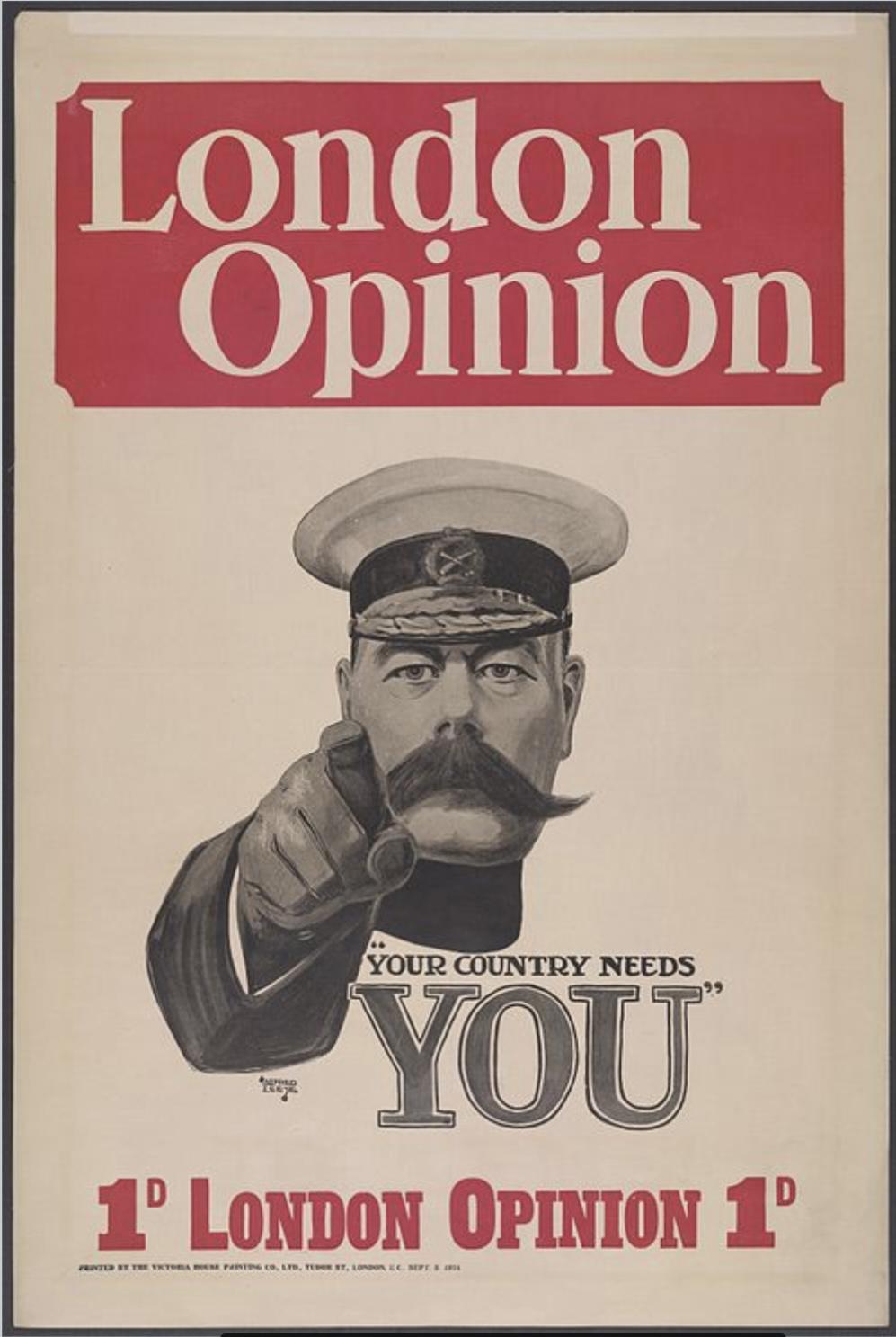
The shift to conscription marked the end of the era symbolised by one of the most famous images of the conflict: Alfred Leete’s iconic “Your Country Needs You” poster. Created in 1914 for the magazine London Opinion, the image depicted Lord Kitchener staring directly at the viewer, finger pointed outward in a commanding gesture. Though it was only one of many recruitment posters, it became the defining visual of Britain’s early war effort, embodying the call to voluntary service and personal duty. By 1916, however, the message it carried had become less a plea and more a reminder of a duty now enforced by law.
The introduction of conscription under Asquith represented a profound change in the relationship between the British state and its citizens. It acknowledged that the war could no longer be fought by enthusiasm alone and that survival depended on the full mobilisation of society. While deeply controversial, the decision reshaped Britain’s military system and marked a turning point in how the nation waged modern war.