On this day in military history…
Operation Nordwind, literally “North Wind,” was the last major German offensive on the Western Front and the final attempt to salvage something from the failure of the Battle of the Bulge. Launched on the night of 31 December 1944 into 1 January 1945, it was conceived as a follow-up blow while the Allies were still reeling from the Ardennes fighting. By striking in Alsace and northern Lorraine, the German leadership hoped to force the Allies to divert forces away from the Ardennes, fracture the already stretched Allied front, and possibly regain the initiative long enough to negotiate or at least delay the inevitable collapse of the Reich.
The idea for Nordwind came directly from Adolf Hitler. Even as the Ardennes offensive was faltering, he remained convinced that a fresh, unexpected attack elsewhere could destabilize the Allied command. Alsace appealed to him for both military and political reasons. Militarily, the sector was held by relatively thinly spread Allied forces after units had been pulled north to deal with the Bulge. Politically, Alsace had been annexed by Germany in 1940, and Hitler was determined not to abandon what he considered German territory. Against the advice of many of his generals, he ordered a winter offensive there despite the Wehrmacht’s acute shortages of fuel, armor, and trained infantry.
Overall command of the German forces involved rested with Army Group G, led by Colonel General Johannes Blaskowitz. The main striking formations came from the German First Army under General Hans von Obstfelder and elements of the Nineteenth Army, supported by several corps commanders, including General Karl Decker of XXXIX Panzer Corps. Unlike the Ardennes offensive, Nordwind was not spearheaded by massive armored formations in overwhelming strength. Instead, it relied on a mixture of battered but experienced divisions, some newly reconstituted units, and a number of formations pulled from quieter sectors or rushed in from Germany.
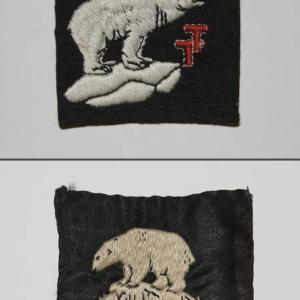
Among the German units committed were the 6th SS Mountain Division Nord, the 17th SS Panzergrenadier Division Götz von Berlichingen, elements of the 21st Panzer Division, parts of the 10th SS Panzer Division Frundsberg, and remnants of Panzer Lehr and other armored formations that had been mauled earlier in the campaign. Several Volksgrenadier divisions, designed for defensive warfare but increasingly thrown into offensive roles, also took part. Many of these units were understrength, short of heavy weapons, and relied heavily on artillery and infiltration tactics rather than sweeping armored breakthroughs.
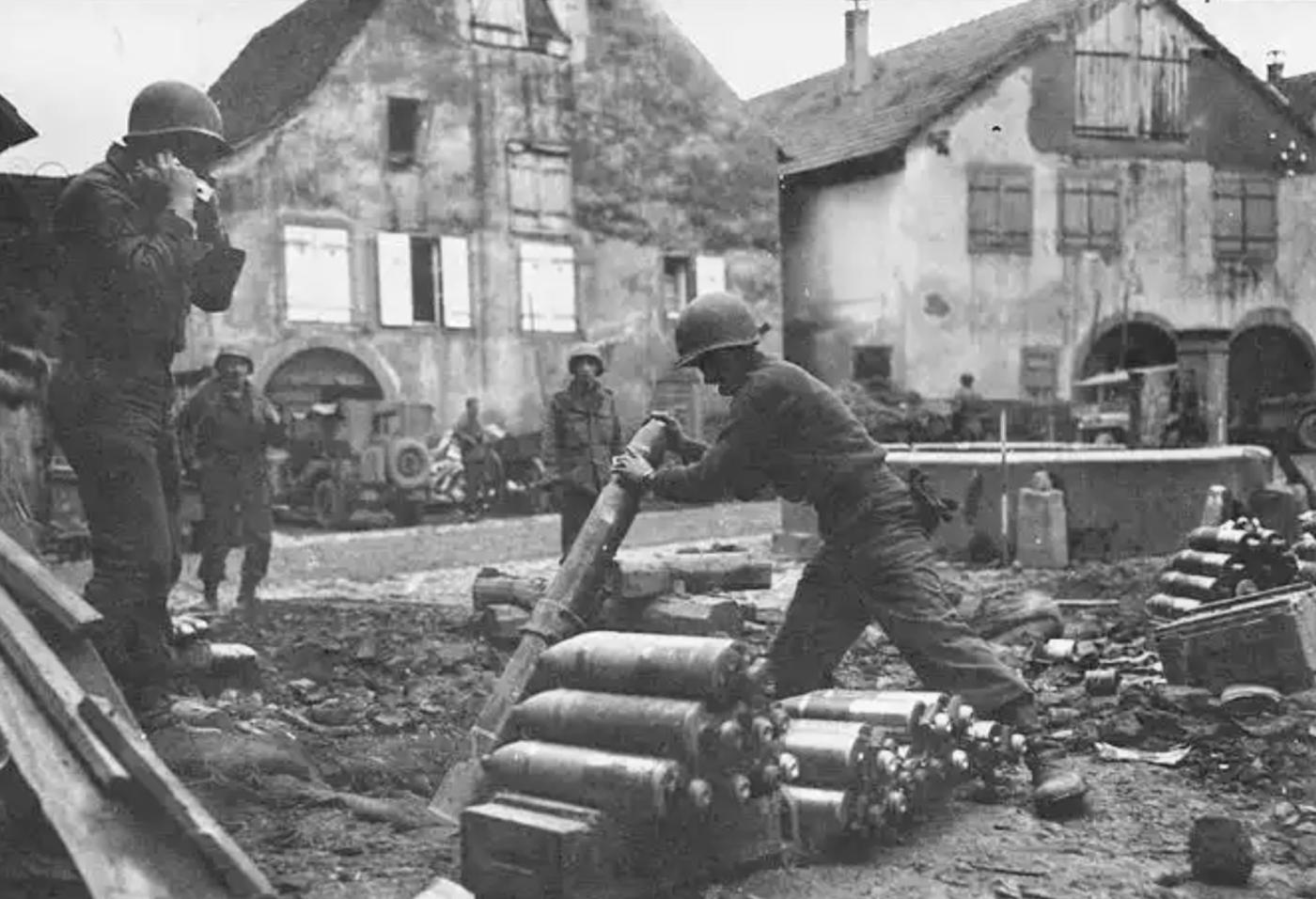
The offensive struck the U.S. Seventh Army, commanded by General Alexander Patch, particularly its VI Corps holding positions in the Vosges Mountains and along the Rhine plain. American units involved included the 44th, 45th, 79th, and 100th Infantry Divisions, along with armored and tank destroyer battalions rushed in as the situation deteriorated. French forces of General Jean de Lattre de Tassigny’s First French Army were also engaged, especially further south around the Colmar Pocket, an area that remained in German hands and complicated Allied defensive planning.
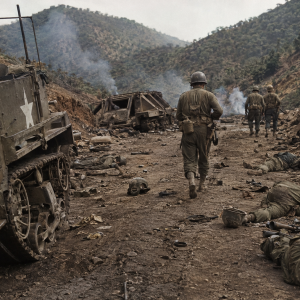
Initial German attacks achieved surprise in several sectors and caused sharp local crises. In the dense forests and snow-covered hills of the Vosges, German infantry infiltrated American lines, overran outposts, and temporarily captured villages and road junctions. The fighting was brutal, often at close quarters, with bitter cold, deep snow, and poor visibility compounding the danger. American units, some already worn down by earlier operations, suffered heavy casualties, and in early January there were moments when a broader German breakthrough appeared possible.
Despite these initial gains, Nordwind failed to achieve its strategic objectives. The Germans lacked the strength to exploit their successes. Fuel shortages limited armored movement, and Allied artillery and air power, once the weather improved, inflicted severe losses. American commanders reacted quickly, shifting reserves and shortening their lines. One of the most controversial moments came when General Eisenhower briefly considered withdrawing Allied forces from most of Alsace to establish a more defensible line, a move strongly opposed by French leaders, for whom holding Alsace was symbolically vital. In the end, the Allies held their ground, absorbing the German blows rather than yielding territory.
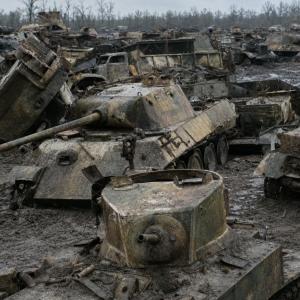
By mid to late January 1945, the German offensive had ground to a halt. Casualties were heavy on both sides, but Germany could least afford them. Nordwind cost the Wehrmacht tens of thousands of men it could not replace, along with valuable equipment. While it temporarily tied down Allied divisions and delayed some operations, it did not relieve pressure on the Ardennes front nor alter the overall balance of power. The Allies retained the initiative, and within weeks they resumed large-scale offensives into Germany itself.
An interesting aspect of Nordwind is how it overlapped with the reduction of the Colmar Pocket. While German forces were attacking in northern Alsace, other German units were simultaneously being squeezed out of the Colmar area by French and American troops, creating a confusing and fragmented operational picture. Another notable feature was the increasing reliance on SS and Volksgrenadier units, reflecting both the ideological commitment of the Nazi leadership and the erosion of the traditional German army structure by this late stage of the war.
In retrospect, Operation Nordwind stands as a final illustration of Hitler’s refusal to accept defeat and his belief in offensive action as a solution to strategic collapse. Tactically, German troops often fought with skill and determination, and in places they inflicted serious losses on Allied units. Strategically, however, the operation was ineffective. It accelerated the exhaustion of Germany’s remaining combat power and left the western defenses even weaker, contributing directly to the rapid Allied advance across the Rhine only a few months later.