On this day in military history…
On 26 December 1941, in the early weeks of the Pacific War, the United States took the dramatic step of declaring Manila an open city in an effort to spare one of Asia’s most historic capitals from destruction. The decision came as Japanese forces rapidly advanced through the Philippines following their invasion on 8 December, just hours after the attack on Pearl Harbor. Manila, the political, economic, and cultural heart of the islands, was densely populated and rich in centuries-old architecture, including churches, universities, and government buildings dating back to the Spanish colonial era. American and Filipino leaders hoped that by withdrawing military forces and formally announcing the city’s undefended status, they could preserve it from the devastation already seen in other bombed cities across Asia.
The declaration was made under the authority of General Douglas MacArthur, commander of U.S. Army Forces in the Far East, with the approval of the Philippine Commonwealth government led by President Manuel L. Quezon. On the same day, Quezon declared Manila a neutral and open city, while MacArthur ordered most U.S. and Filipino troops to withdraw to the Bataan Peninsula and Corregidor. The intent was clear: Manila would no longer be used for military defense, and therefore, under the conventions of war, should not be attacked. Hospitals, diplomatic missions, and civilian populations remained, trusting that the declaration would be respected. Notices were transmitted through diplomatic and military channels to inform the Japanese command of the city’s status.
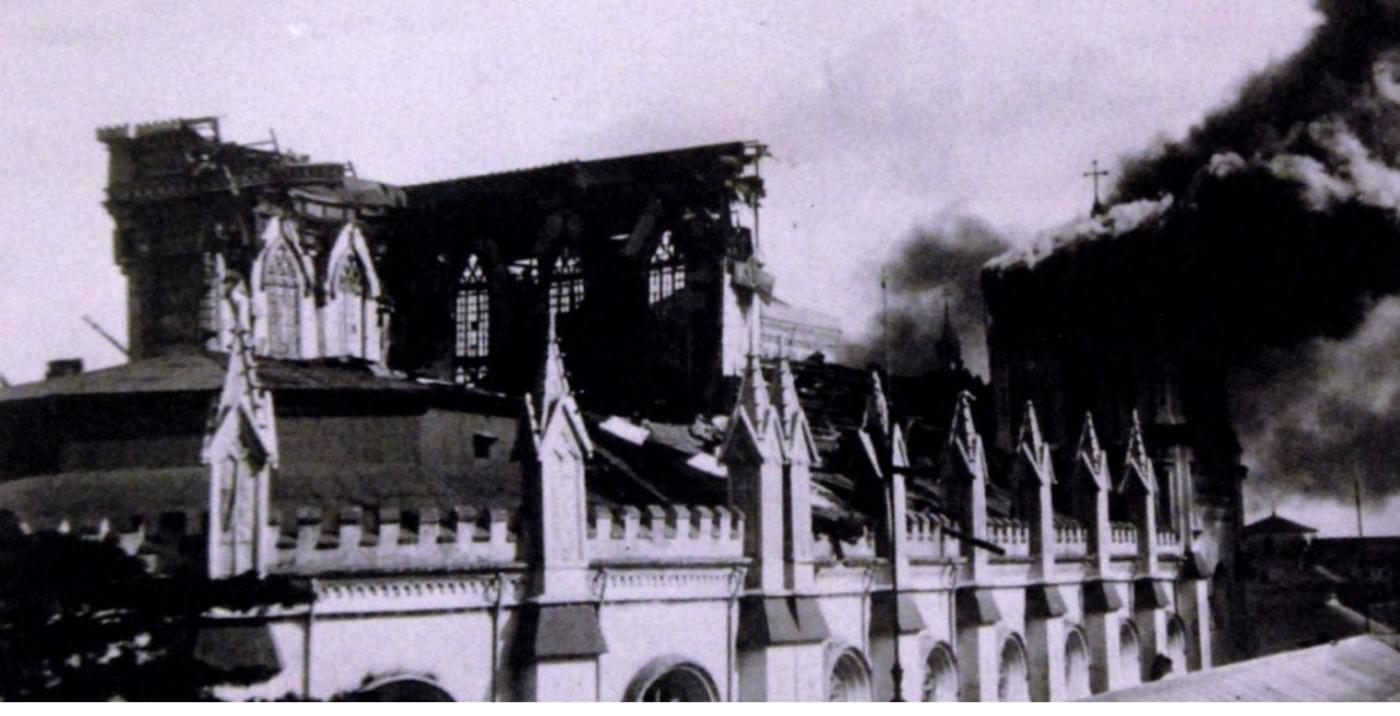
Despite these measures, the hope that Manila would be spared proved tragically short-lived. On 27 December 1941, Japanese aircraft began bombing the city. Though the attacks were not yet on the catastrophic scale seen later in the war, they were enough to shatter any illusion that restraint or compassion would define the coming conflict. Civilian areas were struck, infrastructure was damaged, and fear spread rapidly among the population. The bombings demonstrated that the declaration of an open city offered little real protection when weighed against strategic objectives and the brutal realities of total war.
The bombing of Manila so soon after its declaration as an open city sent a grim message. It revealed that international norms and legal protections, while formally acknowledged, could be disregarded when military advantage was at stake. For many Filipinos, this moment marked the beginning of a long and harsh occupation characterized by repression, shortages, and violence. The early bombing foreshadowed the far greater tragedy that would come later, particularly during the Battle of Manila in 1945, when the city would be almost completely destroyed and tens of thousands of civilians killed.
An interesting and often overlooked detail is that Manila was one of several cities during the Second World War declared open in hopes of avoiding destruction, yet its experience showed how fragile such declarations were in practice. While Rome and Paris would later see mixed results from similar status declarations, Manila’s case stood out for how quickly the promise of protection collapsed. The Japanese would occupy the city on 2 January 1942, and although they initially avoided total destruction, the earlier bombing had already revealed the limits of mercy in the unfolding war.