On this day in military history…
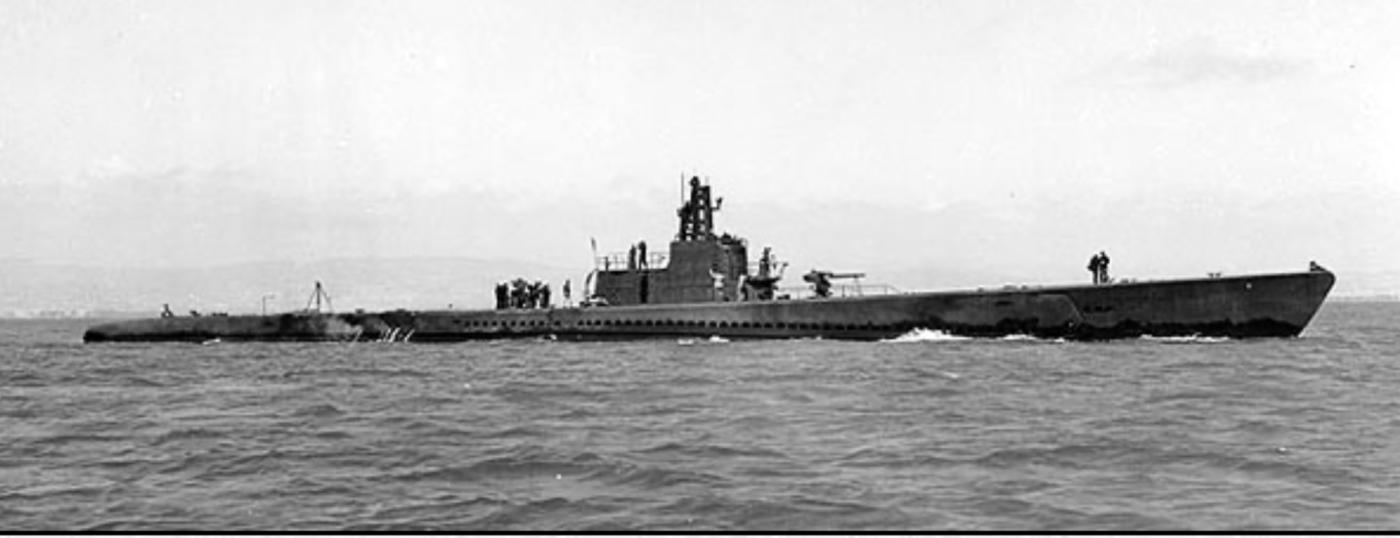
On 26 December 1944 the American fleet submarine cast off from Midway after taking on fuel and final stores, pointed her bow west, and disappeared into the winter Pacific on what should have been another combat patrol. She never returned. No distress call was received, no wreckage was found, and no survivors were ever recovered. Her loss was silent and complete, one of the enduring mysteries of the Pacific submarine war.
USS Swordfish (SS-193) was a Sargo-class fleet submarine built at the Mare Island Naval Shipyard in Vallejo, California. Her keel was laid on 27 October 1937, she was launched on 1 April 1939, and she was commissioned later that year. Designed for long-range patrols and independent operations far from base, she represented the peak of pre-war American submarine design and would go on to serve through most of the Pacific conflict.
The captain who led her on the final voyage was Commander Keats Edmund Montross of the United States Navy. An experienced submarine officer, Montross took command at a time when veteran boats and crews were being asked to undertake increasingly dangerous missions close to Japan itself. Under his leadership the submarine departed Pearl Harbor on 22 December 1944 for her thirteenth war patrol, making a brief stop at Midway before sailing west on 26 December.
The task assigned for this patrol carried exceptional risk. The boat was ordered to operate near the Ryukyu Islands and to conduct photographic reconnaissance of Okinawa. This intelligence was urgently required for planning the forthcoming Allied invasion. To complete the assignment, the submarine would have had to work close to shore at shallow depth in waters heavily patrolled by Japanese aircraft, escort vessels, and coastal defenses, with extensive minefields guarding likely approaches.
By late 1944 the vessel already had an impressive combat record. Across twelve previous war patrols she was credited with sinking twenty-one enemy ships totaling more than 113,000 tons and damaging several others. Early in the war she gained particular distinction by sinking what is widely regarded as the first Japanese ship lost to an American submarine after the outbreak of hostilities. Her patrol areas ranged from the Philippines and the Dutch East Indies to distant reaches of the western Pacific as Allied forces advanced.
The crew were seasoned veterans of undersea warfare. They had survived repeated depth-charge attacks, long submerged pursuits, mechanical failures, and the constant strain of operating for weeks at a time inside a confined steel hull. As the war moved closer to Japan, however, the dangers intensified. Anti-submarine defenses near the home islands improved, and mine warfare became a major threat to submarines operating near key island chains.
The exact fate of the submarine remains unknown. The most widely accepted explanation is that she struck a Japanese naval mine somewhere in or near her assigned patrol area, possibly while approaching Okinawa to carry out reconnaissance. Other possibilities include destruction by enemy anti-submarine forces or an internal accident, but no conclusive evidence has ever been found.
To date, no wreck positively identified as USS Swordfish has been discovered. Despite advances in deep-sea search technology and several surveys conducted in the western Pacific, the submarine’s final resting place remains unlocated. The absence of physical evidence has meant that the circumstances of her loss remain based on analysis of Japanese mine records, patrol reports, and the known movements of Allied submarines rather than direct confirmation.
The boat was declared lost with all hands. Seventy-nine officers and enlisted men went down with her, including Commander Montross. Confirmation of the loss came only months later, after she failed to return and was officially listed as missing and presumed sunk.