On this day in military history…
The night of 22–23 December 1940 marked one of the darkest episodes in Manchester’s wartime experience, as the Luftwaffe launched a concentrated attack that would later be remembered as the Manchester Blitz. Although the city had been targeted before, nothing matched the scale and intensity of this raid. It formed part of the wider German strategy to cripple major industrial centres across Britain during the winter of 1940–41, striking just before Christmas when morale might be most vulnerable. Manchester, whose docks, engineering works and aircraft factories played a vital role in the British war effort, became a prime objective.
Air raid sirens began sounding in the early evening of 22 December. Many civilians, already accustomed to alerts, could not have anticipated the severity of what was coming. Shortly after darkness fell, waves of German bombers approached the region. The first aircraft dropped flares and incendiaries to illuminate their targets, setting off fires that served as beacons for the bombers that followed. Within minutes, major parts of the city were ablaze. Incendiaries rained onto rooftops, overwhelming fire watchers and auxiliary fire services who were stretched to their limit as they attempted to contain dozens of outbreaks at once.
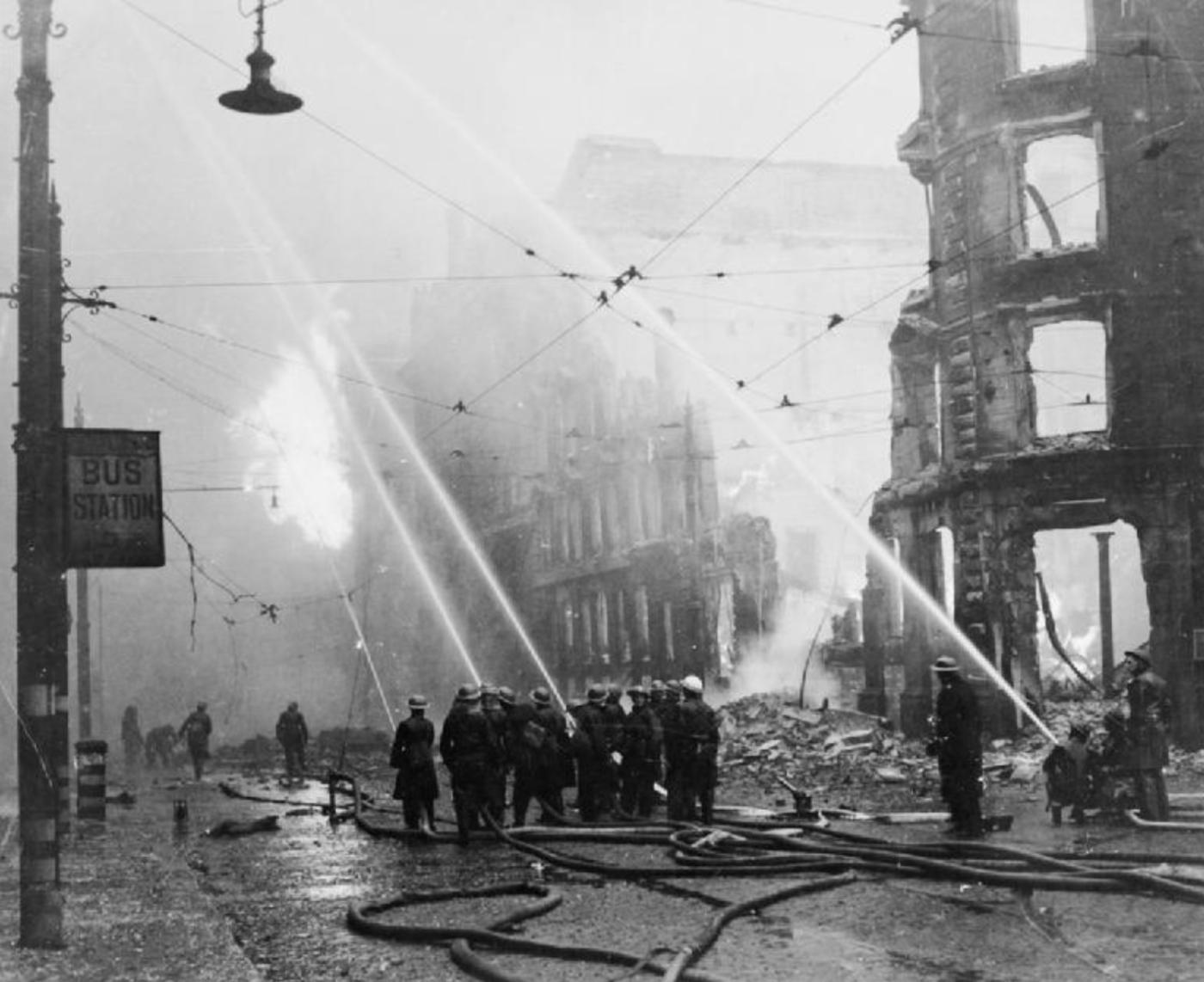
The city centre suffered heavy damage early in the raid. Iconic buildings such as the Free Trade Hall, the Royal Exchange and the Manchester Cathedral area were struck, some sustaining damage that would take years to repair. Streets that had stood for centuries were suddenly reduced to rubble. The scale of destruction was amplified by the combination of high-explosive bombs and incendiaries: fires spread rapidly through commercial districts full of warehouses and shops stocked for Christmas. Despite the courage of firefighters, the volume of burning material and the collapse of water mains made the task nearly impossible.
Residential districts did not escape the devastation. Salford, Hulme, Cheetham Hill, and the areas surrounding Piccadilly suffered numerous direct hits. Houses were demolished without warning, leaving families trapped beneath debris as rescue teams worked through the night to reach survivors. The docklands and industrial zones around Trafford Park, one of the largest industrial estates in Europe, were bombed repeatedly. Trafford Park’s factories produced vital components for aircraft, munitions and vehicles, making them a strategic target. Although much of its production survived the attack, significant damage disrupted operations temporarily and underscored the vulnerability of Britain’s industrial infrastructure.
By the early hours of 23 December the bombing intensified. The raid lasted for several hours, with the Luftwaffe returning in repeated waves that prevented emergency services from gaining control of the fires. Roads became impassable due to fallen masonry, unexploded bombs and blazing buildings. Trams, railway lines and telephone exchanges were damaged, adding to the paralysis. Even as dawn approached, fires continued to burn across Manchester and Salford, and many residents emerging from shelters faced a transformed landscape of smoke, ash and shattered streets.
Casualty figures from the Manchester Blitz underscored the human cost. More than 650 people were killed across the two-night attack, with thousands more injured and tens of thousands made homeless. Many families were displaced permanently, and entire neighbourhoods would need rebuilding. The emotional impact of the raids, coming so close to Christmas, resonated deeply. Yet in the midst of destruction there were countless acts of bravery: rescue workers who entered collapsing buildings, firemen who fought flames for hours, and ordinary civilians who aided neighbours or volunteered for emergency duties.
The morning after the raid revealed both the tragedy and the resilience of the city. Charred building frames stood like skeletons, streets were filled with smouldering debris, and shop windows once decorated for Christmas were shattered. But almost immediately, clean-up operations began. Emergency feeding centres were opened, transport networks were gradually restored, and displaced families were taken in by relatives or housed in temporary accommodation. Despite the shock, Manchester’s industries returned to work as soon as possible, determined not to allow the attack to derail wartime production.
The Manchester Blitz of 22–23 December 1940 became a defining moment in the city’s wartime history. It demonstrated Manchester’s strategic importance and the price its people paid for their contribution to the war effort. It also showcased the city’s endurance. In the months that followed, rebuilding efforts continued even as further raids occurred, though none on the same scale as that December night. The memory of the attack lived on in the stories of survivors and in the rebuilt streets that replaced the ruins.