On this day in military history…
The battle of Ormoc Bay, culminating on 21 December 1944, was a decisive phase of the Leyte Campaign and marked one of the most complex maritime interdiction efforts of the Pacific War. It was remarkable for being the first large-scale coordinated assault in which submarines, carrier and land-based aircraft, destroyers, mines, torpedo attacks, and shore batteries all worked together to seal off a strategic body of water. The goal was simple but critical: to choke off the last Japanese attempt to reinforce Leyte, where the Imperial Army was fighting desperately to prevent the Americans from securing a foothold that would open the way to Luzon.
By early December 1944, Ormoc Bay on the western coast of Leyte had become the only usable entry point for Japanese convoys attempting to land troops and materiel. The earlier convoys—TA-1 through TA-7—had suffered terrible losses to American air and naval attacks, yet Japanese commanders persisted, hoping that sufficient reinforcements might shift the balance on the ground. The key Japanese officers directing defense and reinforcement efforts around Ormoc included Rear Admiral Mikio Hayakawa and, more broadly across the Leyte area, Vice Admiral Shōji Nishimura’s surviving staff structures and land commanders such as General Tomoyuki Yamashita, whose strategic directives had ordered the reinforcement attempts. At sea, Japanese escort destroyers and transports were led by officers such as Captain Kiyoshi Kikkawa and others tasked with running the gauntlet of American air and naval dominance.
For the United States, the overall naval command in the area fell under Admiral Thomas C. Kinkaid of the Seventh Fleet, with Vice Admiral Jesse B. Oldendorf’s forces and Rear Admiral Arthur D. Struble coordinating amphibious and surface actions. Air support came from both carrier groups and land-based Fifth Air Force aircraft under Lieutenant General George C. Kenney. Submarine coordination in the surrounding waters had already proven its effectiveness earlier in the campaign, with commanders operating boats like USS Hardhead, USS Flasher, and others tightening the noose around Leyte’s maritime approaches.
The Americans employed a layered strategy to isolate Ormoc Bay. Submarines prowled the approaches and attacked any Japanese vessels attempting to reach Leyte from Formosa or Luzon. Mines were laid in patterns designed to constrict movement inside the bay itself, forcing enemy ships into predictable routes where aircraft and surface vessels could strike with maximum effect. Land-based artillery, including long-range guns emplaced on the eastern Leyte ridges as ground forces progressed, provided an additional threat to any vessel venturing too close to shore.
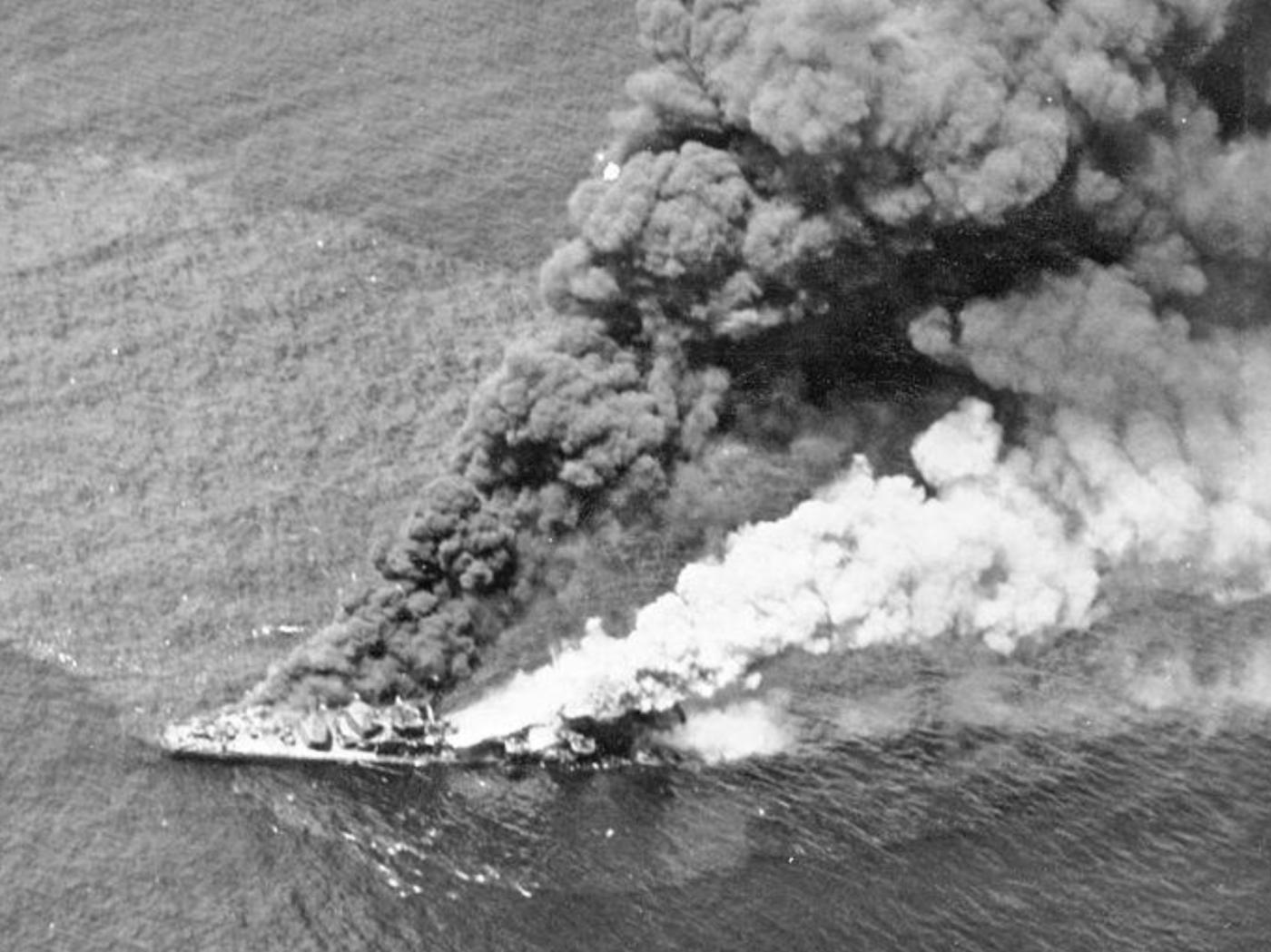
A series of fierce engagements throughout late November and early December eventually crippled Japanese efforts. A defining moment occurred on 7 December with the destruction of convoy TA-8, when American destroyers such as USS Allen M. Sumner and USS Moale fought a chaotic night battle against Japanese escorts, sinking several ships. Carrier and land-based aircraft constantly harassed Ormoc Bay, destroying transports, barges, and supply dumps, and by mid-December the Japanese line of communication was effectively collapsing.
The final blow came on 21 December 1944. Japanese forces attempted one more push to bring troops into Ormoc Bay, but the Americans had converted the entire bay into a killing zone. Air strikes launched from Morotai, Leyte, and the escort carriers offshore swept across the bay, sinking or crippling every major vessel the Japanese committed. Destroyers and smaller U.S. ships closed in to finish damaged vessels with gunfire and torpedoes. Submarines waiting farther out picked off stragglers attempting to flee. Mines detonated under several Japanese craft, and the continuous pressure from artillery and air power prevented any organized landing. By the end of the day, the Japanese losses were catastrophic—multiple transports and escorts sunk, hundreds of troops drowned before reaching the shore, and surviving vessels forced to retreat northward in disarray.
This defeat had strategic consequences beyond the destruction of ships. It ended Japan’s capacity to reinforce Leyte and sealed the fate of their ground forces on the island, which would be ground down over the coming weeks. The coordinated American use of every available domain of warfare—subsurface attacks, mine warfare, massed air strikes, naval gunnery, torpedoes, and land-based artillery—was unprecedented in scale and effectiveness. The battle demonstrated how multidimensional maritime operations could completely isolate and annihilate enemy forces even within confined waters.
By late December, Ormoc Bay was firmly in American hands, and the last meaningful Japanese resistance on Leyte began to unravel. The battle remains a textbook example of joint operations in a littoral environment, showing how the synchronized use of naval, air, and land assets can achieve overwhelming dominance.