On this day in military history…
Operation Giant Slingshot was one of the most ambitious “brown-water navy” campaigns of the Vietnam War, launched at the end of 1968 as part of the broader SEALORDS riverine strategy. Its purpose was to choke off the river and canal routes running from sanctuaries in Cambodia into III Corps, the region around Saigon, preventing men, weapons, and supplies from reaching Viet Cong and North Vietnamese units via the Vam Co Dong and Vam Co Tay rivers and the “Parrot’s Beak” border area.
With coastal traffic disrupted by Operation Market Time and much of the Mekong Delta under constant surveillance from Operation Game Warden, enemy forces increasingly used the Cambodian border rivers to slip into South Vietnam. To counter this, Admiral Elmo Zumwalt, Commander Naval Forces Vietnam and architect of SEALORDS, created Task Force 194 to integrate river and coastal forces into an offensive interdiction system. Within this framework, Operation Giant Slingshot became a specialized barrier along the border rivers, its patrol zones forming a shape on the map that resembled a giant slingshot.
The operation officially began on 6 December 1968. Command was assigned to Captain Arthur W. Price Jr., designated Commander Task Group 194.9. Price also oversaw the entire River Patrol Force and River Patrol Flotilla Five, giving him direct control of the PBR units that formed the primary striking element of the mission. His headquarters operated from the support barge YRBM-16 near Tan An in Long An Province, where he coordinated closely with the U.S. Army’s 9th Infantry Division to synchronize riverine and ground operations.
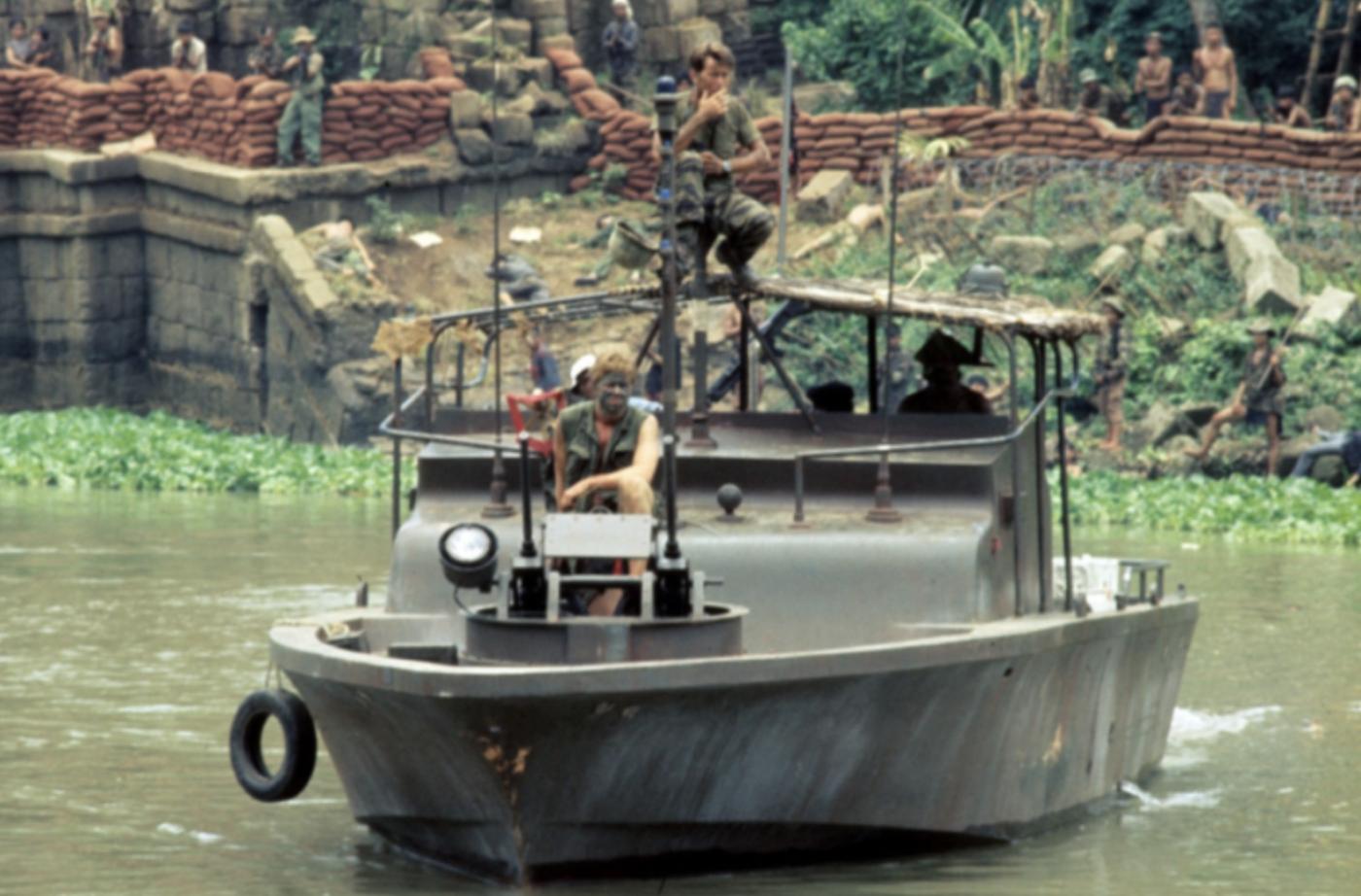
Initial forces included two full River Patrol Divisions, each with ten PBRs. These 32-foot fiberglass boats were fast, agile, and heavily armed with twin .50-caliber machine guns, 40 mm grenade launchers, and various automatic weapons. Over time, the task group expanded to nearly 150 boats, including armored troop carriers, monitors mounting heavy guns, minesweeping craft, command boats, and a growing number of South Vietnamese Navy river assault craft. This expanding fleet enabled near-constant patrol coverage throughout the Giant Slingshot sector.
The operation’s strength lay in its fusion of river and land forces. PBRs maintained overlapping patrol boxes along the rivers, stopping and inspecting civilian traffic ranging from tiny sampans to motorized junks. These river patrols were supported by an interconnected chain of firebases and Advanced Tactical Support Bases at locations such as Tuyen Nhon and Moc Hoa. These bases provided artillery, logistics, maintenance, and medical support, allowing patrol craft to remain on station for extended periods. South Vietnamese Marines and Army units were frequently deployed along the banks as blocking forces or rapid-response elements.
Tactics evolved quickly. Early in the operation, the Viet Cong often engaged directly when intercepted in mid-river or along the banks, suffering heavy losses from the speed and firepower of PBRs and river assault craft. As months passed, they shifted to more deliberate ambushes, using rocket launchers and machine guns from concealed positions along dense riverbanks. This forced U.S. patrols to adopt unpredictable patterns, varied routes, and coordinated movements between multiple boats and air support.
A typical patrol was a blend of law enforcement, reconnaissance, and combat. Crews scanned constantly for signs of movement: fresh trails leading to the river, unusual wake patterns, or hidden caches. Night operations were common, with checkpoints illuminated by spotlights and star shells. Suspicious craft that attempted to flee or ignored commands to halt could be engaged with warning fire or disabling shots. Contraband routinely discovered included rifles, ammunition, explosives, radios, uniforms, medical supplies, and rice.
Air power played a critical role. The Seawolves of Helicopter Attack (Light) Squadron Three provided UH-1B gunships for close support, reconnaissance, and strike missions. The OV-10 Bronco aircraft of Light Attack Squadron Four delivered heavier ordnance when needed. Navy SEALs and South Vietnamese commandos frequently joined the operation, launching reconnaissance missions, planting mines, raiding supply depots, and gathering intelligence on enemy routes.
The operation also employed a wide variety of specialized boats. In addition to PBRs, armored troop carriers could deploy infantry onto contested banks, while monitors equipped with 40 mm cannons or even 105 mm howitzers provided direct fire support. Assault Support Patrol Boats conducted minesweeping and heavy escort duties, typically leading the way into dangerous stretches. Command and control boats coordinated complex multi-unit operations using extensive radio equipment.
In early 1969, Swift Boats—normally used for coastal patrols—were added to extend coverage farther up the Vam Co River, linking Giant Slingshot to other SEALORDS operations and creating a nearly continuous interdiction belt from the Cambodian border to the Mekong Delta. This made it increasingly difficult for enemy units to move supplies without detection.
As the campaign progressed, South Vietnamese forces assumed a greater role. River Assault Divisions of the South Vietnamese Navy took over many patrol sectors, and in October 1969 a South Vietnamese Marine battalion was placed under Task Group 194.9 to conduct amphibious and defensive operations along the Vam Co Dong. This shift reflected the broader Vietnamization policy, with Giant Slingshot serving as a high-functioning model for eventual handover.
The cost and intensity of combat were considerable. Boats regularly endured ambushes at point-blank range in narrow waterways. Casualties occurred on both sides, but the operation succeeded in intercepting significant quantities of enemy supplies and inflicting heavy losses on infiltrating units. Commanders reported that captured materiel reached extraordinary levels and that defections and prisoner interrogations confirmed the effectiveness of the riverine barrier.
By May 1970, operational control of Giant Slingshot passed fully to the South Vietnamese Navy, and U.S. participation steadily diminished as SEALORDS wound down. Yet during its peak from December 1968 onward, Operation Giant Slingshot stood as one of the most complex and effective river interdiction operations of the war, transforming border waterways from enemy avenues of infiltration into dangerous chokepoints that hindered resupply networks and restricted Viet Cong and North Vietnamese activity in the vital region west of Saigon.