On this day in military history…
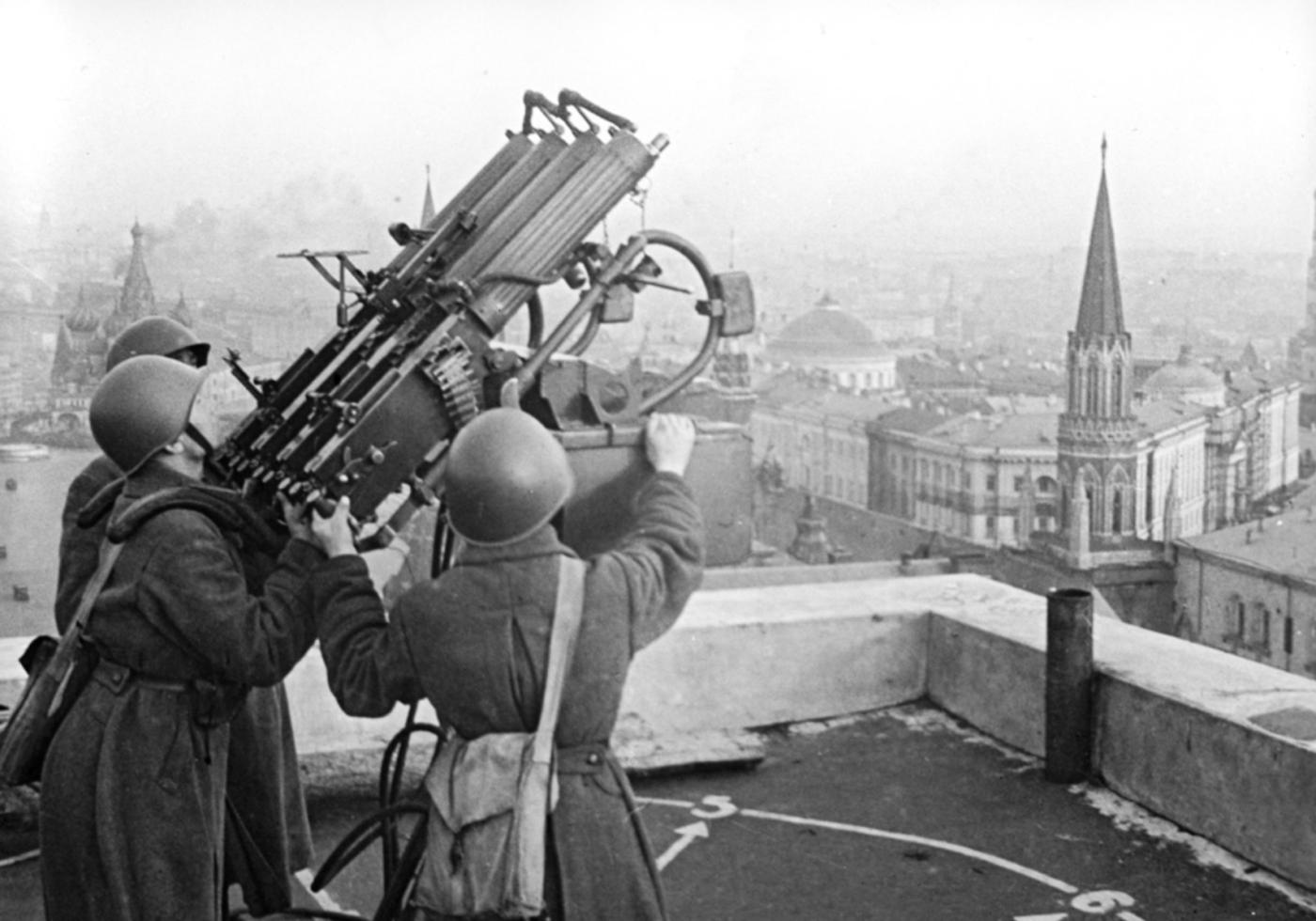
The counter-offensive launched outside Moscow on 5 December 1941 was one of the decisive turning points of the Second World War, marking the moment when the Wehrmacht’s rapid advance across the Soviet Union was finally halted and forced back. After months of retreat, catastrophic losses, and desperate defensive efforts, the Red Army seized the initiative in a sweeping operation that surprised German commanders and reshaped the strategic situation on the Eastern Front.
The offensive was directed by General Georgy Zhukov, recently appointed to coordinate the defence of Moscow on behalf of Stavka, the Soviet high command. Zhukov worked closely with other senior commanders such as Ivan Konev, Konstantin Rokossovsky, and the commanders of the Western, Kalinin, and Southwestern Fronts. The plan for the counter-strike drew heavily on newly arrived Siberian and Far Eastern divisions, troops released after Soviet intelligence correctly assessed that Japan would not attack the USSR in 1941. These fresh formations included some of the best-trained and best-equipped Soviet units then available, many experienced in winter warfare and better prepared for the extreme cold than their German opponents.
In total, the Red Army committed roughly one million soldiers to the wider counter-offensive around Moscow, with around 100 divisions spread across the fronts involved. Although not all these troops were concentrated in a single blow, the combined weight of the renewed Soviet forces produced simultaneous pressure across broad sectors. They were supported by over a thousand tanks and more than six hundred aircraft, though Soviet armour and air capabilities remained limited compared to later in the war. German forces facing them were exhausted, short of vehicles and winter clothing, and fighting at the end of stretched supply lines—conditions made worse by temperatures that dropped below –30°C.
The offensive was planned over several weeks in late November, even while German Army Group Centre continued its final attempts to break into Moscow’s outskirts. Zhukov coordinated a strategy that relied on local superiority at chosen sectors, exploiting weaknesses in German lines that had been thinly spread to maintain the pressure on Moscow. The Red Army launched its main assaults north and south of the capital, aiming to encircle advanced German spearheads and push them away from the city. The plan was not a single, rigid design but a sequence of regional attacks intended to maintain constant momentum. Soviet commanders were encouraged to press any opportunity for a breakthrough, and the harsh winter conditions were recognised as an asset rather than an obstacle.
When the first Soviet assaults struck on 5 December 1941, they achieved immediate local successes. German units were stunned to encounter well-equipped troops in white camouflage, supported by T-34 and KV-1 tanks that performed well in the snow. Within days, much of the German front began to buckle. The Soviets recaptured towns such as Klin, Kalinin, and Istra, pushing the Wehrmacht back between 100 and 280 kilometres from the approaches to Moscow. The counter-offensive forced Adolf Hitler into a series of contentious decisions: he dismissed several senior generals, forbade further retreats, and took personal command of the army. Despite his rigid orders, German forces continued to withdraw in order to avoid encirclement.
The Soviet counter-offensive did not completely destroy Army Group Centre, nor did it achieve all its ambitious goals of rolling back German lines to the Dnieper. Logistics, overextension, limited reserves, and ongoing losses prevented the Red Army from maintaining the same pace into early 1942. Nonetheless, the outcome was unmistakable: the Germans had been decisively stopped, and the myth of their invincibility on land was shattered. It was the Wehrmacht’s first major strategic defeat of the war, and it ended any realistic German hope of taking Moscow or forcing a Soviet collapse before winter.
The battle produced numerous noteworthy elements that would shape the remainder of the Eastern Front. The performance of Soviet winter troops, the effective use of camouflage and skis, and the reliability of the T-34 tank in freezing conditions all highlighted strengths that would grow in importance later in the conflict. The Soviet Union’s ability to redeploy divisions from the Far East at a critical moment demonstrated the importance of military intelligence. Perhaps most significantly, the counter-offensive proved to the world that the Red Army could conduct large-scale, coordinated operations despite the devastating losses suffered earlier in the year.
By the time the operation slowed in February 1942, the Red Army had not only saved Moscow but had seized the initiative for the first time in the war. The failure of Operation Barbarossa’s final effort and the success of the Soviet counter-stroke marked a fundamental turning point: Germany would never again come as close to victory in the East, and the long, grinding push westward had begun.