On this day in military history…
The Luftwaffe’s assault on Liverpool on the nights of 28 and 29 November 1940 was among the most destructive episodes of the Blitz, striking at a city whose docks and shipyards formed the backbone of Britain’s supply lifeline. These two nights brought devastation on a scale that even wartime-hardened Liverpool had not yet experienced, prompting Winston Churchill to note the extraordinary severity of the attack.
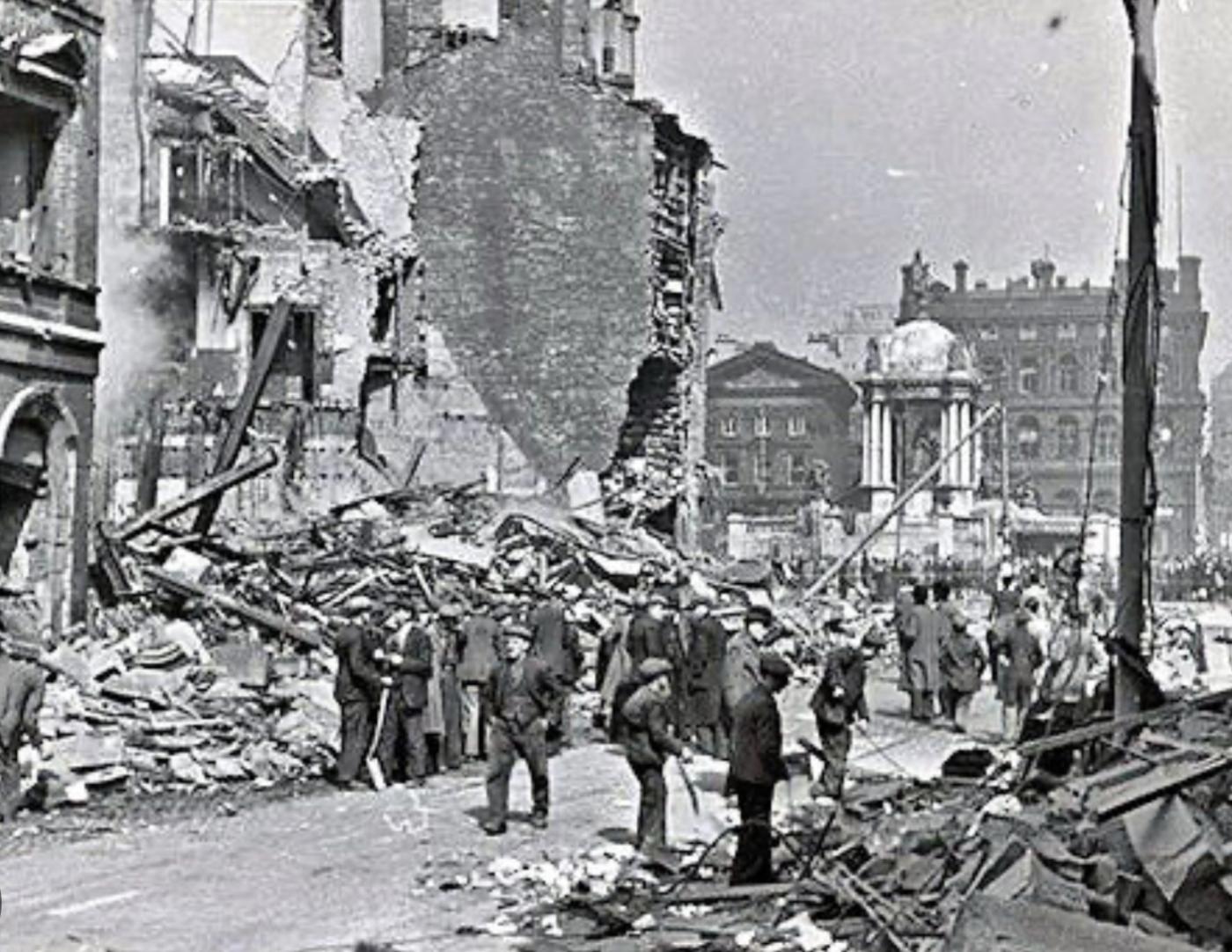
Around 160 to 200 bombers—mainly Heinkel He 111s and Junkers Ju 88s—approached the city from bases in occupied Europe, flying in waves and releasing high-explosive bombs, incendiaries, and deadly parachute mines designed to level buildings and ignite vast fires. On 28 November the first strikes fell across the central and northern docklands, where warehouses packed with flammable cargo turned into towering infernos. Terraced streets near the docks suffered catastrophic damage as parachute mines flattened entire rows of houses and trapped families inside. Fire crews fought hard, but debris-strewn roads, spreading flames, and the wind from the Mersey made movement nearly impossible.
The city’s defences were quickly overwhelmed. RAF Fighter Command, still recovering from the Battle of Britain, had limited night-fighter capability in the northwest. Radar coverage was patchy, only a handful of fighters carried early airborne radar, and searchlight-guided interceptions rarely succeeded. Several fighters from RAF Cranage and RAF Woodvale were scrambled, but thick smoke and poor visibility left them unable to find the bombers. Anti-aircraft batteries fired throughout the night, yet altitude, darkness, and confusion made accurate targeting extremely difficult.
By the time dawn broke, Liverpool was choking under smoke, with fires still raging in several districts. Rescue teams worked through collapsing structures, sometimes tunnelling for hours to reach trapped survivors. Thousands were left homeless, and hundreds had been killed or injured in just one night.
The second night brought little relief. The Luftwaffe exploited the chaos, returning while the city was still burning and before damaged communication lines, exhausted ground crews, and depleted anti-aircraft batteries could recover. Firefighters from surrounding towns and fire boats from the Mersey were drafted in, but the scale of destruction overwhelmed every available resource. Warehouses continued to explode, tram depots and schools collapsed, and sections of the railway and dock infrastructure were cut off. Though landmark buildings such as the Liver Building withstood the blasts, many sustained significant structural damage.
RAF night-fighters were again sent up but were hampered by the same issues—poor visibility, unreliable radar guidance, and a sky obscured by smoke from the previous night. Pilots described flying blind through choking clouds, with little hope of spotting enemy aircraft. The Luftwaffe, splitting its bomber force into staggered groups and varying its approach routes, kept defences guessing and rarely offered a clear target.
The people of Liverpool endured these two nights with remarkable resilience. Public shelters saved many lives, but some suffered direct hits, including one of the city’s worst tragedies when a parachute mine struck near a shelter on Durning Road. Even so, morale did not collapse. By morning, emergency kitchens were serving meals, neighbours were helping one another salvage belongings, and dockworkers returned to their posts sooner than the Luftwaffe had anticipated.
The raids of 28–29 November 1940 exposed the limits of Britain’s night-time air defences at this stage of the war, but they also revealed Liverpool’s determination to keep functioning despite extraordinary hardship. The devastation left deep scars, yet the city’s resolve ensured that Britain’s vital western port continued to operate, even under the most punishing conditions of the Blitz.